
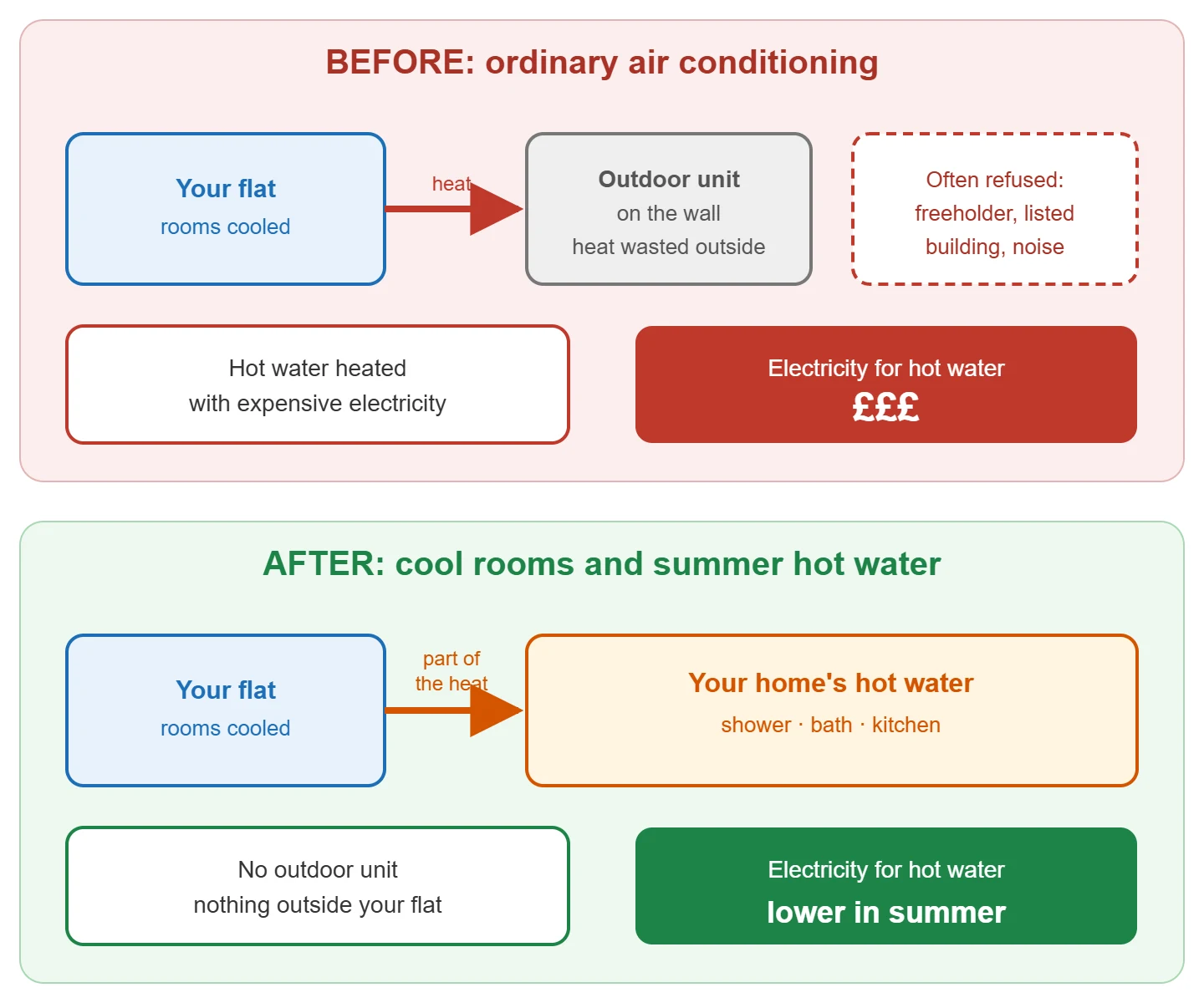
London summers are getting hotter, and flats, especially top floors, converted lofts and new-builds with large windows, can become hard to sleep in. But many flat owners and tenants are told they cannot have air conditioning, because an outdoor unit is not allowed: the freeholder says no, the building is listed or in a conservation area, there is no balcony, or planning and noise rules get in the way.
UK Coldroom has designed an air conditioning system for London homes that needs no outdoor unit outside the flat, and that does something ordinary air conditioning does not: in summer it puts part of the heat it removes from your rooms to work warming your home’s hot water.
The London flat problem
Ordinary split air conditioning has two parts: an indoor unit in the room and an outdoor unit on a wall, balcony or roof. In much of London, that outdoor unit is where the project stops.
- Leases and freeholders. Most leases do not allow changes to the outside of the building without consent, and many freeholders simply refuse.
- Listed buildings and conservation areas. Visible equipment on the front of a building often needs consent and is frequently refused.
- Noise. Councils look closely at noise from outdoor units near neighbours’ windows.
- No space. Many flats have no balcony, no flat roof and no wall the installer can reach safely.
The usual fallback is a portable unit with a hose out of the window: noisy, inefficient and not much cooler. Our system is designed to remove that compromise.
What you get
- Cool rooms in summer. Proper, quiet air conditioning, not a portable unit with a hose.
- No outdoor unit. Nothing on the wall, balcony or roof outside your flat.
- Hot water from your cooling. In summer, part of the heat taken out of your rooms is used to warm your hot water, so your immersion heater or boiler does less work.
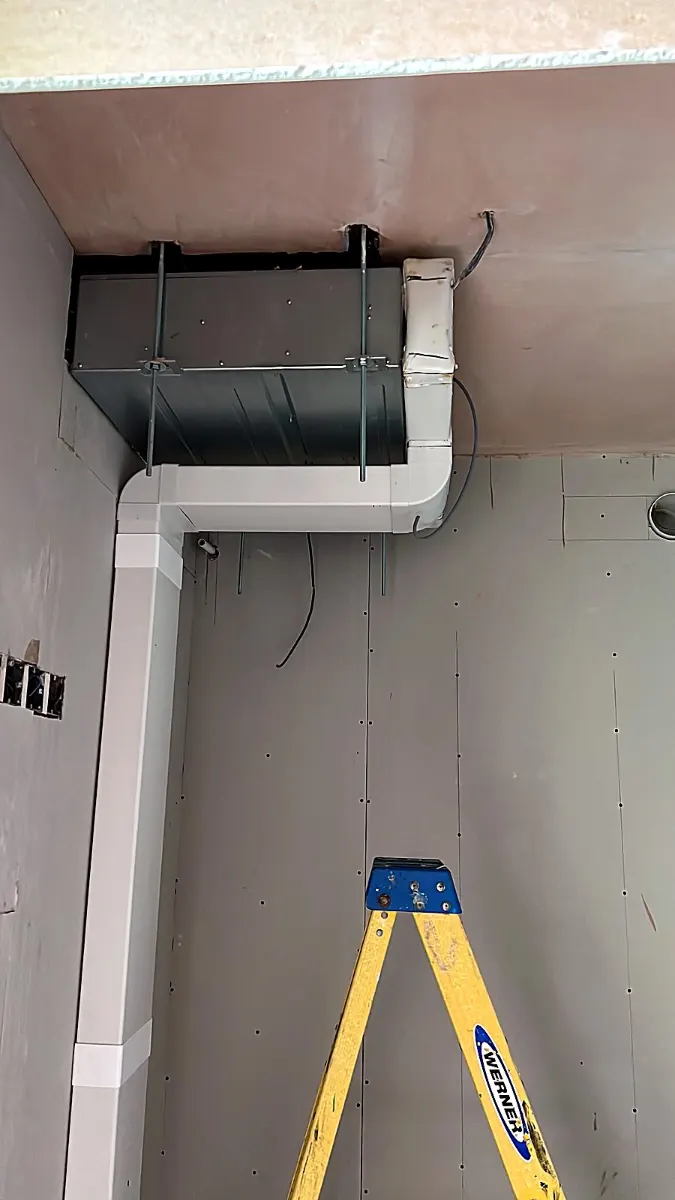
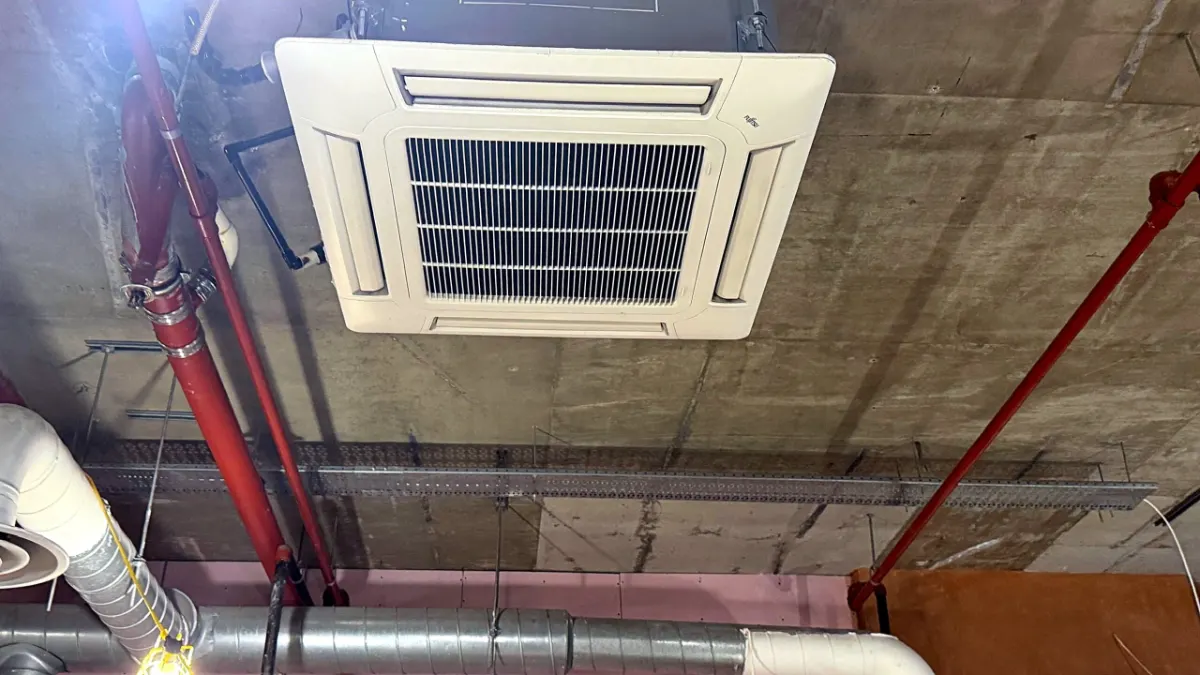
- Discreet indoor equipment that fits the way London flats are built.
Why the hot water matters
In many London flats, hot water is heated by electricity, usually with an immersion heater in a cylinder. Electricity in the UK is expensive, so heating water this way is one of the larger items on a household’s energy bill.
Ordinary air conditioning removes heat from your rooms and throws it away outside. Our system gives you cool rooms with no outdoor unit and uses part of that heat to warm your hot water. On the days you are cooling, your immersion heater has less to do, and that saving comes straight off your electricity bill.
It is a simple idea: in summer you need cooling and you need hot water. Instead of paying for both separately, you get part of the second from the first.
Summer and winter
This is a summer system. It cools your rooms and helps make hot water during the cooling season.
In winter, your home’s existing heating and hot water system carries on exactly as before, whether that is an electric immersion heater, electric heating or a boiler. Nothing about your winter setup has to change.
Central London and outer London
Central London flats: mansion blocks, Georgian and Victorian conversions, listed and conservation-area buildings and high-rise flats, where outdoor units are hardest to get approved. This is where the system helps most.
Outer London and the suburbs: houses and flats that could have an outdoor unit, but whose owners would rather not put one on the front of the building, and who want lower electricity bills for hot water.
Who it suits
- Top-floor and loft flats that overheat in summer
- Flats where the freeholder or managing agent will not allow an outdoor unit
- Homes in listed buildings or conservation areas
- Homes with electric hot water, where the saving matters most
- Landlords who want to offer cooler, more comfortable flats without changing the building’s exterior
Safe and compliant
- Hot water designed to the HSE Legionella guidance (ACoP L8 and HSG274).
- Drinking water kept fully separate from refrigerant.
- Installed by a REFCOM F-Gas certified company.
Is your home suitable?
Tell us about your flat: which floor, how many rooms you want to cool, how your hot water is heated now, and any restrictions from your lease or freeholder. We will tell you honestly whether the system suits your home.
Request a home survey or call free on 0800 772 0333.
See also our air conditioning and heat pump service.
See our air conditioning projects and our air conditioning and heat pump service.
Frequently asked questions
Can I have air conditioning in a flat without an outdoor unit?
Yes. Our system is designed for exactly that situation and needs no outdoor unit outside the flat.
Do I need my freeholder’s permission?
Most leases require permission for alterations inside the flat as well. Because there is no outdoor unit, the request is usually much simpler.
How does it save on hot water?
In summer, part of the heat removed from your rooms is used to warm your hot water, so your immersion heater or boiler uses less energy.
Where does the rest of the heat go?
It is handled within the system, with no outdoor unit. We explain the details for your building at the survey.
Does it work in winter?
It is a summer cooling system. In winter your existing heating and hot water carry on as normal.