Freezer room running costs can quickly impact your business profits. However, with smart planning, you can control energy usage effectively. Moreover, modern efficiency techniques help lower expenses without compromising performance. Therefore, understanding operating costs is essential for long-term savings.
Understanding Freezer Room Running Costs
Freezer room energy consumption depends on several operational factors. Firstly, room size directly affects electricity usage. Secondly, insulation quality controls temperature stability. Additionally, compressor efficiency determines overall power draw. Consequently, poor setup leads to higher energy bills. Meanwhile, well-designed systems improve performance and lower operating expenses.
Main Factors That Increase Energy Bills
Frequent door opening increases cold air loss. As a result, compressors work harder. Poor door seals allow warm air to enter. Therefore, energy demand rises quickly. Similarly, damaged insulation panels reduce cooling efficiency. Additionally, outdated compressors consume excessive power. Hence, regular maintenance becomes essential.
Average Freezer Room Electricity Costs
Daily electricity costs vary by region and usage. However, commercial freezer rooms usually run continuously. On average, small units consume moderate power. Meanwhile, large industrial units require heavy-duty systems. Therefore, energy bills can range from manageable to very high. Consequently, efficient planning helps avoid financial pressure.
Best Insulation Methods to Reduce Heat Gain
High-density polyurethane panels provide excellent thermal protection. Furthermore, thicker insulation reduces heat transfer effectively. Also, installing thermal breaks prevents energy leakage. In addition, airtight sealing around joints improves temperature control. As a result, compressors run less frequently. Ultimately, this reduces electricity costs significantly.
Energy-Efficient Compressors for Lower Power Use
Modern compressors consume less electricity per cooling cycle. Moreover, inverter-driven compressors adjust speed automatically. Therefore, they avoid unnecessary power waste. In addition, scroll compressors operate smoothly and quietly. As a result, overall system efficiency improves. Consequently, monthly energy bills drop steadily.
Smart Temperature Control for Cost Savings
Accurate thermostat settings prevent overcooling. Therefore, freezer rooms maintain optimal temperatures consistently. In addition, digital controllers provide real-time monitoring. Furthermore, automatic defrost cycles prevent ice buildup. As a result, airflow remains stable. Consequently, energy usage stays under control.
Importance of Regular Maintenance
Clean condenser coils improve heat release. Thus, compressors work efficiently. Additionally, checking door gaskets prevents air leakage. Moreover, lubricating mechanical parts reduces friction. Therefore, overall system performance improves. Consequently, energy wastage decreases. Regular servicing also extends equipment lifespan.
Using LED Lighting Inside Freezer Rooms
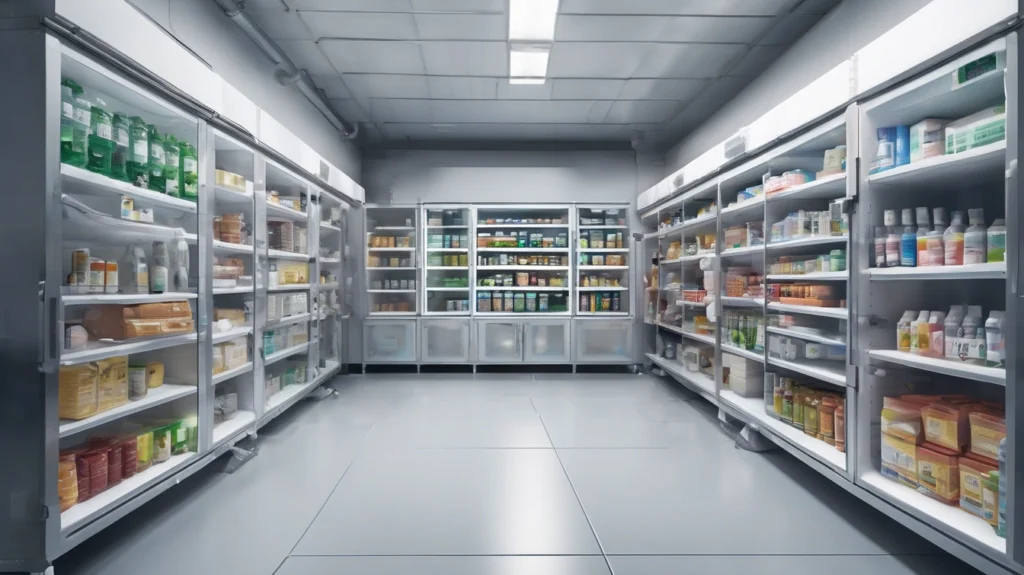
LED lights generate minimal heat during operation. Therefore, they reduce cooling load. Additionally, motion sensors prevent lights from staying on. As a result, unnecessary power usage stops. Furthermore, LED systems last longer. Consequently, replacement costs drop. Overall, lighting becomes more efficient and affordable.
Night Curtains and Air Barriers for Energy Control
PVC strip curtains block warm air entry. Therefore, cold air stays inside. Additionally, air curtains create invisible thermal barriers. As a result, door openings cause less temperature loss. Furthermore, these solutions are affordable. Consequently, they deliver quick energy-saving results.
Load Management for Efficient Cooling
Proper product placement improves airflow circulation. Therefore, cooling becomes faster and more uniform. Additionally, avoiding overloading prevents refrigeration strain. Meanwhile, balanced storage reduces compressor workload. Consequently, energy consumption stays stable. Ultimately, this improves operational efficiency.
Defrost Systems That Minimize Power Use
Automatic defrost systems prevent ice accumulation. Therefore, evaporator coils remain efficient. Additionally, hot gas defrost provides faster results. As a result, downtime reduces. Furthermore, smart defrost timing avoids peak power hours. Consequently, energy costs remain lower.
Renewable Energy Options for Freezer Rooms
Solar panels can partially power cooling systems. Therefore, dependency on grid electricity reduces. Additionally, hybrid energy systems provide backup support. As a result, energy cost stability improves. Furthermore, green energy improves brand image. Consequently, businesses gain environmental credibility.
Practical Tips to Cut Freezer Room Energy Bills
Seal doors tightly at all times. Install high-quality insulation panels. Upgrade to energy-efficient compressors. Use smart thermostats and controllers. Schedule routine maintenance regularly. Switch to LED lighting systems. Add PVC strip curtains on doors.
Final Thoughts on Freezer Room Cost Reduction
Freezer room running costs significantly affect operational budgets. However, energy-efficient strategies deliver measurable savings. Moreover, modern technology improves system control. Therefore, businesses can lower electricity bills consistently. Ultimately, smart investments generate long-term financial benefits.
Leave a Reply