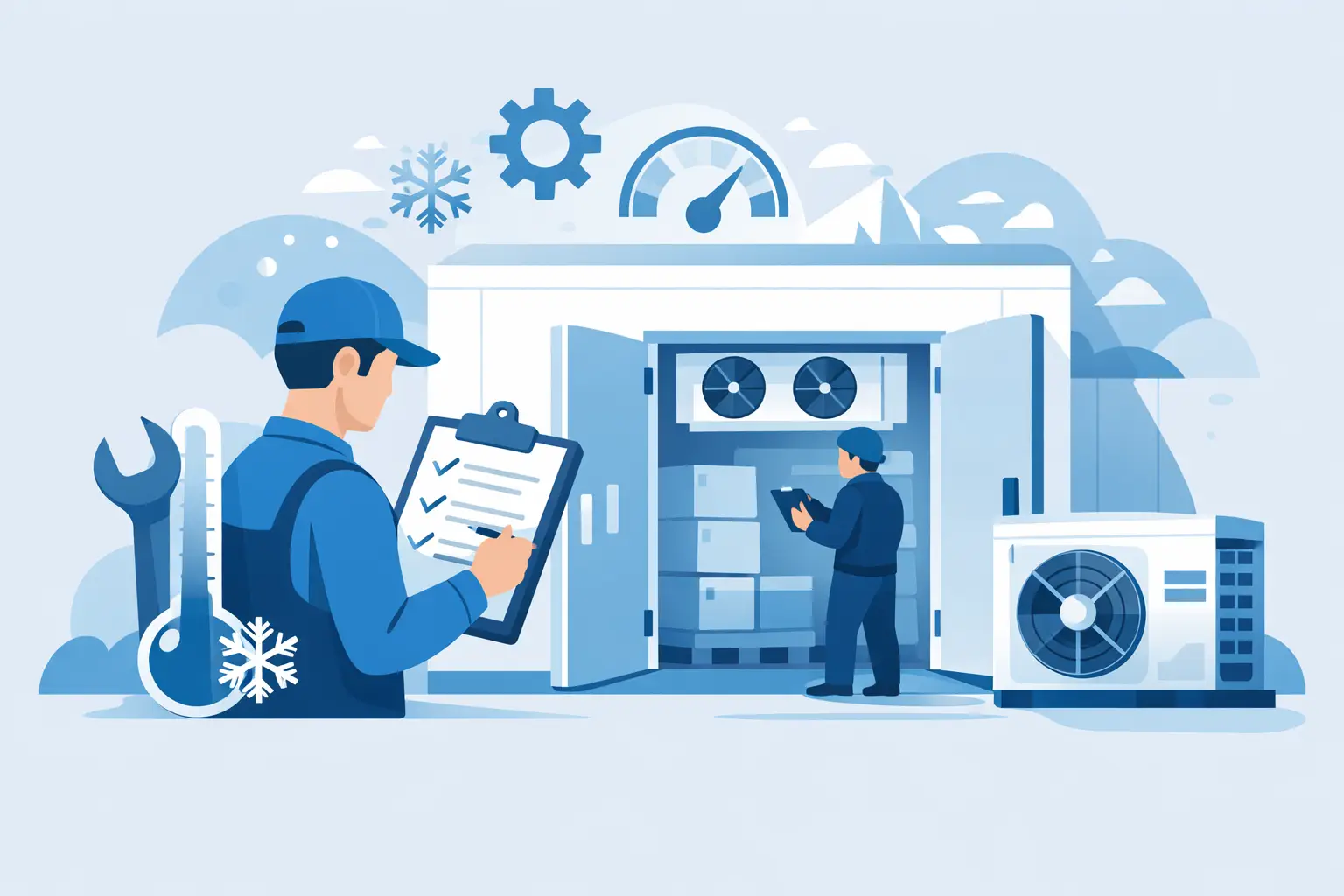
A cold room rarely fails at a convenient time. It tends to happen during a busy service, ahead of a delivery, or over a weekend when stock levels are high and temperature stability matters most. That is why a proper cold room servicing checklist is not just a maintenance document. It is part of protecting stock, avoiding disruption, controlling energy costs, and reducing the risk of emergency repair.
For restaurants, supermarkets, wholesalers and pharmaceutical operators, servicing needs to be practical rather than theoretical. The right checklist should help you spot wear early, keep the system running efficiently, and make it clear when a qualified engineer needs to step in.
What a cold room servicing checklist should cover
A useful checklist looks beyond whether the room is simply running cold. Temperature is only one part of performance. A cold room can still hold set point while using too much power, short cycling, icing up, or putting strain on major components.
A proper service should cover the refrigeration system, electrical controls, airflow, insulation, doors, drainage and overall hygiene. It should also consider how the room is being used. A well-installed system can still struggle if doors are left open too often, stock blocks evaporators, or product loads exceed the room’s design.
That is where routine servicing pays off. It catches the smaller faults before they develop into compressor damage, spoiled stock or compliance problems.
Cold room servicing checklist: the key inspection areas
Temperature performance and control accuracy
Start with the basics. Check the room temperature against the controller reading and confirm that the system is maintaining the correct range for the products stored inside. If there is a difference between the display and the actual room condition, the issue may be with probe accuracy, controller calibration or airflow.
It is also worth reviewing temperature recovery time after door openings. If the room takes too long to pull back down, this can point to poor airflow, refrigerant issues, overloading or door seal problems.
In regulated sectors such as food production and pharmaceuticals, temperature records should also be reviewed during servicing. Repeated fluctuations matter even if they appear brief.
Evaporator coils, fans and airflow
Airflow problems are one of the most common causes of poor cold room performance. Dirty evaporator coils, iced surfaces or failing fan motors all reduce the system’s ability to remove heat effectively.
During servicing, evaporator coils should be checked for dirt build-up, frost accumulation and physical damage. Fans should be inspected for smooth operation, secure mountings and unusual noise. Air circulation around the room should also be assessed. If shelving or stacked stock blocks discharge air, the room may develop hot spots and work harder than it should.
This is one of those areas where a cold room may still appear functional while efficiency drops steadily in the background.
Condenser condition and heat rejection
If the condenser cannot reject heat properly, the whole system is placed under pressure. That means higher energy use, poor cooling and increased wear on the compressor.
Condenser coils should be cleaned as part of planned servicing, especially in kitchens, yards and plant areas where grease, dust or debris build up quickly. Fan operation, motor condition and airflow around the condensing unit also need to be checked. Restricted clearance around outdoor equipment is a simple issue, but it can have a serious effect on performance.
In coastal or exposed environments, corrosion should be monitored closely. It may not cause immediate failure, but it does shorten equipment life.
Refrigerant circuit and operating pressures
A visual and performance check of the refrigerant circuit is essential. Engineers should inspect for signs of leaks, oil traces around joints, abnormal suction or discharge conditions, and any indication that the system is undercharged or overcharged.
Pressure readings, superheat and subcooling all help confirm whether the system is operating as designed. This is not just about cooling performance. Refrigerant issues often drive up running costs long before complete failure occurs.
Leak checks are particularly important where temperature-critical stock is involved. A small leak left unattended can become a major outage.
Compressor health and electrical components
The compressor is doing the heavy lifting, so its condition deserves close attention. During service, the engineer should check running current, start-up behaviour, noise levels, vibration and signs of overheating.
Electrical connections, contactors, relays, overloads and capacitors should also be inspected. Loose terminals and worn electrical components are easy to miss during day-to-day operation, but they are a common cause of breakdowns.
If a system is short cycling, tripping intermittently or drawing unusual current, it should be investigated early. Waiting for complete failure usually turns a manageable repair into a more expensive one.
Defrost system and drainage
In freezer rooms and low-temperature applications, the defrost cycle has a direct effect on reliability. Faulty defrost heaters, timers or sensors can lead to heavy ice build-up on the evaporator, restricted airflow and unstable temperatures.
The drainage system also needs to be checked. Blocked or frozen drains can cause water build-up, slip hazards and secondary icing issues. In some sites, especially busy food environments, drain lines can become contaminated more quickly than expected.
A service visit should confirm that defrost is operating correctly and that condensate is clearing properly.
Door seals, hinges and insulated panels
Cold air loss often starts with the room envelope rather than the refrigeration pack. Worn door gaskets, damaged hinges, poor door alignment and cracks in insulated panels all allow warm air and moisture into the room.
That leads to higher energy use, more icing and extra strain on the system. Strip curtains, heater elements on freezer doors, door closers and threshold condition should all be checked as part of servicing.
Small defects here are worth fixing quickly. They are usually low-cost compared with the energy waste and temperature instability they cause over time.
Lighting, alarms and safety features
A cold room service should also include the parts people tend to overlook until there is a problem. Internal lighting, alarm functions, door release mechanisms and emergency escape systems need to be tested.
If your site relies on remote temperature monitoring or alarm notification, that system should be checked too. An alarm that does not trigger or reach the right person is not much use during an overnight failure.
For facilities managers and business owners, this part of the checklist matters just as much as the mechanical plant. It supports both compliance and staff safety.
How often should servicing be carried out?
There is no single answer for every site. A lightly used cold room in a clean environment may need less attention than a freezer in a busy commercial kitchen with frequent door openings and high ambient heat.
As a general rule, commercial cold rooms should be professionally serviced at least twice a year. High-use sites, critical storage environments and older systems may need quarterly visits. If the room stores pharmaceuticals, high-value stock or products with strict compliance requirements, more frequent checks are often the safer choice.
It also depends on age and condition. Newer equipment may perform well on a standard maintenance schedule, while ageing systems benefit from closer monitoring to avoid surprise failures.
Daily checks your team can handle
Not every check needs an engineer. Site staff can help by keeping an eye on temperature readings, listening for unusual noises, checking whether doors are sealing properly, and making sure product is not stacked against evaporators.
Basic housekeeping goes a long way. Keep condensers free from obvious debris where accessible, report ice build-up early, and do not ignore minor alarms or repeated controller resets. These are often early warnings rather than one-off glitches.
What staff should not do is attempt technical adjustments to controls, refrigerant components or electrical parts without the right training. That usually creates a bigger problem than the original fault.
Why planned servicing costs less than reactive repair
Emergency callouts have their place, and when a room goes down you need fast action. But reactive maintenance is always the more expensive way to run a critical refrigeration asset.
Planned servicing reduces the risk of stock loss, catches efficiency problems earlier and helps extend the life of major components. It also gives you a clearer picture of what the equipment needs over the next 6 to 12 months, which makes budgeting easier.
For many businesses, the real saving is operational. A cold room that holds temperature properly, recovers quickly and runs efficiently creates fewer disruptions for kitchen teams, warehouse staff and site managers.
If you need experienced support with servicing, repairs or a maintenance plan built around your site, UK Cold Room can help assess the condition of your system and keep it working as it should. The right checklist is useful on paper, but it matters most when it is backed by engineers who know what they are looking at.
A cold room should not only work when everything is quiet and conditions are ideal. It should keep performing during busy periods, warm weather and heavy demand – and that starts with servicing done properly.