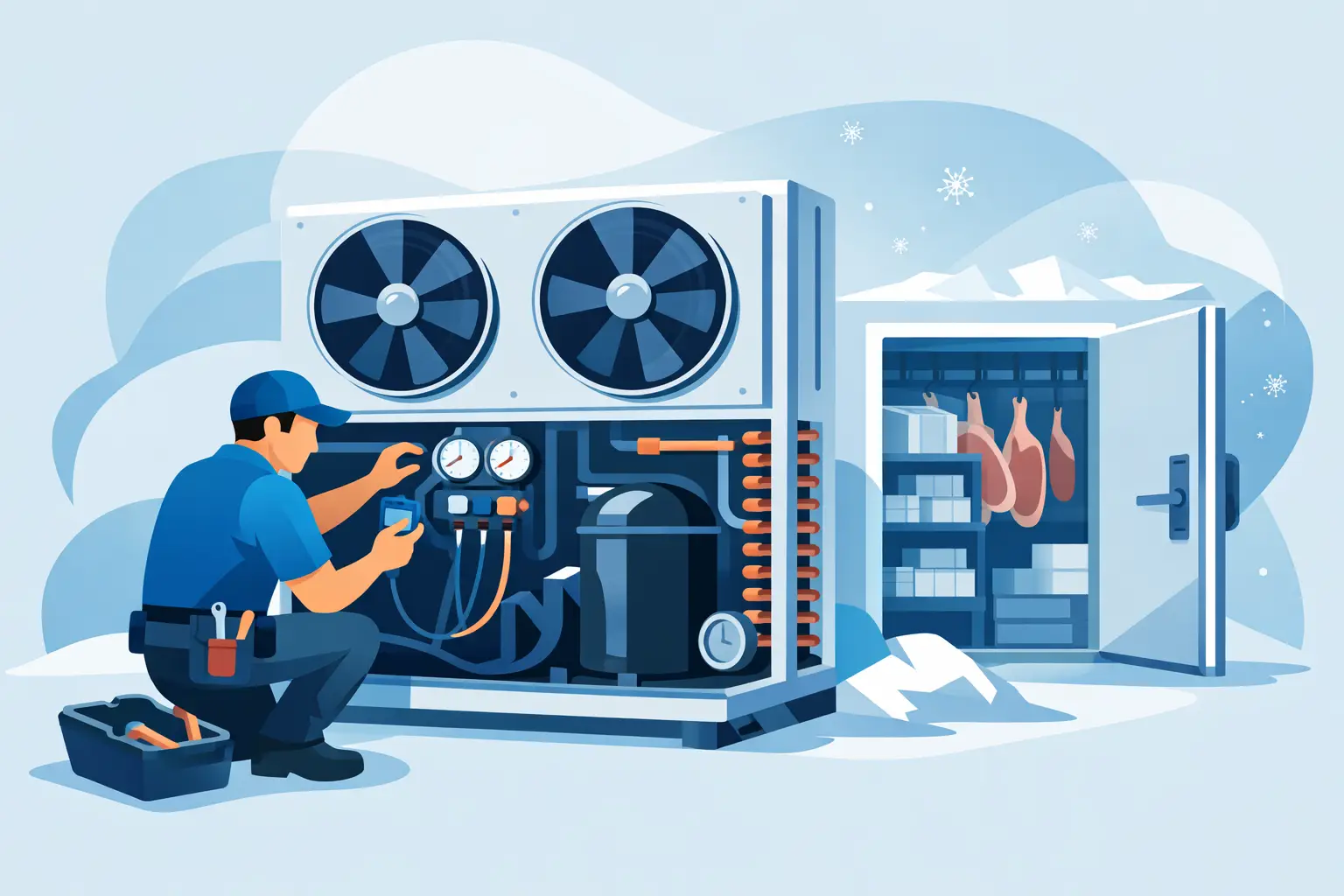
A cold room rarely fails all at once. More often, the first sign is subtle – a temperature drift during a busy service, a condenser fan running louder than usual, or an alarm that clears and then returns. When that happens, cold room condenser repair becomes less about a single part and more about protecting stock, staying compliant, and avoiding a bigger system failure.
For restaurants, supermarkets, wholesalers and pharmaceutical sites, the condenser is one of the hardest-working parts of the refrigeration system. It is responsible for rejecting heat from the refrigerant so the cold room can hold the temperature you set. If it is dirty, damaged, poorly ventilated or electrically faulty, the whole system has to work harder. That usually means higher energy use, reduced cooling performance and more wear on the compressor.
Why the condenser causes so many cold room failures
In commercial environments, condensers deal with far more than normal operating load. They are exposed to grease in kitchens, dust in warehouses, weather on external installations, and blocked airflow where plant space is tight. Even a well-installed system can struggle if maintenance is missed or the unit is undersized for the room’s actual use.
That is why condenser problems often sit behind symptoms that seem unrelated at first. You might notice warm product, excessive ice build-up, rising running costs or a compressor tripping out. The condenser may not be the only issue, but it is frequently part of the chain.
A proper repair starts with diagnosis, not guesswork. Replacing a fan motor without checking coil condition, refrigerant pressures, controls and ambient conditions can leave the root cause untouched. In practical terms, that means the room might start again, but it will not stay reliable for long.
Common signs you need cold room condenser repair
The most obvious sign is poor temperature control. If the room is taking longer to pull down, struggling in warm weather or failing to recover after door openings, the condenser should be checked early. A refrigeration system can only remove heat effectively if it can also reject that heat properly.
Another common warning sign is short cycling. When the system starts and stops too frequently, it can point to pressure problems, fan faults, sensor issues or restricted airflow through the condenser coil. Left unresolved, this puts unnecessary stress on the compressor.
Noise also matters. Rattling fan blades, buzzing contactors and vibrating pipework are not just irritations. They can indicate failing bearings, loose mountings or electrical faults that will usually worsen under load.
Then there is visible condition. Bent fins, heavy dirt build-up, corrosion and damaged guards all affect airflow and performance. On outdoor units across the UK, weather exposure can accelerate wear, especially where units are installed in coastal, high-traffic or poorly protected areas.
Symptoms businesses often notice first
In day-to-day operations, the first concern is usually not the condenser itself. It is spoiled food, staff reporting warm sections of the room, or an unexpected jump in electricity usage. Site teams may also notice the condensing unit running constantly, particularly during peak hours.
For pharmaceutical and temperature-sensitive storage, even a small drift can become a compliance issue. That makes early intervention far cheaper than waiting for a complete breakdown.
What actually goes wrong with a condenser
Most condenser faults fall into a few categories, but the cause is not always simple. Airflow problems are very common. Dirty coils, blocked discharge air, failed fan motors or fan speed control issues can push condensing temperatures too high. The unit then loses efficiency and may begin tripping on high pressure.
Electrical faults are another regular cause of callouts. Failed capacitors, worn contactors, damaged wiring and control faults can stop fans from operating correctly or cause intermittent operation that is harder to trace. These faults are especially disruptive because they can appear random from the customer’s point of view.
Mechanical damage matters too. Impact to the coil, vibration over time, corroded components and refrigerant leaks all reduce performance. In some cases, a condenser coil can be repaired. In others, replacement is the more sensible option, particularly where corrosion is advanced or previous repairs have only bought short-term time.
There is also the issue of system design. Some repair visits reveal that the condenser is not failing in isolation at all. It may be working in poor conditions because of inadequate ventilation, an oversized room load, door usage patterns or deferred maintenance elsewhere in the system. That is where experienced engineering support makes a difference. The repair has to fit the way the cold room is actually being used.
Cold room condenser repair vs replacement
This is where there is no one-size-fits-all answer. A fan motor replacement, deep coil clean, electrical repair or control adjustment can restore good performance when the main structure of the condenser is still sound. That is often the right route when the fault is identified early and the rest of the system is in reasonable condition.
Replacement becomes more likely when the condenser has widespread corrosion, repeated leak issues, obsolete components or chronic efficiency problems. If a business has already paid for multiple reactive visits, a repair that only extends life for a short period may not be good value.
Age alone should not decide it. We regularly see older equipment that is repairable and newer systems that have been compromised by poor installation or harsh operating conditions. The better question is whether the repair will return the room to reliable, efficient service and whether the cost makes sense against the remaining life of the system.
The cost of delaying action
A condenser fault that looks minor can become expensive very quickly. High head pressure raises compressor strain. Longer run times increase energy consumption. Poor cooling puts stock at risk and can interrupt deliveries, prep schedules or order fulfilment.
For a busy commercial kitchen or food retailer, the real cost is usually operational disruption, not just the invoice for the repair. That is why fast attendance and accurate diagnosis matter so much.
What a proper repair visit should include
A competent engineer should do more than swap parts and leave. The condenser needs to be assessed as part of the full refrigeration circuit. That means checking operating pressures, temperature performance, airflow, fan operation, electrical components, controls and visible condition.
If the coil is fouled, cleaning may be part of the solution, but it should be done properly and with care to avoid damaging fins or creating further issues. If there is a refrigerant leak, the leak location and likely cause need to be identified before any recharge is considered. If controls are involved, calibration and control logic should be reviewed rather than assumed.
Good repair work also includes practical advice. If the unit is repeatedly failing because pallets are being stored too close to airflow routes, or because the external plant area is congested, that should be explained clearly. The goal is not just to get the room running again but to reduce the chance of another callout next week.
How planned maintenance reduces condenser breakdowns
Most condenser repairs are preventable to some degree. Planned servicing catches dirty coils, failing fans, loose electrics and pressure issues before they cause a shutdown. It also gives businesses a clearer picture of equipment condition, helping them budget for repair or replacement before it becomes urgent.
Maintenance is particularly important where rooms operate continuously or where stock loss would be costly. In these settings, a reactive-only approach is usually a false economy. The plant may appear to be saving money until the first serious failure lands at the worst possible time.
For businesses that need a reliable partner across installation, service and emergency support, working with one specialist provider usually leads to faster fault finding and better long-term decisions. Teams that already know the system can see patterns, spot recurring issues and recommend practical improvements. That is part of the value UK Cold Room brings to commercial refrigeration support across London and the wider UK.
When to call for urgent support
If the room is not holding temperature, the condensing unit is tripping repeatedly, there is a burning smell, unusual noise, or visible icing linked to poor cooling performance, it is time to call an engineer. Waiting rarely improves the outcome.
If the site stores food, medicines or high-value stock, urgency is even greater. Temporary workarounds may protect product for a short period, but they should not replace a proper repair. Refrigeration faults have a habit of worsening under load, especially during warm weather or peak trading periods.
The right response is quick attendance, clear diagnosis and a repair that deals with the actual fault, not just the symptom. That is what keeps the cold room stable, protects the stock inside it and gives your team one less problem to manage when the day is already busy.
If your condenser starts showing signs of strain, treat it early. A small repair at the right time is usually far easier than recovering from a full cold room failure.