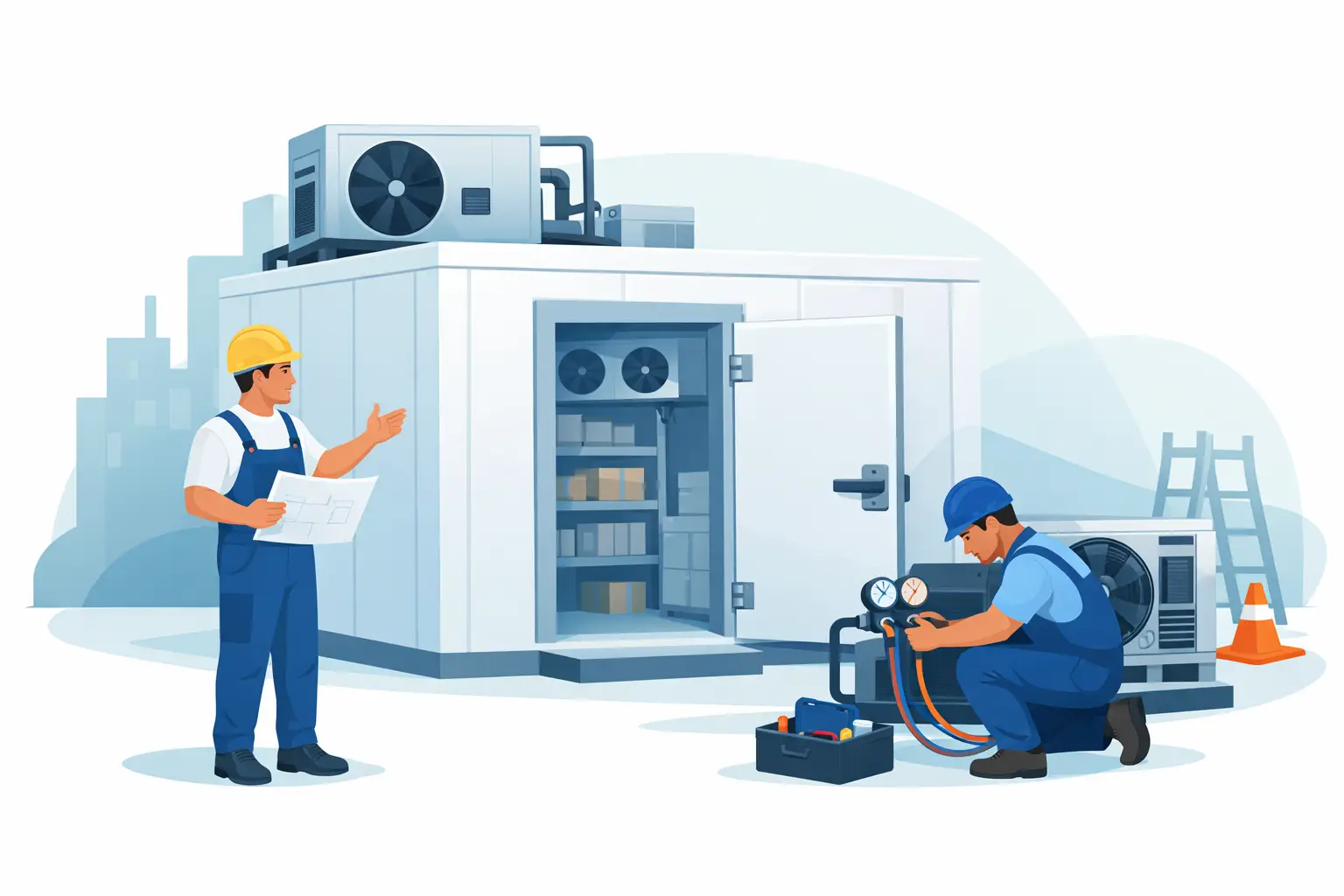
A cold room that is the wrong size, poorly sited or rushed into place will usually tell on you later – in higher energy bills, uneven temperatures, stock loss and avoidable call-outs. That is why a proper commercial cold room installation guide matters before a single panel is delivered. For restaurants, supermarkets, wholesalers and pharmaceutical operators, installation is not just a build job. It is an operational decision that affects compliance, uptime and running costs for years.
Why installation decisions matter more than most buyers expect
Many businesses focus first on capacity. They know how much chilled or frozen stock they need to hold, and they want a room that fits the available footprint. That is sensible, but it is only one part of the job. A cold room has to suit the way your site actually works – delivery patterns, door openings, staff access, ambient temperature, hygiene requirements and future growth all matter.
A room built too tightly around current stock can become a problem within months. On the other hand, oversizing it can mean paying to cool empty space every day. The right answer usually sits somewhere between those two extremes, and getting there takes proper planning rather than guesswork.
Commercial cold room installation guide: start with the room’s real purpose
Before design begins, the first question is simple: what exactly is the room storing, and at what temperature? A chilled prep room for a busy kitchen does not need the same specification as a freezer room for long-term wholesale stockholding. A pharmaceutical cold room may need closer temperature tolerances, tighter monitoring and stronger compliance controls than a general food storage area.
This stage shapes almost everything that follows, including insulation thickness, refrigeration capacity, door choice, floor finish and alarm or monitoring systems. It also affects how the room should be used. If staff are in and out all day, fast access and airflow management become far more important than they would in a low-traffic storage area.
It is also worth thinking about tomorrow, not just today. If your stock range is expanding or your operation is moving towards higher-volume service, that should be built into the specification now. Retrofitting a room that was undersized from day one is rarely the cheapest route.
Site assessment is where good projects are won or lost
A proper survey prevents expensive surprises. At this point, the installer should be looking beyond the obvious dimensions of the space. Ceiling height, floor condition, drainage, ventilation, access for delivery, power supply and plant location all need checking before installation is agreed.
The surrounding environment matters as well. If the cold room sits beside a hot kitchen line, in a loading area with frequent door openings, or in a plant space with poor airflow, the system will be working against those conditions from the start. That does not mean the project cannot go ahead. It means the design has to reflect reality.
Access is another detail buyers sometimes underestimate. In existing buildings, getting insulated panels, evaporators and condensing equipment into position can be more awkward than expected. A straightforward design on paper may become complex if there are tight corridors, stairs, restricted working hours or trading operations continuing during the fit-out.
Design is about performance, not just dimensions
A reliable cold room is the result of several decisions working together. Panel specification, floor build-up, door design, evaporator placement and condensing unit sizing all affect daily performance. If one element is wrong, the whole system tends to suffer.
Insulation needs to match the target temperature and the operating environment. Chilled rooms and freezer rooms require different levels of thermal protection, and cutting corners here usually leads to energy waste and strain on the refrigeration system. Door choice matters too. In high-traffic sites, the wrong door arrangement can mean constant temperature recovery issues and frost build-up.
Airflow is one of the most overlooked parts of cold room design. If stock is packed too tightly or the evaporator is poorly positioned, temperatures can vary across the room. That can be a compliance issue in food and pharmaceutical environments, and it can quietly reduce shelf life even when the room appears to be working.
Power, plant and controls need early attention
Cold room projects often slow down when electrical requirements are treated as an afterthought. Refrigeration equipment, lighting, alarms, heaters and control panels all need suitable power provision. If the existing supply is limited or the distribution board is already heavily loaded, that should be identified before installation begins.
Plant location also deserves careful thought. Outdoor condensers need proper positioning for airflow, service access and weather exposure. Indoor plant areas must have enough ventilation to reject heat effectively. If the condensing unit is boxed into a poorly ventilated corner, performance and lifespan will suffer.
Controls should suit the risk level of the business. Some sites need simple, dependable temperature control. Others benefit from remote monitoring, temperature logs, alarm notifications or out-of-hours alerts. The right level depends on what is stored and how serious the impact would be if temperatures drifted.
Compliance should be built in, not added later
Any commercial cold room installation guide should make this clear: compliance is part of the installation, not an optional extra. Food businesses need temperature control that supports hygiene and storage requirements. Pharmaceutical and healthcare settings may require tighter validation and record-keeping. Refrigeration systems must also meet current environmental and safety standards.
This is another reason experienced installation matters. It is not just about getting a room cold. It is about making sure the room is fit for purpose, safe to use and supportable over time. A cheaper installation can become costly very quickly if it leads to failed inspections, poor temperature consistency or repeated breakdowns.
Installation day is only one part of the process
When the project moves to site, coordination becomes critical. The room structure has to be assembled accurately, sealed properly and finished to a standard that supports hygiene and thermal performance. Refrigeration equipment then needs to be installed, pressure tested, commissioned and checked under load.
Good installers also think about how the site will use the room from the first day. Shelving layout, door swing, lighting position and staff movement all affect how practical the finished room feels. A technically sound installation can still be frustrating if it has not been planned around real working patterns.
For trading businesses, timing matters just as much as quality. Many sites need installation completed around deliveries, service hours or live operations. In busy parts of London and across the UK, restricted access and tight programmes are common, so project planning needs to be realistic from the outset.
The cheapest quote is rarely the cheapest room to own
It is understandable to compare installation prices closely. Cold rooms are a significant investment, and businesses need cost control. But headline price alone can hide important differences in panel quality, refrigeration components, installation standard and aftercare support.
A cheaper system may cost less to fit and more to run. It may struggle in summer, recover slowly after door openings or need more frequent repairs. Better design and better components usually pay back through lower energy use, fewer interruptions and longer service life.
There is always a balance to strike. Not every site needs the most complex specification available. But every site does need a room that is properly matched to its load, use pattern and compliance needs. That is where practical engineering advice makes a real difference.
Aftercare is part of installation quality
A cold room should not be treated as finished the moment it reaches temperature. Ongoing servicing, planned maintenance and fast repair support are part of protecting the original investment. Even a well-installed system will lose efficiency if coils block, door seals wear or refrigerant issues go unnoticed.
This is why many businesses prefer one provider that can design, install, maintain and troubleshoot the system over its full life. It keeps accountability clear and usually leads to faster fault finding when problems appear. For critical storage, that continuity matters.
A good handover should include clear operating guidance as well. Staff need to understand loading practices, door discipline, basic checks and when to report unusual noise, icing or temperature fluctuation. Small habits have a direct effect on performance.
Choosing the right installation partner
The best installer is not simply the one who can fit a cold room. It is the one who asks the right questions before the build starts, explains trade-offs clearly and remains available when the room is in service. That means understanding your stock, your site pressures and the cost of downtime to your business.
For many operators, the real test is what happens when conditions are not ideal. Existing buildings, limited access, live trading and urgent timescales are common in this sector. A dependable engineering partner will work through those constraints without losing sight of long-term reliability.
If you are planning a new cold room, treat installation as the foundation of performance rather than a line item to get through. A room that is designed properly, installed properly and supported properly gives you something every operation values – one less thing to worry about when the day gets busy.