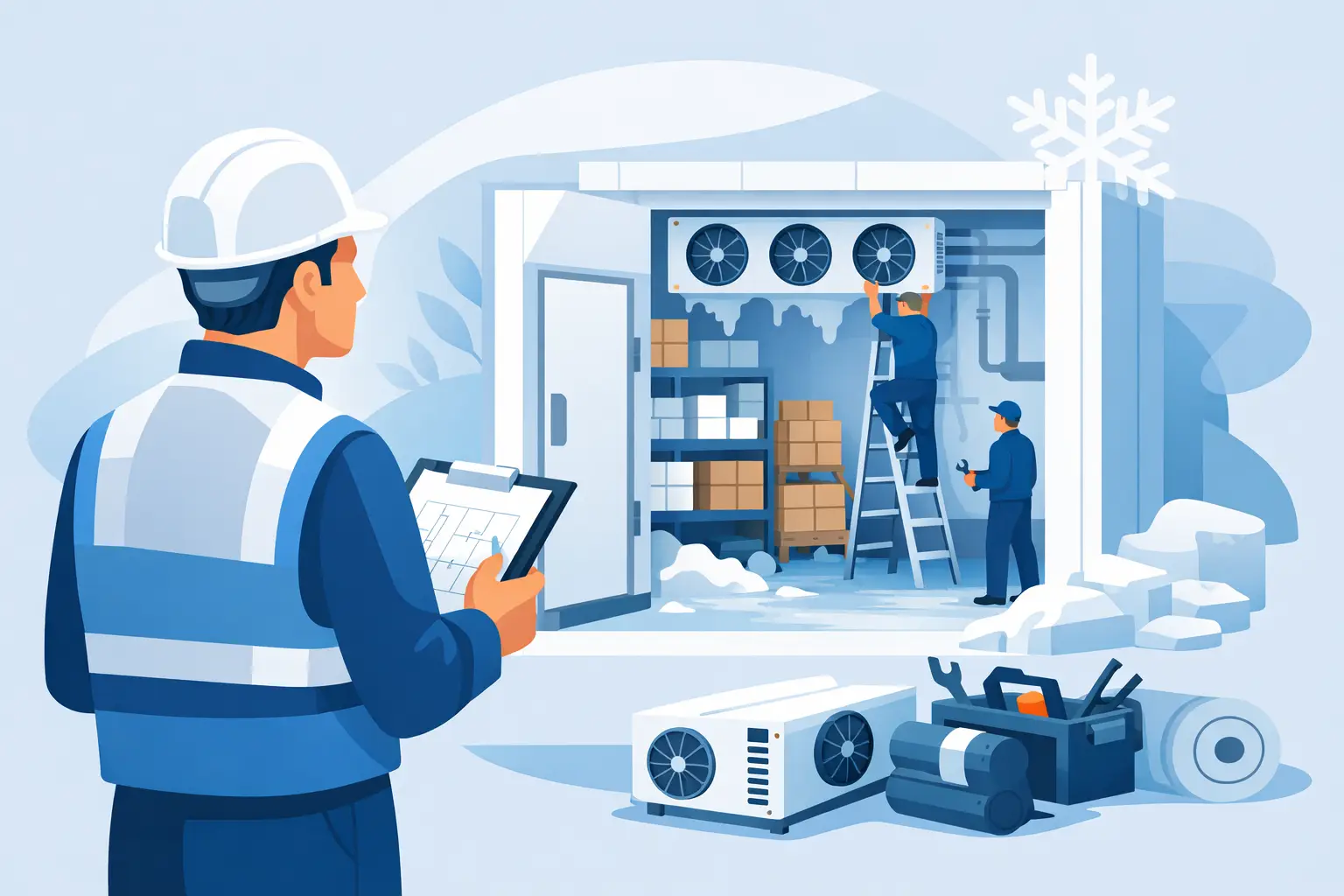
If your cold room is holding temperature only just, your energy bills keep creeping up, or callouts are becoming part of the monthly routine, a retrofit is usually worth a serious look. This guide to cold room retrofits is for businesses that need reliable chilled or frozen storage without the cost and disruption of a complete rebuild.
For many sites, the problem is not that the cold room has reached the end of the road. It is that one or two parts of the system are no longer doing the job properly. Ageing panels, inefficient condensing units, failing door seals, outdated controls and poor airflow can all drag performance down. The result is familiar – unstable temperatures, rising running costs, stock risk and more pressure on staff.
What a cold room retrofit actually means
A retrofit is an upgrade to an existing cold room rather than a full replacement. That can be quite minor, such as replacing damaged insulation panels or fitting new door furniture, or more involved, such as changing the refrigeration plant, installing modern controllers and improving the room layout to support better airflow.
The right scope depends on the condition of the room, the products being stored and how the site operates. A busy restaurant with frequent door openings has different demands from a pharmaceutical storage area with tighter temperature tolerances. That is why good retrofit work starts with diagnosis, not guesswork.
When this guide to cold room retrofits matters most
Retrofit projects tend to make sense when a cold room still has a sound basic structure but performs poorly in day-to-day use. If the room shell is in decent condition, the floor is intact and the site layout still suits your operation, upgrading key components can deliver a strong return without the downtime of building from scratch.
There are a few common signs that point in this direction. One is repeated breakdowns on older equipment, especially compressors and evaporators that are being pushed harder than they should be. Another is temperature inconsistency across the room, which often shows up as warmer spots near the door or shelving that blocks circulation. Condensation, ice build-up, noisy fans and doors that do not close cleanly are also warning signs.
Energy use is another major trigger. Older systems often keep running, but they do so inefficiently. If your refrigeration plant is cycling too often, struggling in warmer weather or running constantly to recover temperature after access, the equipment may still work, but it is costing you more than it should.
What should be assessed before any retrofit
A proper survey should cover more than the condensing unit. The refrigeration system matters, but so does the condition of the room itself and the way your team uses it.
Panels and insulation should be checked for damage, moisture ingress and thermal loss. If the shell is compromised, even the best new equipment will work harder than necessary. Doors need close attention too. Worn seals, misaligned hinges and damaged thresholds can cause constant cold loss and moisture problems.
Controls are often overlooked. Older thermostats and basic controllers may not give you accurate readings, sensible alarm settings or efficient defrost management. Upgrading controls can improve both performance and visibility, especially where compliance records matter.
Airflow also deserves careful review. A room can fail to hold stable temperature not because the system is undersized, but because stock is packed badly, evaporators are obstructed or the internal layout has changed since the original installation. In many cases, small operational changes paired with targeted engineering work make a noticeable difference.
The most common cold room retrofit upgrades
The most effective retrofit work is usually selective. Replacing everything is not always necessary, and partial upgrades often solve the real problem faster.
Refrigeration plant upgrades are common where older equipment has become unreliable or expensive to run. A modern condensing unit, matched properly to the room load, can improve efficiency and recovery times. That said, bigger is not always better. Oversized systems can short cycle, wear faster and create avoidable operating costs.
Evaporator and fan upgrades can help where airflow is poor or ice build-up is recurring. Newer fan motors and correctly selected evaporators often reduce energy use while maintaining tighter temperature control.
Door upgrades are often among the best value changes. New seals, self-closing mechanisms, strip curtains or faster access solutions can cut cold loss significantly, particularly in high-traffic food and warehouse environments.
Panel repairs or replacements may be needed where insulation has deteriorated. This is especially important if there are signs of water ingress or damaged joints, because thermal loss through the shell will keep affecting performance no matter how often mechanical parts are repaired.
Control system upgrades are another strong option. Digital monitoring, alarm integration and more accurate temperature management can help operators respond quickly before stock is affected. For sites under food safety or pharmaceutical compliance pressure, better control and recording is often a key part of the decision.
Retrofit or full replacement?
This is where it depends. If the room footprint no longer suits your workflow, the panel system is badly deteriorated and the plant is near the end of its service life, a full replacement may be the better long-term choice. Spending money on a patchwork of upgrades only makes sense if the core asset is worth keeping.
On the other hand, many businesses assume replacement is the only answer when it is not. If the shell is fundamentally sound and the problems sit mainly with controls, access points or ageing mechanical equipment, retrofit work can restore reliability at a lower capital cost and with less disruption.
A practical engineering assessment should look at both options honestly. The cheapest route upfront is not always the cheapest over three to five years. Equally, replacing an entire cold room because of one weak component is often unnecessary.
Planning the work without disrupting operations
For live commercial sites, timing matters almost as much as technical scope. Cold storage is rarely something you can switch off for a week and revisit later. That is why retrofit planning needs to account for stock handling, temporary storage, access windows and how the work will affect your team.
In busy kitchens and food service environments, work may need to be phased around service hours. In wholesale or warehouse settings, installation may need to happen in sections to keep product moving. Pharmaceutical and regulated environments may require tighter validation and documentation before changes go live.
This is also where having one engineering partner helps. Design, installation, testing and aftercare all need to connect. If different trades are handling separate parts without a clear plan, delays and missed details become more likely.
Costs, savings and payback
Retrofit costs vary widely because no two rooms are the same. A door and control upgrade is a very different project from replacing plant and rebuilding damaged sections of panel. The useful question is not just what the retrofit costs, but what the existing room is costing you now.
That includes callouts, stock loss risk, wasted labour, compliance pressure and energy use. A system that appears cheaper because it still runs may be draining money quietly every month.
Payback is usually strongest where energy waste and breakdown frequency are already obvious. Sites with long operating hours, high door traffic or older refrigeration equipment often see the clearest gains. Some upgrades pay back quickly, while structural improvements may be more about long-term stability and asset life than immediate savings.
Choosing the right contractor for cold room retrofit work
Retrofit projects reward practical experience. The installer needs to understand refrigeration systems, room construction, airflow, controls and how commercial sites actually operate under pressure. This is not just a case of swapping parts and hoping for the best.
Ask how the assessment will be carried out, what assumptions sit behind the proposed works and whether the contractor can support the system after installation. Ongoing maintenance matters. So does emergency response if a problem appears once the room is back in service.
For businesses in London and across the UK, speed of response can be as important as technical quality. A cold room failure does not wait for a convenient time, and retrofit work should leave you with a system that is easier to support, not harder.
A retrofit should solve a business problem
The best retrofit projects are not driven by equipment alone. They are driven by what your business needs the cold room to do reliably every day – protect stock, keep temperatures stable, reduce running costs and support compliance without constant firefighting.
If your current cold room is giving you warning signs, dealing with them early usually gives you more options. A well-planned retrofit can extend the life of the asset, improve efficiency and take pressure off your operation before a minor issue turns into a full breakdown.