Friday lunch service is not the moment to find out your cold storage was undersized, badly laid out or running with a tired compressor. In a restaurant, refrigeration is not just another utility. The best refrigeration systems for restaurants protect stock, support food safety, keep prep moving and stop expensive disruption before it starts.
What counts as “best” depends on your menu, service style, delivery pattern and available space. A small café kitchen has very different demands from a high-volume restaurant with separate chilled, frozen and prep areas. The right answer is usually a combination of systems designed to work together, not a single unit picked from a catalogue.
What the best refrigeration systems for restaurants actually look like
In practice, most restaurants need a refrigeration setup with more than one job in mind. Bulk storage, day-to-day prep access, frozen goods, drinks service and waste reduction all place different demands on equipment. The strongest setups are built around workflow first, then capacity, then energy performance.
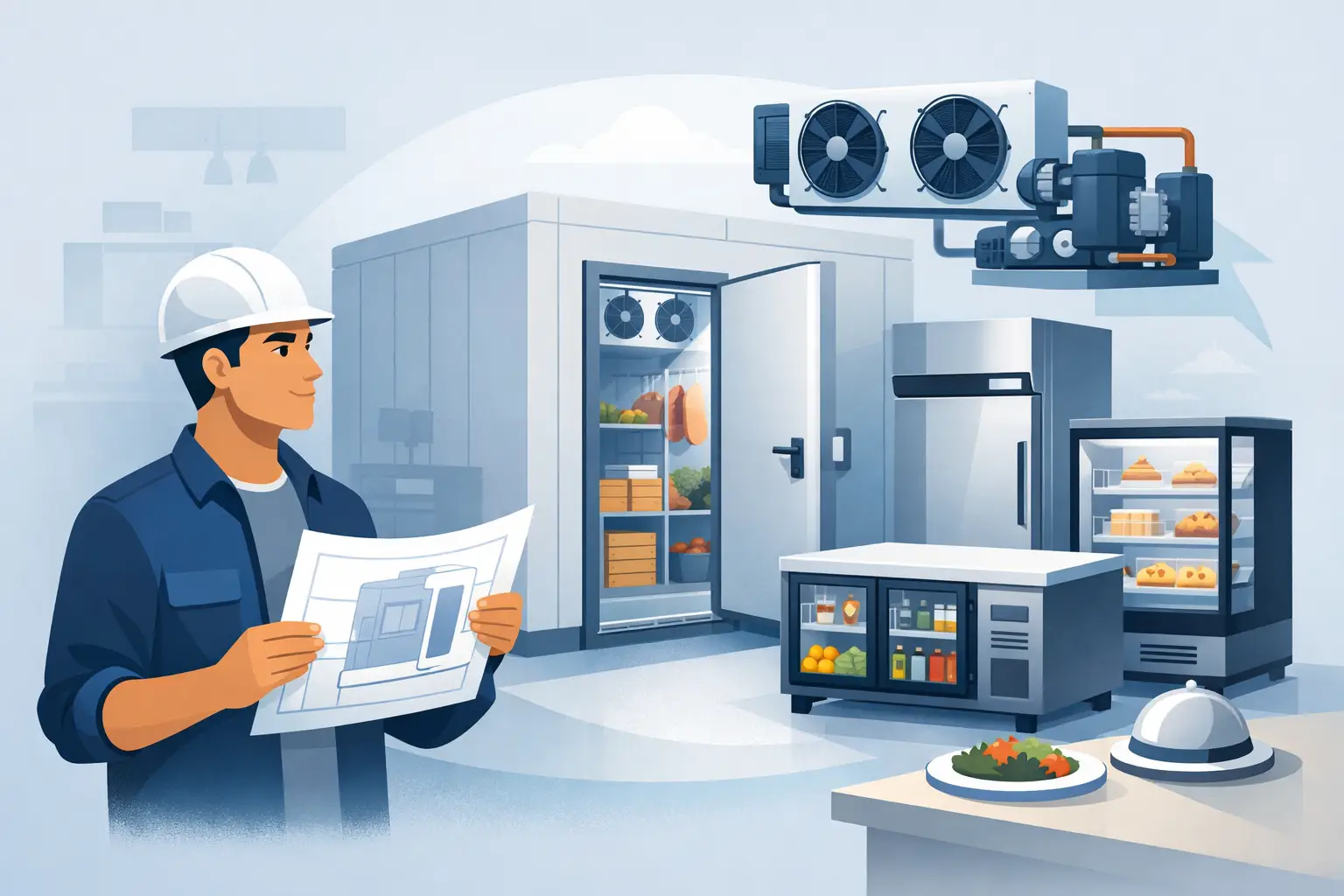
For many sites, that means a walk-in cold room for main chilled stock, a freezer room or freezer cabinet for frozen items, undercounter or upright refrigeration near prep stations, and display or bar refrigeration where front-of-house service needs it. If one part of the system fails or becomes overloaded, the whole operation feels it.
This is why the best refrigeration choice is rarely about buying the most expensive unit. It is about matching the equipment to the way the kitchen actually works during deliveries, prep, service and close-down.
Walk-in cold rooms are often the backbone
For restaurants handling regular deliveries, fresh produce, dairy, meat and prepped ingredients, a cold room is usually the most practical option. It gives better storage volume than multiple reach-in cabinets and can make stock rotation far easier if the layout is planned properly.
A well-designed cold room also helps with consistency. Temperature recovery is generally better when the system is correctly sized, doors are suitable for the traffic level and shelving allows decent airflow. That matters in busy kitchens where staff are in and out throughout the day.
The trade-off is space and upfront cost. Not every site has the footprint for a walk-in, especially in older city premises where kitchens were never designed for modern refrigeration loads. But where space allows, a cold room often provides better long-term value than trying to spread stock across several overloaded cabinets.
When a freezer room makes sense
A freezer room is not essential for every restaurant, but it becomes worthwhile when frozen stock is a regular part of service or when volume purchasing helps control margin. It is also useful for sites that need separate frozen storage to avoid cluttering prep areas with chest freezers or tall cabinets.
As with chilled storage, the key issue is usage pattern. If frozen goods are limited to chips, desserts and a few backup lines, a quality freezer cabinet may be enough. If frozen stock turns over heavily, a properly designed freezer room is usually the more dependable option.
Reach-in cabinets still matter
Walk-ins handle volume, but reach-in cabinets support speed. Upright fridges and freezers are often the best choice for line-side access, pastry sections, smaller kitchens and split service areas where staff need ingredients close at hand.
The mistake many operators make is asking these cabinets to do bulk storage as well. That can lead to poor airflow, warm spots and doors being opened far more than they were intended for. Cabinets work best when they are supporting service, not replacing proper central storage.
Undercounter units, chef base refrigeration and refrigerated prep tables also earn their place in restaurants where movement and timing matter. They cut steps during service and can improve kitchen flow, but only when they are specified with enough capacity and positioned away from major heat sources.
Remote vs integral systems
This is one of the most important decisions and one of the least understood. Integral systems have built-in condensing units. They are straightforward to install and often suit smaller sites, bars and cafés. The downside is that they release heat into the room and can add to noise in already tight kitchen spaces.
Remote systems place the condensing unit away from the main refrigerated cabinet or room. They are often better for larger restaurants, hotter kitchens and sites trying to improve staff comfort and overall efficiency. They can cost more to install, and the design needs to be right from the start, but they often perform better in demanding environments.
If a kitchen already struggles with ambient heat, fitting more integral refrigeration can create a circular problem. The room gets hotter, the refrigeration works harder, energy use rises and component wear increases. In that case, a remote solution is often the better engineering choice.
Energy efficiency is not a side issue
Restaurants watch food cost closely, but refrigeration energy use often gets less attention than it should. Systems run around the clock. Small efficiency gains add up quickly, especially where there are multiple cabinets, cold rooms and freezer systems on site.
Good insulation, properly fitted doors, quality controls, EC fans, LED lighting and correctly sized compressors all make a difference. So does installation quality. Even efficient equipment performs badly if pipework is poorly arranged, airflow is restricted or condensers are left to clog up.
The best refrigeration systems for restaurants are not just efficient on paper. They stay efficient because the design suits the site and the equipment is maintained properly. That is where long-term running cost is won or lost.
Don’t ignore maintenance access
This point is often missed during fit-out. If filters, condensers, fan sections and control components are awkward to reach, basic servicing gets delayed. That usually means declining performance, higher energy consumption and more reactive repairs later.
Restaurants need systems that can be maintained without turning every visit into a major disruption. Easy access may not look exciting at install stage, but it matters a great deal over the life of the equipment.
Compliance, food safety and temperature stability
A refrigeration system is only useful if it holds temperature reliably during real kitchen conditions, not just under ideal test settings. Frequent door openings, warm deliveries, heavy loading and nearby cooking equipment all affect performance.
That is why temperature stability matters more than headline capacity alone. A unit that looks large enough on paper may still struggle if the evaporator is undersized, the door arrangement is wrong or the kitchen environment is too demanding.
For restaurants, compliance is tied directly to day-to-day reliability. Poor temperature control can mean wasted stock, failed checks and unnecessary pressure on staff. A proper system design reduces those risks before they appear.
How to choose the right setup for your restaurant
Start with stock profile and service rhythm. How much chilled and frozen product do you carry at peak? How often are deliveries made? What needs to be close to the line, and what can sit in main storage? There is no value in installing a large cold room if the prep area still bottlenecks because line-side refrigeration was overlooked.
Then look at the building itself. Space, access, ventilation, heat load and power supply all shape what is practical. Basement kitchens, restricted service corridors and older properties in places such as London often need more careful planning than a new-build commercial unit.
Finally, think beyond installation day. Restaurants need refrigeration that can be repaired quickly, serviced sensibly and supported over time. That is where working with a specialist engineering partner matters. A provider that can design, install, maintain and respond to faults is usually better placed to keep a restaurant operational than one that simply supplies equipment.
The systems that usually work best
For many full-service restaurants, the strongest arrangement is a cold room for main chilled stock, a separate freezer solution based on volume, and dedicated prep refrigeration near workstations. Bars and front-of-house areas often benefit from separate drinks refrigeration rather than sharing kitchen capacity.
Smaller restaurants may do well with a compact cold room and a limited number of high-quality cabinets rather than trying to fill every corner with standalone units. Larger sites, hotel kitchens and multi-station operations typically benefit from a more integrated design, often with remote plant, clearer zoning and planned maintenance from the outset.
There is no universal winner because restaurants are not all running the same operation. The best choice is the system that keeps temperature stable, supports service, controls energy use and gives you confidence that a busy shift will not be derailed by avoidable refrigeration problems.
If you are reviewing your current setup, treat recurring warm spots, overloaded cabinets, frost build-up and rising energy bills as early warnings rather than minor annoyances. Most refrigeration failures give you clues before they become emergencies, and acting on them early is usually far cheaper than losing stock in the middle of service.