A walk-in freezer is a game-changer for businesses in the food industry. It offers ample storage space for bulk items, reducing restocking frequency.
This type of freezer is essential for maintaining food safety standards. It keeps perishable goods at consistent, safe temperatures, preventing spoilage.

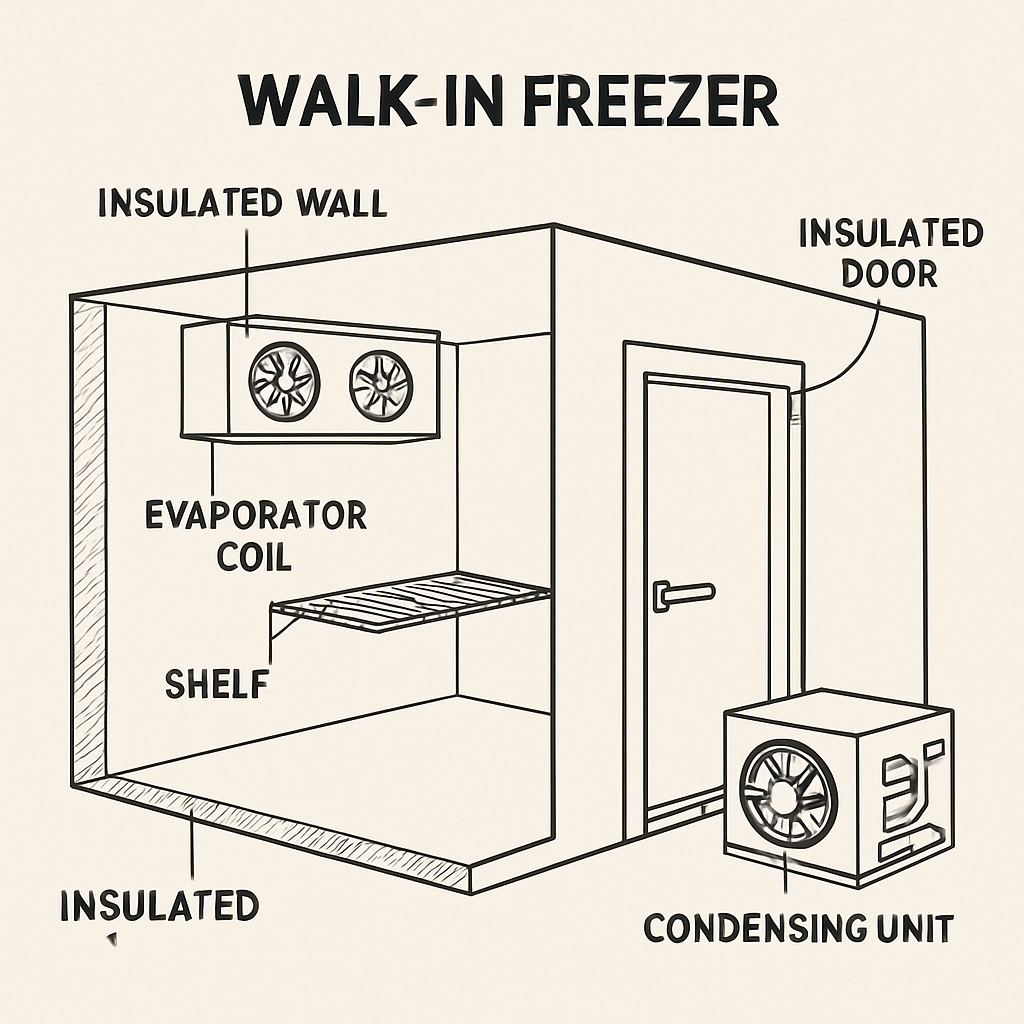
Walk-in freezers are equipped with key components like evaporator coils and condensers. These parts ensure efficient cooling and energy efficiency.
The door of a walk-in freezer is designed to seal tightly. This prevents cold air from escaping, which is crucial for energy savings.
Temperature control is vital in these freezers. It helps maintain food quality and extends the shelf life of products.
Investing in a walk-in freezer can enhance business efficiency. It supports food preservation and reduces energy costs over time.
What Is a Walk-In Freezer and How Does It Work?
A walk-in freezer is a large, enclosed storage space designed to keep food frozen. It is an essential asset for businesses in food-related sectors.
These freezers function similar to household freezers but on a much larger scale. They are designed to maintain very low temperatures efficiently.
Key components like the evaporator coil and condenser work together to cool the interior. The evaporator coil absorbs heat while the condenser expels it outside.
Temperature control systems allow for precise settings. This ensures the freezer maintains the specific cold environment necessary for food safety.
Key Features of a Walk-In Freezer:
- Heavy-duty door with secure sealing
- Advanced cooling systems
- Temperature control mechanisms
- Durable insulated walls
Walk-in freezers offer significant benefits over standard freezers by providing ample storage and improved functionality. They support efficient organization and rapid access to stored goods.
Key Components of a Walk-In Freezer
A walk-in freezer consists of several key components, each playing a vital role in its operation. These elements ensure that food stays frozen and fresh.
The evaporator coil is critical for absorbing heat from the interior. It works by converting liquid refrigerant into gas, which cools the air.
The condenser is equally important. It expels heat absorbed by the evaporator coil, usually to the outside environment, maintaining low temperatures.
Another essential part is the walk in freezer compressor. It circulates refrigerant between the evaporator and condenser, keeping the cooling process continuous.
The walk in freezer door is designed to close tightly. This prevents cold air from escaping, conserving energy and maintaining consistent temperatures.
Essential Walk-In Freezer Components:
- Evaporator coil
- Condenser
- Compressor
- Airtight door
- Insulation panels
In addition to these components, a reliable temperature control system is vital. It allows precise management of internal conditions. This ensures food preservation and compliance with safety standards. Proper installation and maintenance of these elements are crucial for efficient operation and longevity.
Advantages of Installing a Walk-In Freezer for Your Business
Investing in a walk-in freezer offers numerous benefits for commercial enterprises. It streamlines operations and enhances food quality.
Firstly, walk-in freezers provide substantial storage space. Businesses can buy in bulk, reducing restock frequency and saving money.
Temperature control is another major advantage. Walk-in freezers maintain stable conditions, crucial for food safety compliance.
Moreover, they foster efficient inventory management. By organizing products systematically, staff can quickly find what they need.
Energy efficiency stands out as a significant benefit. Walk-in freezers consume less energy compared to multiple smaller units.
This investment also reduces food waste. By extending shelf life, businesses can save on food costs and minimize spoilage.
Lastly, installing a walk-in freezer can enhance operational efficiency. It simplifies daily tasks, allowing staff to focus on customer service and other responsibilities.
Key Benefits:
- Increased storage capacity
- Precise temperature control
- Improved inventory management
Operational Advantages:
- Energy efficiency
- Reduced food waste
- Enhanced daily operations
The versatility of walk-in freezers allows them to adapt to various business models. Whether in hospitality, healthcare, or retail, they provide customized solutions. Each business can tailor its freezer to meet specific needs, optimizing space and workflow. Ultimately, a walk-in freezer is a wise investment for businesses seeking efficiency and quality in their food storage solutions.
Food Preservation and Temperature Control
Walk-in freezers play a pivotal role in food preservation by maintaining consistent low temperatures, essential for slowing bacterial growth. This extends the shelf life of perishable products significantly.
Temperature control in walk-in freezers ensures that food items remain at optimal conditions for extended periods. Fluctuations in temperature can cause food spoilage, which is why precise control mechanisms are crucial.
Advanced temperature control systems in walk-in freezers offer accurate monitoring. These systems keep a constant check on internal conditions, allowing immediate adjustments when necessary.
Maintaining proper temperature settings is a key factor for compliance with health regulations. It prevents contamination and ensures consumer safety, a top priority for any business handling food products.
Benefits of Temperature Control:
- Extends food shelf life
- Prevents spoilage and contamination
- Ensures compliance with health standards
Efficient temperature control not only aids in preserving food but also enhances the quality of service, building customer trust and satisfaction. These features make walk-in freezers indispensable in the food service industry.
Energy Efficiency and Cost Savings
Investing in a walk-in freezer can lead to significant energy savings. These units are designed to operate efficiently, reducing overall energy consumption compared to multiple smaller freezers.
Energy-efficient components, such as high-efficiency compressors and well-insulated panels, play a major role. These elements ensure minimal energy loss, which contributes to cost savings over time.
Adopting energy-efficient models aligns with eco-friendly practices. Businesses can lower their carbon footprint, contributing positively to the environment.
Ways Walk-In Freezers Save Energy and Reduce Costs:
- Use of high-efficiency compressors
- Effective insulation reducing heat penetration
- Energy-saving lighting solutions
Moreover, investing in a walk-in freezer can reduce utility costs, as these systems are optimized for better performance. This makes them a valuable asset for any commercial food service operation, enhancing sustainability while cutting operational costs.
Customization and Design Options
Walk-in freezers offer extensive customization options to meet diverse business needs. They can be tailored to fit unique spatial constraints and storage requirements.
From size variations to layout designs, businesses can choose configurations that optimize their workflow. This flexibility enhances operational efficiency by providing better access to stored items.
Key Customization Options:
- Adjustable shelving for varied products
- Modular panels for easy expansion
- Optional features like anti-slip flooring
Moreover, technological integrations can enhance functionality. Features such as smart temperature controls and monitoring systems allow for precise management.
Customization also extends to aesthetic preferences. Businesses can select finishes and materials that match their branding or desired ambiance, making these freezers not just functional but also visually appealing.
Maintenance, Repairs, and Longevity
Regular maintenance is vital for a walk-in freezer’s optimal performance. Routine checks help identify issues early, preventing costly repairs.
Key components, such as the walk-in freezer evaporator coil and compressor, need regular inspection. This ensures they function efficiently and extend the system’s lifespan.
Essential Maintenance Tasks:
- Inspect seals on the walk-in freezer door
- Clean the condenser and evaporator coils
- Check the walk-in freezer condensing unit for dust buildup
Engaging in scheduled maintenance reduces the risk of unexpected breakdowns. It also minimizes downtime, keeping business operations smooth.
For any technical issues, commercial walk-in freezer repair services are crucial. They provide expert solutions that ensure long-term efficiency.
Adopting a proactive approach to maintenance not only enhances longevity but also sustains energy efficiency. This contributes to overall cost savings, making regular upkeep a wise investment.
Walk-In Freezer DIY vs. Professional Installation
Building a walk-in freezer DIY style can save initial costs. However, it demands significant expertise and precision to ensure safety and effectiveness.
Professional installation offers numerous benefits. Experts ensure the freezer’s design meets safety standards, and performs efficiently. They consider factors like airflow and insulation.
Considerations for DIY vs. Professional:
- Level of expertise required
- Potential safety risks
- Long-term cost-effectiveness
While a DIY walk-in freezer might seem appealing, professional installation provides peace of mind. It ensures compliance with regulations and often comes with warranties, safeguarding against unexpected issues.
Choosing the Right Walk-In Freezer for Your Needs
Selecting a walk-in freezer involves several key considerations. Business needs and space availability play significant roles in deciding the perfect fit.
You should also think about long-term operational requirements. Evaluating energy efficiency and ease of maintenance can significantly impact overall costs.
Factors to Consider:
- Size and storage capacity
- Energy efficiency ratings
- Ease of access and organization
These factors help ensure that your walk-in freezer supports your business operations. The right choice can enhance efficiency and meet your specific storage demands effectively.
Conclusion: Why a Walk-In Freezer Is a Smart Investment
Investing in a walk-in freezer benefits businesses in numerous ways. It ensures food safety by maintaining consistent, low temperatures.
Beyond food preservation, a walk-in freezer reduces energy costs compared to smaller units. This efficiency contributes to long-term savings.
Ultimately, a walk-in freezer enhances business operations. It boosts storage capacity, supports food safety, and reflects a commitment to quality and organization.