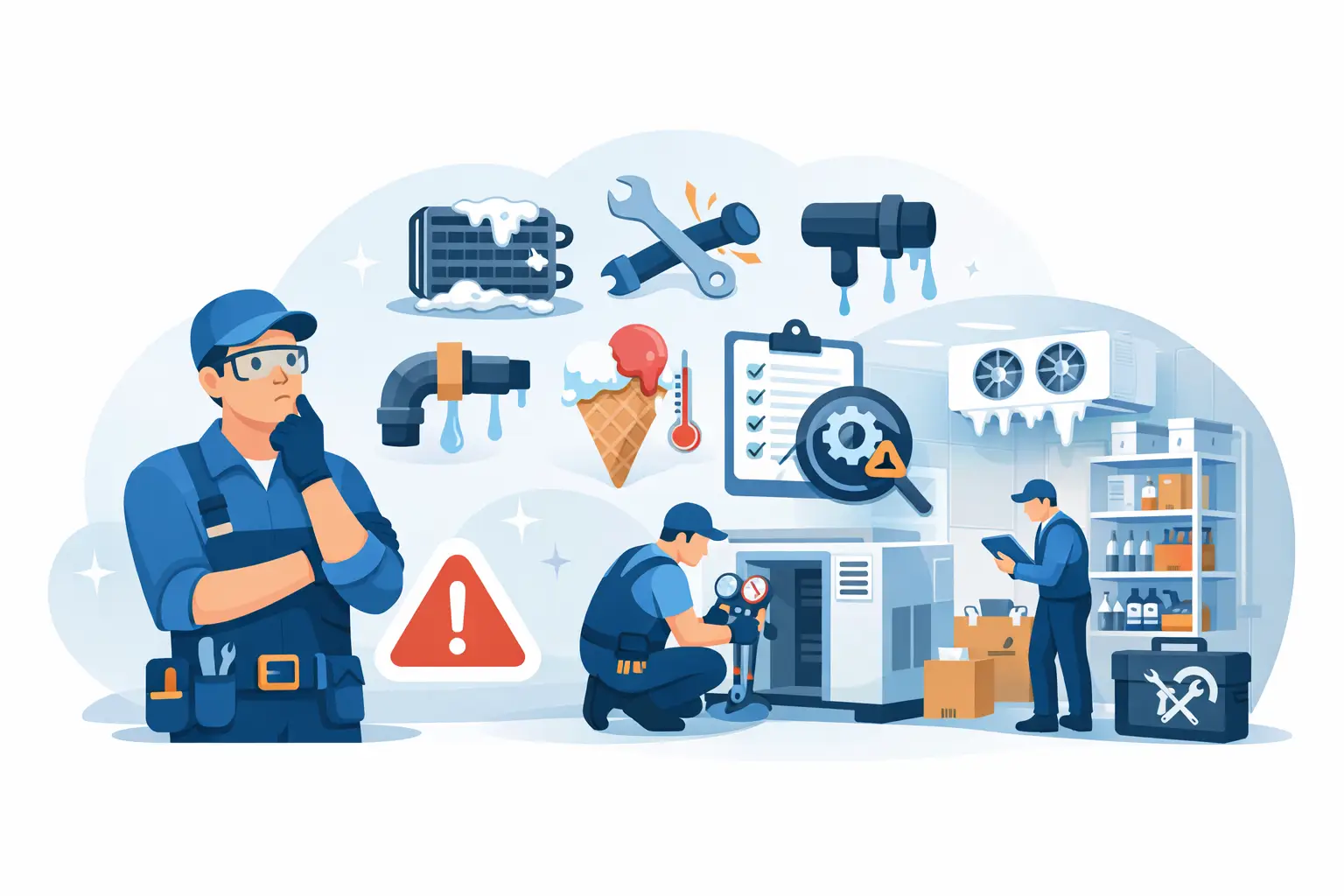
A cold room rarely fails at a convenient time. It goes down during a busy service, overnight in a warehouse, or just before an inspection when temperature records matter most. That is why the top refrigeration maintenance mistakes are rarely small issues. In commercial settings, they can quickly turn into spoiled stock, lost trading time, rising energy costs and avoidable emergency callouts.
Most refrigeration failures are not caused by one dramatic fault. They build up through neglected checks, rushed fixes and poor day-to-day habits. For restaurants, supermarkets, wholesalers and pharmaceutical operators, the real cost is not just the repair bill. It is disruption.
The top refrigeration maintenance mistakes that cost businesses most
The common thread behind most avoidable breakdowns is simple. Maintenance gets treated as something to do later, rather than something that protects the operation today. A system may still be running, but that does not mean it is running efficiently or safely.
When refrigeration plant is under strain, early warning signs usually appear first. Evaporators ice up. Condensers run dirty. Doors do not seal properly. Temperatures drift. Compressors cycle more often than they should. None of these faults should be ignored, because each one places extra load on the system and shortens component life.
1. Leaving condenser coils dirty
This is one of the most frequent and expensive maintenance oversights. Condenser coils reject heat from the system, so when they are clogged with dust, grease or debris, head pressure rises and the unit has to work harder to maintain temperature.
In a commercial kitchen or busy loading area, coils can become dirty surprisingly quickly. The result is higher electricity use, poorer cooling performance and extra wear on the compressor. Businesses often notice the energy bill before they notice the cause.
Cleaning coils sounds straightforward, and in some cases it is. But it also depends on location, type of equipment and how accessible the condenser is. If the unit sits in a greasy plant area or a dusty back-of-house environment, cleaning needs to be more frequent and more thorough than a basic wipe-down.
2. Ignoring door seals and door usage
A damaged door gasket can undermine the performance of the whole cold room. Warm air enters, moisture follows, and the system runs longer to compensate. That means temperature instability, ice build-up and unnecessary energy consumption.
In practice, this problem is often made worse by poor operational habits. Doors are propped open during deliveries, staff move in and out repeatedly, or hinges are left misaligned after minor damage. In a freezer room, even a small air leak can create persistent icing around the entrance and evaporator.
This is one of those faults that seems minor until stock quality or compliance is affected. A quick seal inspection can prevent far bigger issues later.
3. Skipping regular temperature checks and record reviews
Some sites rely too heavily on the assumption that if the unit sounds normal, everything is fine. It is not enough. Refrigeration systems can drift out of range without an obvious failure, especially where sensors are inaccurate, defrost settings are wrong or airflow is restricted.
Routine temperature monitoring matters for two reasons. First, it protects stock. Second, it provides an early sign that the system is underperforming. If temperatures are creeping up, or recovery times after door openings are getting longer, there is usually a reason worth investigating.
This is especially important in food and pharmaceutical environments where product integrity and compliance are tied directly to storage conditions. Good maintenance is not only about parts and plant. It is also about paying attention to the data your system is already giving you.
Why reactive repairs are one of the top refrigeration maintenance mistakes
Many businesses only call an engineer once the system stops cooling properly. From an operational point of view, that can feel understandable. If the cold room is still running, there is pressure to keep going. But reactive maintenance nearly always costs more than planned servicing.
A failing fan motor, blocked drain, refrigerant leak or electrical fault usually gives some warning before complete breakdown. If it is picked up early, the repair is smaller, cheaper and less disruptive. If it is left until failure, the knock-on effects often spread. A worn contactor can become a compressor issue. A drainage fault can become an ice problem that affects airflow and temperature stability.
There is also a practical point here. Emergency callouts are sometimes unavoidable, but no business should rely on them as a maintenance strategy. Planned inspections allow faults to be found under controlled conditions rather than in the middle of service or during peak trading.
4. Delaying refrigerant leak checks
Low refrigerant charge is not something to ignore or top up casually. If a system is short of refrigerant, there is usually a leak that needs to be identified and repaired properly. Running with an incorrect charge affects cooling performance and can damage key components.
Leak-related issues often show up as poor pull-down times, icing patterns on the evaporator, unusual pressures or rising cabinet temperatures. In some cases the symptoms are subtle at first. That is why experienced diagnostics matter.
There is also the compliance side to consider. Depending on the equipment and refrigerant type, leak management may carry regulatory obligations. For commercial operators, this is another reason why professional servicing should not be left too long.
5. Neglecting evaporator fans, drains and defrost systems
When a cold room starts icing up, people often assume it is just part of normal operation. It is not. Excess ice usually points to an airflow issue, a drainage problem, excessive moisture ingress or a fault in the defrost cycle.
Blocked drains can cause water to back up and refreeze. Faulty fan motors reduce air circulation and create uneven temperature zones. Defrost heaters or controls that are not functioning correctly leave ice on the coil, which then restricts heat exchange and pushes the unit to work harder.
These are all common service issues, but they should never be treated as cosmetic. Ice build-up is a symptom, not the root cause.
6. Using temporary fixes instead of proper repairs
Tape on a failing seal, repeated resets on a tripping unit, or topping up refrigerant without leak tracing all fall into the same category. They keep the system going for the moment, but they do not solve the actual problem.
Temporary fixes often make later repairs more expensive because they allow stress to build elsewhere in the system. They also make diagnosis harder. When an engineer arrives to deal with a recurring fault, previous patch repairs can mask what is really happening.
For business owners and site managers, the sensible approach is straightforward. If a fault keeps returning, it needs a proper diagnosis, not another short-term workaround.
7. Treating maintenance as the same for every site
Not every refrigeration environment needs the same servicing schedule. A freezer room in a busy distribution setting will face different demands from a chilled prep room in a restaurant or a temperature-controlled pharmaceutical store. Footfall, ambient conditions, product load, cleaning routines and operating hours all affect maintenance requirements.
This is where generic advice can fall short. Some sites need more frequent coil cleaning. Others need closer attention to door traffic, alarm systems or backup planning. The mistake is assuming all refrigeration plant can be maintained on the same timetable regardless of how hard it works.
A good maintenance plan is based on actual usage and risk. That is what keeps equipment reliable over the long term.
How to avoid top refrigeration maintenance mistakes in practice
The best results usually come from a mix of daily awareness and scheduled engineering support. Site teams do not need to become refrigeration specialists, but they should know what to watch for: damaged seals, unusual noises, standing water, icing, temperature drift and longer run times.
At the same time, technical servicing should be structured rather than ad hoc. Preventive visits allow engineers to inspect pressures, electrics, controls, airflow, defrost operation and component condition before faults become urgent. For sites where downtime carries real commercial risk, that approach is far more cost-effective than waiting for failure.
It also helps to work with one provider that understands the full system, from cold room design and installation through to ongoing servicing and emergency repair. When the same engineering team knows the plant history, diagnosis is faster and maintenance decisions are more accurate.
Commercial refrigeration does not ask for much fanfare. It asks for consistency. If your cold room or freezer room is critical to trade, product quality or compliance, maintenance should be treated as part of operations, not an afterthought. The businesses with the fewest disruptions are usually not the lucky ones. They are the ones that deal with small faults before they become expensive ones.