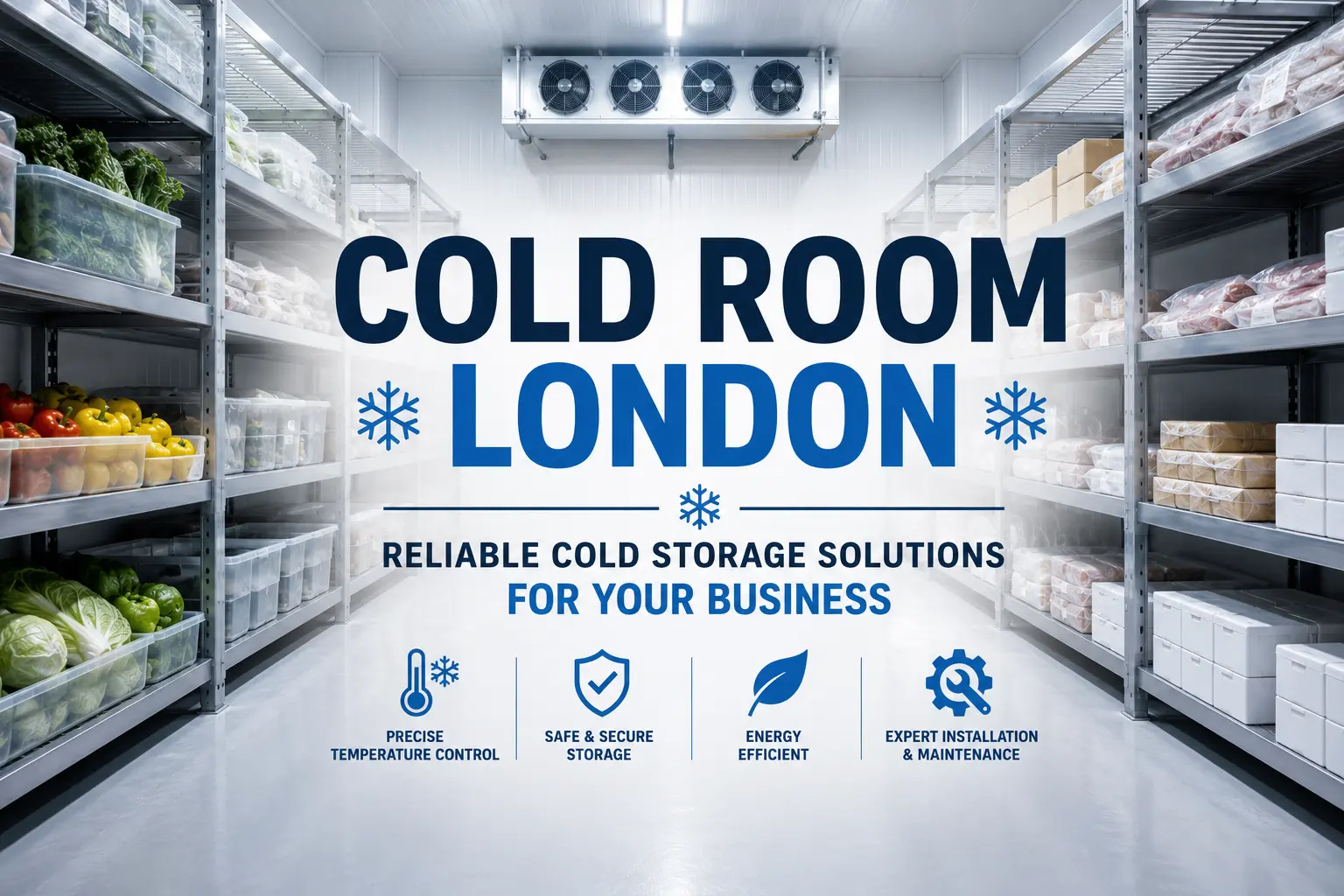
London never sleeps, and neither does its food and pharmaceutical industry. Every day, thousands of restaurants, supermarkets, hospitals, and food distributors rely on temperature-controlled storage to keep products fresh and safe. This growing demand has made cold room solutions in London one of the most important investments for businesses dealing with perishable goods. A cold room is essentially a large refrigerated storage area designed to maintain a specific temperature range for products that require controlled conditions.
The demand for cold storage is not slowing down. The global cold storage market is projected to grow from $217.1 billion in 2026 to $474.2 billion by 2033, reflecting the massive need for temperature-controlled logistics and storage worldwide. Businesses in London are increasingly investing in modern cold rooms that offer improved energy efficiency, remote monitoring, and lower operational costs.
Think of a cold room as a giant refrigerator built specifically for commercial operations. Instead of storing a few groceries, it protects thousands of pounds worth of products every day. Without proper cold storage, businesses could face spoiled products, regulatory penalties, and significant financial losses.
What Is a Cold Room and Why Does London Need Them?
A cold room is an insulated storage facility equipped with refrigeration systems that maintain a precise temperature. Depending on the application, temperatures can range from a few degrees above freezing to well below zero.
London’s economy is heavily dependent on industries that require temperature-controlled environments. Restaurants need fresh ingredients, pharmaceutical companies need precise medicine storage, and supermarkets require reliable refrigeration to preserve food quality. As London’s commercial infrastructure continues evolving, businesses are increasingly prioritizing efficient cold storage systems.
Understanding Temperature-Controlled Storage
Temperature control isn’t simply about keeping products cold. Different products require different conditions. Fresh vegetables, dairy products, seafood, vaccines, and frozen foods all have unique storage requirements.
A slight variation in temperature can dramatically impact product quality. For example, vaccines often require extremely precise temperature ranges to remain effective, while fresh produce needs humidity control alongside cooling. Modern cold rooms use advanced monitoring systems to ensure these conditions remain stable.
Industries Driving Demand in London
Several sectors are fueling London’s cold room demand:
| Industry | Main Usage |
|---|---|
| Restaurants | Ingredient storage |
| Supermarkets | Food preservation |
| Pharmaceuticals | Medicine and vaccine storage |
| Food Distribution | Large-scale cold chain logistics |
| Catering Companies | Bulk food storage |
The expansion of online grocery delivery and pharmaceutical logistics has significantly increased the need for sophisticated cold storage systems.
The Growing Cold Room Market in London
The global cold room market is estimated to reach approximately $276 billion by 2035, growing at an impressive rate due to increasing demand for frozen foods and pharmaceutical products.
London’s food industry is experiencing changing consumer habits. Customers want fresh produce year-round, quick grocery deliveries, and premium food products. This demand places enormous pressure on businesses to invest in reliable refrigeration infrastructure.
Technology is also transforming the sector. Modern cold room London now feature smart sensors, automated monitoring, and predictive maintenance capabilities. These innovations help businesses reduce energy costs while maintaining product quality.
Market Trends and Future Growth
Several trends are shaping London’s cold room industry:
- Smart temperature monitoring systems
- Modular coldroom construction
- Energy-efficient refrigeration systems
- Environmentally friendly refrigerants
- Increased automation and remote management
These advancements are not merely optional upgrades anymore. They are becoming industry standards as businesses strive to reduce costs and improve operational efficiency.
Impact of Food and Pharmaceutical Sectors
The pharmaceutical industry has become a major contributor to cold storage demand. Temperature-sensitive medicines and biological products require highly specialized storage environments.
Similarly, London’s food sector continues expanding due to population growth and increasing reliance on delivery services. This combination creates strong long-term demand for commercial cold rooms.
Types of Cold Rooms Available in London
Not every business needs the same kind of cold room. Different applications require different solutions.
Chiller Rooms
Chiller rooms generally operate between 0°C and 8°C. They are perfect for:
- Fresh produce
- Dairy products
- Flowers
- Beverages
Restaurants and supermarkets frequently rely on chiller rooms to maintain product freshness.
Freezer Rooms
Freezer rooms maintain temperatures below freezing and are commonly used for:
- Frozen food
- Ice cream
- Seafood
- Meat products
These rooms are essential for businesses that need long-term storage solutions.
Blast Freezers
Blast freezers rapidly lower product temperatures, preserving quality and preventing bacterial growth. They are particularly valuable in food processing industries.
Modular Cold Rooms
Modular cold rooms London are becoming increasingly popular because they can be customized and expanded as business needs grow. Their flexibility makes them attractive to startups and growing businesses.
Industries That Benefit from Cold Rooms
Restaurants and Catering Businesses
The hospitality industry depends heavily on reliable refrigeration. Fresh ingredients are the foundation of excellent cuisine, and a poorly functioning coldroom London can result in wasted inventory and dissatisfied customers.
Restaurants often purchase ingredients in bulk to save money. Without adequate storage, these savings quickly disappear through spoilage and waste.
Supermarkets and Food Distributors
Large retailers depend on cold rooms to maintain stock levels and product quality. Distribution centers often require multiple temperature zones to accommodate various product categories.
The rise of online grocery shopping has accelerated investment in cold storage infrastructure across London.
Pharmaceutical and Medical Storage
Medical products require exceptionally precise storage conditions. Even minor temperature fluctuations can render some medicines ineffective.
Modern pharmaceutical cold rooms often include:
- Automated alerts
- Data logging systems
- Backup refrigeration units
- Emergency power supplies
Key Features of a Modern Cold Room
Technology has dramatically improved cold room performance.
Energy Efficiency
Energy consumption is one of the largest operating costs for cold storage facilities. Modern systems use:
- High-performance insulation
- Variable-speed compressors
- LED lighting
- Smart energy management systems
These features can significantly reduce electricity bills.
Remote Temperature Monitoring
IoT-enabled monitoring systems allow operators to monitor conditions from anywhere. If temperatures deviate from acceptable ranges, alerts are sent immediately.
Remote monitoring reduces risk and provides peace of mind.
Eco-Friendly Refrigerants
Environmental regulations are encouraging businesses to adopt low-global-warming-potential refrigerants. The industry is increasingly moving toward sustainable cooling solutions and natural refrigerants.
How to Choose the Right Cold Room in London
Selecting a cold room isn’t simply about buying the biggest system available.
Determining Size Requirements
Consider:
- Current storage needs
- Future growth plans
- Product turnover rates
- Available installation space
Buying an undersized system can create operational problems, while an oversized unit wastes energy.
Considering Running Costs
Businesses should evaluate:
- Electricity consumption
- Maintenance requirements
- Repair costs
- Expected lifespan
A cheaper installation may result in higher long-term expenses.
Installation and Maintenance Factors
Professional installation is crucial. Improper installation can reduce efficiency, increase energy costs, and shorten equipment lifespan.
Choosing an experienced installer ensures compliance with safety regulations and industry standards.
Cold Room Installation Process
A typical installation process includes:
- Site survey
- Design and planning
- Panel installation
- Refrigeration system installation
- Electrical connections
- Testing and commissioning
Each stage plays an essential role in ensuring long-term reliability.
Modern modular systems can often be installed relatively quickly, minimizing business disruption.
Cost of Cold Room Installation in London
Cold room pricing varies significantly depending on several factors:
| Factor | Impact on Cost |
|---|---|
| Room Size | Higher size increases cost |
| Temperature Requirement | Lower temperatures cost more |
| Insulation Thickness | Premium insulation raises price |
| Monitoring Systems | Advanced features add expense |
| Custom Design | Bespoke systems cost more |
Although installation costs can seem substantial, a properly designed cold room is a long-term investment that protects inventory and improves operational efficiency.
Maintenance Tips for Long-Term Performance
Regular maintenance keeps cold rooms operating efficiently and reduces unexpected breakdowns.
Important maintenance tasks include:
- Cleaning condensers
- Checking door seals
- Monitoring refrigerant levels
- Inspecting electrical systems
- Calibrating temperature sensors
Preventive maintenance often costs far less than emergency repairs.
Businesses should also train staff to use cold rooms correctly. Simple habits, such as minimizing door opening times, can significantly improve efficiency and reduce energy consumption.
Conclusion
The demand for cold room solutions in London continues to grow as food distribution, pharmaceutical logistics, and commercial refrigeration become increasingly important. Modern cold rooms are no longer simple refrigerated spaces; they are sophisticated systems that combine energy efficiency, automation, and intelligent monitoring technologies.
Investing in the right cold room can improve product quality, reduce waste, lower operating costs, and support long-term business growth. Whether you’re running a restaurant, supermarket, catering company, or pharmaceutical facility, reliable temperature-controlled storage has become an essential component of business success.
As the global cold storage market continues its rapid expansion and sustainability regulations reshape the refrigeration industry, businesses that invest in modern cold room technology today will be better positioned for tomorrow’s opportunities.
Frequently Asked Questions
1. What temperature should a commercial cold room maintain?
Most commercial cold rooms operate between 0°C and 8°C, while freezer rooms can go below -18°C depending on the products stored.
2. How long does a cold room installation take?
Installation times vary by project size, but many modular cold rooms can be installed within several days.
3. Are modern cold rooms energy efficient?
Yes. Modern systems use advanced insulation, smart controls, and efficient compressors to reduce energy consumption.
4. Which industries use cold rooms the most?
Restaurants, supermarkets, pharmaceutical companies, food distributors, and catering businesses are among the biggest users.
5. How often should a cold room be serviced?
Professional servicing is generally recommended at least twice a year to maintain optimal performance and prevent breakdowns.
Future of Cold Room Technology in London
The cold storage industry in London is entering a completely new era. Businesses are no longer looking for simple refrigeration systems that merely keep products cold. Instead, they are searching for intelligent, connected, and highly efficient solutions that can reduce costs while improving reliability. The future of cold room London services revolves around automation and sustainability. Smart sensors now allow operators to monitor temperatures, humidity levels, and equipment performance in real time through mobile applications and cloud-based systems. If something goes wrong, the system can send an alert instantly, allowing businesses to respond before products are damaged.
Artificial intelligence is also beginning to play an important role. AI-powered monitoring systems can analyze performance data and predict when a component is likely to fail. Imagine your car warning you weeks before a breakdown occurs—that is exactly what predictive maintenance does for cold rooms. It helps businesses avoid costly downtime and expensive emergency repairs.
Environmental concerns are also shaping the future of refrigeration. The UK government and environmental agencies continue encouraging businesses to reduce carbon emissions and adopt more sustainable cooling solutions. As a result, many new cold rooms are using eco-friendly refrigerants with lower global warming potential. Energy-efficient compressors, LED lighting, and advanced insulation materials are becoming standard features rather than luxury upgrades.
Another exciting trend is the rise of solar-powered refrigeration support systems. Rising electricity prices in the UK have pushed many businesses to explore renewable energy options. Some companies are now integrating solar panels with cold room operations to offset electricity costs and improve sustainability credentials.
Common Problems Businesses Face Without a Cold Room
Many businesses underestimate the importance of proper cold storage until something goes wrong. The consequences can be severe, especially in industries where product freshness and safety are essential. A restaurant that stores ingredients improperly can face food spoilage, customer complaints, and even legal action. Similarly, pharmaceutical companies can lose thousands of pounds if medicines are stored outside their recommended temperature ranges.
One of the biggest issues is inventory loss. Food products have a limited shelf life, and even a few degrees of temperature fluctuation can accelerate spoilage. Imagine spending thousands of pounds on fresh seafood, dairy products, or premium meat, only to throw it away because of inadequate refrigeration. Those losses can significantly affect a company’s profitability.
Businesses also face challenges with regulatory compliance. Food safety authorities and pharmaceutical regulators impose strict requirements on storage conditions. Failure to comply with these standards can result in penalties, damaged reputations, and loss of customer trust. In today’s competitive market, reputation is everything. One incident involving spoiled food or improperly stored medicines can spread rapidly through social media and damage a business for years.
Another hidden cost is higher energy consumption. Older or poorly designed refrigeration systems often consume excessive electricity, increasing operational expenses month after month. Investing in a modern cold room may seem expensive initially, but the long-term savings frequently outweigh the initial installation cost.
Why Professional Cold Room Maintenance Matters
A cold room is like the heart of many businesses—it needs regular care to function properly. Unfortunately, some business owners only think about maintenance when something breaks down. This reactive approach often results in expensive emergency repairs and unnecessary downtime.
Routine maintenance helps identify small problems before they become major issues. For example, a damaged door seal may seem insignificant, but it can cause cold air to escape continuously. The refrigeration system then works harder to maintain the desired temperature, increasing energy consumption and placing additional strain on equipment components.
Professional technicians typically inspect several critical areas during a maintenance visit:
- Refrigerant levels
- Compressor performance
- Electrical connections
- Temperature sensors
- Door gaskets and insulation
- Condenser and evaporator cleanliness
Regular servicing can significantly extend the lifespan of refrigeration equipment. A well-maintained cold room may continue operating efficiently for many years, while neglected systems often experience premature failures.
Maintenance also provides peace of mind. Business owners can focus on serving customers and growing their companies instead of worrying about unexpected refrigeration failures. In industries where product quality depends on consistent temperatures, that reassurance is invaluable.
Choosing the Best Cold Room Company in London
London has many refrigeration companies offering installation and maintenance services, but choosing the right provider can make a huge difference. A reliable company doesn’t simply install equipment; it becomes a long-term partner that supports your business as it grows.
Experience should always be one of the first factors to consider. Companies with extensive experience understand the unique requirements of different industries and can recommend the most suitable solutions. A restaurant’s needs differ significantly from those of a pharmaceutical warehouse or a food distribution center.
Customer support is equally important. Refrigeration emergencies rarely happen at convenient times. A company that offers 24-hour emergency support can save businesses from substantial financial losses. Before selecting a provider, it is worth asking about response times and after-sales services.
Another important factor is customization. Every business is unique, and a one-size-fits-all solution rarely delivers the best results. Professional cold room companies typically conduct detailed site surveys and design systems tailored to specific operational requirements.
Finally, businesses should consider the company’s reputation. Reading customer reviews, requesting references, and reviewing previous projects can provide valuable insights into the quality of service offered.
Final Thoughts on Cold Room Solutions in London
The demand for cold room solutions in London will continue increasing as the city’s food, pharmaceutical, and logistics sectors expand. Modern cold rooms have evolved far beyond simple refrigerated storage spaces. They now incorporate advanced technologies, energy-efficient designs, and intelligent monitoring systems that help businesses protect valuable inventory and reduce operating costs.
Whether you’re running a small restaurant, a large supermarket, or a pharmaceutical facility, investing in the right cold room can transform your operations. It protects products, improves compliance, enhances efficiency, and provides a foundation for long-term growth.
In a city as dynamic and competitive as London, reliable temperature-controlled storage is not merely an operational necessity—it’s a strategic investment that can determine the success and sustainability of a business for years to come.