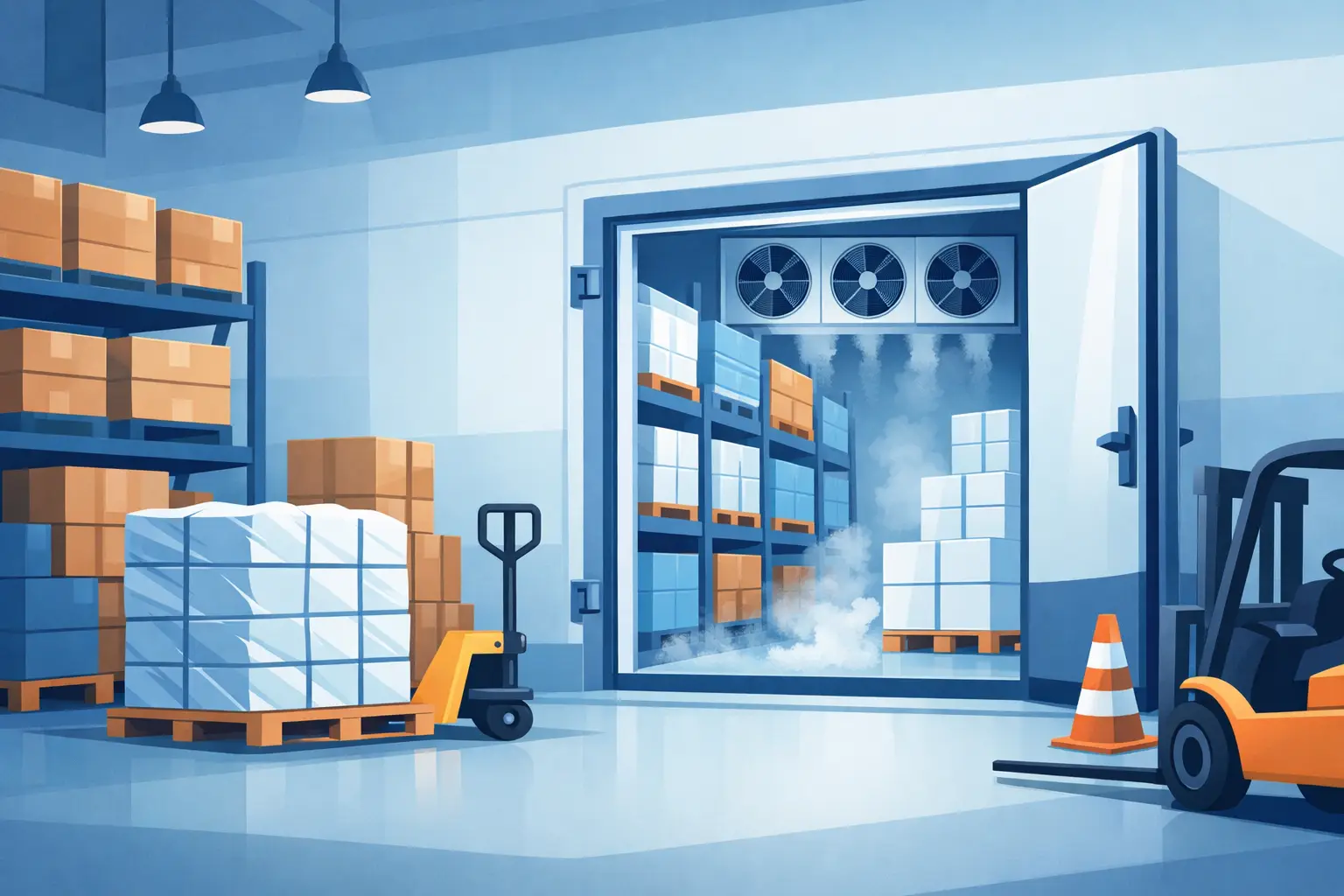
A warehouse cold room that runs a few degrees out of range can quietly cause expensive problems long before an alarm sounds. Stock loss, rejected deliveries, compliance issues and rising energy bills usually start with small design or maintenance mistakes. If you are planning a cold storage room for warehouse operations, getting the specification right at the start matters far more than patching problems later.
Warehouse refrigeration is rarely one-size-fits-all. A chilled room for produce, dairy or prepared foods has very different demands from a freezer space holding bulk stock, and pharmaceutical storage brings another level of control again. The right system depends on what you store, how fast stock moves, how often doors open, how goods are loaded, and what level of temperature stability your operation genuinely needs.
What a cold storage room for warehouse operations needs to do
At a basic level, a cold room must hold the target temperature safely and consistently. In practice, warehouse environments ask more of the system. You may have forklifts moving in and out, frequent pallet deliveries, long operating hours, and a large volume of product creating changing heat loads across the day.
That means the room is not just a box with refrigeration attached. It is a working part of your operation. Panel thickness, door design, floor build-up, evaporator placement, airflow, drainage and condensing unit performance all affect whether the room performs properly under real use.
A well-designed warehouse cold room should support stock protection, compliance, energy efficiency and uptime. If one of those is overlooked, the others usually suffer. For example, a system that technically reaches temperature but struggles after every delivery may protect stock less effectively and cost more to run.
Choosing the right temperature range
The first question is straightforward – are you storing chilled goods, frozen goods, or products with tighter control requirements? Chilled warehouse rooms often operate between 0C and 5C, while freezer rooms may run at -18C or below. Some products need a narrower band, especially in pharmaceutical or specialist food storage.
This is where many projects go wrong. Businesses sometimes specify colder temperatures than they need, assuming it adds a safety margin. In reality, overcooling increases running costs and can damage certain products. Others under-specify the room because the initial budget looks better, then find it cannot recover temperature quickly enough during busy periods.
The right answer depends on your stock profile, throughput and compliance obligations. It also depends on whether your room is for long-term holding, short-term staging or mixed-use storage.
Sizing the room properly
A cold room that is too small creates workflow issues and forces staff to overfill it, blocking airflow and reducing efficiency. A room that is too large can waste energy and capital if the load does not justify the footprint. Good sizing is not just about floor area. It includes internal height, racking layout, aisle clearance, door positions and loading patterns.
In warehouse settings, usable space matters more than headline dimensions. If pallets are stacked too close to the evaporator or walls, air circulation suffers. If access routes are cramped, doors stay open longer and warm air enters more often. Those practical details affect performance every day.
Future growth also needs thought. Some operators only size for current stock volume, then quickly outgrow the room. Others pay for a much larger build than they will use for years. The sensible approach is to design around realistic growth and expected throughput, not guesswork.
Key design features that affect performance
Insulated panels and floor construction
Panels are central to heat retention and energy use. The required thickness depends on the room temperature and building conditions. Freezer rooms need stronger thermal separation than chilled rooms, and warehouse floors often need careful treatment to handle load-bearing equipment and prevent cold bridging.
Floor specification is particularly important when pallet trucks or forklifts are involved. A poor floor build can lead to damage, uneven wear and long-term insulation issues.
Doors and traffic flow
Doors are often the weak point in a warehouse cold room. If they are undersized, badly positioned or unsuitable for traffic levels, temperature loss becomes a daily problem. Hinged, sliding and rapid-roll options each have their place. The best choice depends on the size of goods, how often the room is accessed and how quickly doors need to close.
Strip curtains or air curtains can help in some environments, but they are not a cure for poor layout. If the loading process is inefficient, warm air ingress will remain an issue.
Refrigeration plant and controls
Reliable plant selection matters as much as the room structure. Compressors, condensers, evaporators and controls need to match the application, not just the room size on paper. This is where experienced engineering support makes a real difference.
Controls should be easy for staff to use but accurate enough to maintain stable conditions. Alarms, remote monitoring and clear fault reporting are especially valuable in warehouse operations where downtime can affect large volumes of stock very quickly.
Energy efficiency without compromising reliability
Every warehouse operator wants lower running costs, but cheap installation decisions often produce the opposite result. Energy efficiency comes from sound design, suitable components, good insulation and proper commissioning. It is not just a matter of choosing the lowest stated power consumption.
Variable-speed fans, efficient condensing units, well-set defrost cycles and accurate controls can all help reduce waste. So can better door discipline and room layout. If staff have to leave doors open while reorganising stock, the refrigeration plant works harder and bills rise.
There is always a balance to strike. The most efficient specification on paper may not be the best if your site needs heavy-duty access, fast pull-down times or resilience during peak periods. For mission-critical storage, reliability usually deserves equal weight with energy savings.
Compliance, monitoring and stock protection
For food businesses, wholesalers and pharmaceutical operations, temperature control is tied directly to compliance and product integrity. That means monitoring is not optional. A warehouse cold room should provide dependable temperature recording, alarm notification and a clear maintenance history.
If your business is audited, you need more than confidence that the room felt cold enough. You need records. Where products are high value or sensitive, remote alerts and backup planning become even more important.
This is also why maintenance should not be treated as an afterthought. Small faults such as dirty condensers, failing door seals or icing around evaporators can gradually affect temperatures and increase system strain. By the time stock is at risk, the issue has often been building for weeks.
Why installation quality matters
Even good equipment can perform badly if the installation is rushed or poorly coordinated. Pipework routing, drainage falls, electrical connections, airflow clearances and control setup all affect how the cold room behaves under load. Warehouse projects also need attention to site logistics, access constraints and how the new room fits into existing operations.
A proper installation should leave you with a system that is tested, commissioned and explained clearly to your team. Staff should know what normal operation looks like, what to do if an alarm triggers, and when to call for support.
This is where using one specialist partner for design, build, installation and aftercare has practical value. If problems arise later, there is no argument over who is responsible for which part of the system.
Maintenance and emergency support
A cold storage room for warehouse use is too important to run on a break-fix basis alone. Planned maintenance helps catch wear before it becomes failure. It also keeps the system cleaner, more efficient and more stable over time.
Typical maintenance work includes checking refrigerant pressures, cleaning coils, inspecting fans and electrics, testing controls, reviewing defrost settings and examining seals, panels and doors. In busy warehouses, these checks can make the difference between normal operation and a costly out-of-hours breakdown.
Emergency support still matters, of course. When a cold room fails, response time is not just a service metric. It affects stock, staffing and customer commitments. That is why many businesses prefer working with a provider that can install the system properly and respond quickly when faults occur. UK Cold Room supports businesses across London and the wider UK with that full-lifecycle approach.
Making the right investment
The cheapest quote is rarely the cheapest system to own. A better question is what the room will cost over its operating life once energy use, maintenance, downtime risk and stock protection are factored in. For warehouse operators, that wider view usually leads to better decisions.
If you are planning a new room or replacing an ageing one, start with how the space will actually be used. Think about product type, delivery patterns, traffic, compliance and future growth. A cold room should fit the way your warehouse works, not force your warehouse to work around its limitations.
A properly specified cold room does more than keep products cold. It gives your operation one less thing to worry about on a busy day, which is often where the real value shows.