
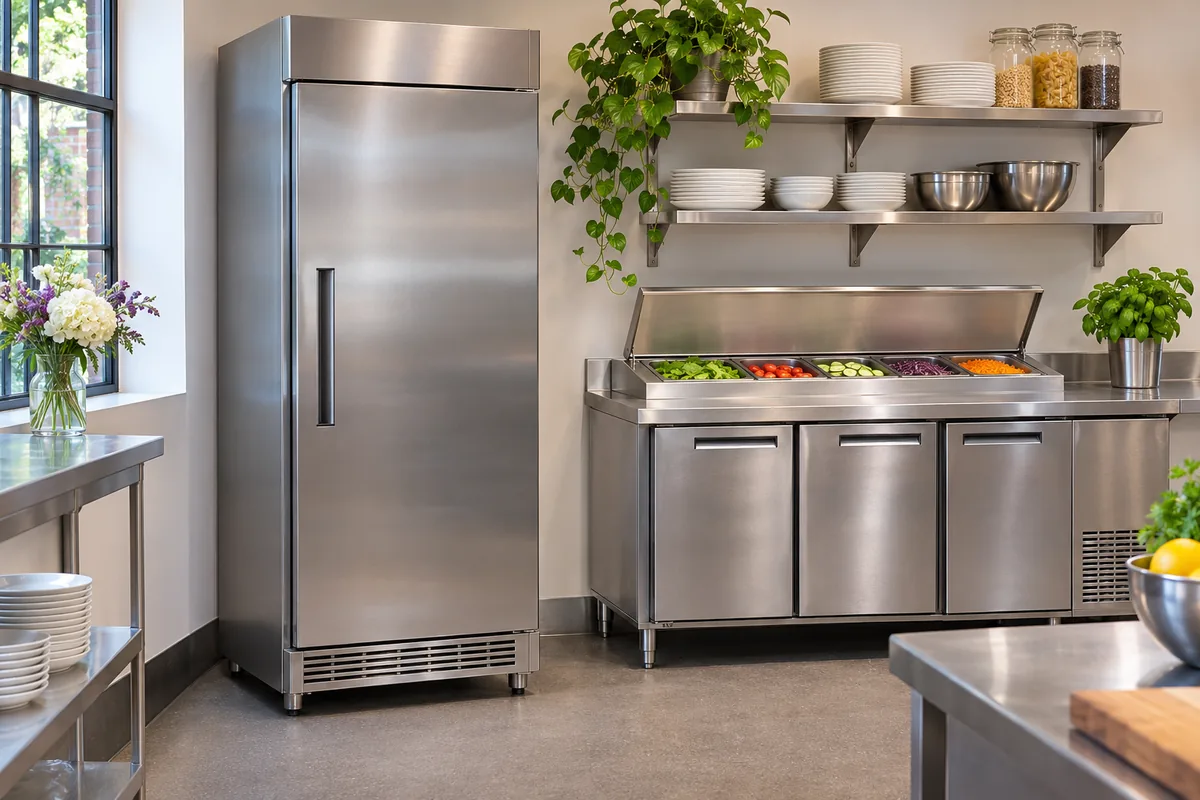
Image: Conceptual illustration of commercial refrigeration equipment.
When a commercial fridge stops holding its required temperature, the immediate priorities are your stock and a clear repair enquiry. Record what is happening, follow your business’s food-safety procedure and gather the equipment details. This guide is for businesses using commercial refrigerated cabinets, such as upright, undercounter and preparation fridges.
UK Coldroom provides commercial refrigeration repair support across London and Greater London through an extensive local network operating 24 hours a day, seven days a week. Contact us with your postcode, equipment details and symptoms to arrange the next step. For walk-in rooms, see our cold room repair service.
Protect your stock and record the temperature
Follow the product storage instructions and your business’s food-safety procedure. Note the current temperature, recent checks and how long the problem may have been present. If suitable storage conditions cannot be maintained, follow your procedure for moving stock and assessing affected food.
GOV.UK’s chilling and freezing guidance for businesses provides a useful reference. A lower thermostat setting or a temporarily cooler cabinet reading is not proof that a fault has been repaired or that stock is safe.
Record symptoms that help an engineer
A fridge running continuously, failing to start, developing ice or leaking water needs assessment in context. Note when the behaviour began and whether it followed a delivery, a change in loading, a power interruption or other work on site.
Record any alarm or fault code exactly as displayed. If safe, photograph the cabinet, the accessible rating plate and the visible issue. Do not remove covers to take photographs. Tell us whether the whole cabinet is affected or only one area.
What you can check safely
Check whether products are holding a door open, the visible door gasket is damaged or normal air paths are blocked by loading. Compare the way the fridge is loaded with its manufacturer’s instructions. Keep the area around it accessible. Check that external ventilation grilles and the space around the cabinet are not blocked by boxes or other equipment.
Avoid repeated resets, service-menu adjustments or attempts to repair wiring or refrigerant components. Do not chip ice from internal parts. For electrical hazards, burning smells or repeated tripping, stop using the affected equipment and follow the site’s safe isolation and emergency procedure. Arrange qualified assistance.
Some cabinets use flammable refrigerants, such as R290. Follow the equipment manufacturer’s safety instructions and leave refrigerant work to properly trained personnel. See Secop’s guidance on flammable refrigerants.
Prepare a useful repair enquiry
Send these details when you request a commercial fridge repair:
- Business name, site address or postcode and a contact number.
- Type of fridge, make and model where available.
- Current readings, fault codes and when the issue started.
- A description of stock affected and any action already taken.
- Access hours, loading restrictions and relevant site arrangements.
This information helps us prepare for your request. An engineer’s assessment establishes the cause and the work needed.
Understand the proposed cost and scope
A useful quotation explains the assessment, proposed work and what is included. Ask about diagnosis, labour, replacement parts, VAT, call-out charges and any work that would need separate approval. The price depends on the actual fault, equipment and access; a generic online price range cannot describe every commercial repair.
If replacement may be an option, compare the condition of the equipment, availability of suitable parts, repair scope, ongoing operating needs and installation requirements. Ask for the reasons behind the recommendation.
After the repair
Ask what was found, what work was completed and what checks were carried out. Continue your normal temperature records and follow any equipment-specific instructions provided. Planned maintenance should reflect the equipment, environment and operating pattern.
If your issue concerns a refrigerated display, read our display unit repair guide. For frozen-storage equipment, see freezer repair in London.
Common commercial fridge repair questions
Can every fridge fault be priced before a visit?
Some visible issues can be discussed from the information you provide, but the cause of a cooling failure may need an on-site assessment. Ask what the assessment covers before arranging it.
How long will the repair take?
Timing depends on diagnosis, parts, access and the work required. We can discuss the next step after receiving the equipment details.
Is this advice for household appliances?
No. Our fridge repair service is for commercial equipment; we do not provide household fridge repairs. If you are unsure what type of equipment you have, send the make and model before booking.
What if the problem is urgent?
Our local repair network operates 24/7 across London and Greater London. Contact us with the postcode, current symptoms and stock-storage concern so we can arrange support. Continue your business’s food-safety and contingency procedures while assistance is being arranged.
Leave a Reply