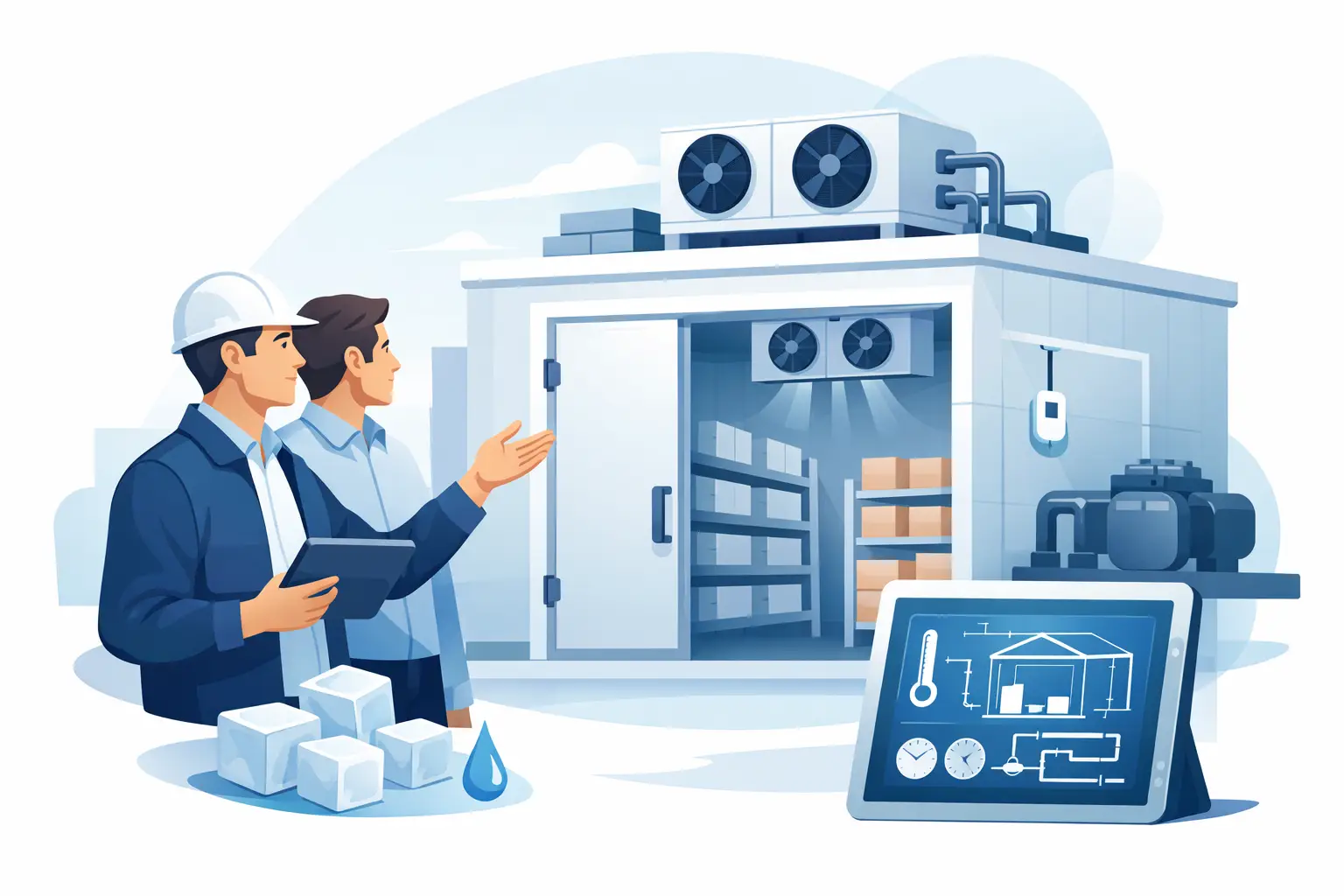
A cold room that looks right on paper can still fail in daily use. The usual problems are not dramatic at first – warm spots near the door, ice build-up on the evaporator, stock blocking airflow, rising energy bills, or a unit that struggles every time deliveries arrive. If you are working out how to design cold room space for a restaurant, supermarket, warehouse or pharmaceutical site, the design has to match the way your operation actually runs.
That is where good engineering makes the difference. Cold room design is not just about picking a target temperature and fitting a condensing unit. It means sizing the room correctly, understanding product load, controlling heat gain, planning access, and making sure the whole system remains serviceable years after installation.
Start with the real operating requirement
The first question is not the room size. It is what the room needs to do every day.
A hospitality business storing fresh meat, dairy and prepared ingredients has a very different usage pattern from a wholesaler holding palletised stock or a pharmacy storing temperature-sensitive products. Some rooms need frequent access throughout service. Others stay closed for long periods but hold high-value goods that cannot drift outside a narrow temperature band.
This is why temperature range comes first. A chilled cold room may need to hold between 2°C and 5°C, while a freezer room could be operating at -18°C or lower. The tighter the tolerance, the more attention you need to give to controls, monitoring and door management. If compliance matters, as it often does in food and pharmaceutical settings, record keeping and alarm capability should be considered at design stage rather than added later.
You also need to be clear about stock type, daily throughput and delivery patterns. Warm product entering the room creates a very different refrigeration demand from already chilled goods simply being held in storage. If you ignore that, the system may be undersized from day one.
How to design cold room capacity accurately
Capacity planning is where many projects go wrong. Businesses often focus on the footprint available in the building and then try to make the refrigeration fit. In practice, the right approach is the other way round.
You need enough internal volume for current stock, sensible shelving or racking, safe access, and future growth. A room that is too small quickly becomes inefficient because stock ends up packed tightly against walls and evaporators. A room that is too large can cost more to run than necessary, especially if occupancy remains low for most of the year.
When calculating capacity, think beyond the simple dimensions. The refrigeration load depends on several factors working together: product entering temperature, target storage temperature, frequency of door opening, lighting, people working inside, fan motors, ambient conditions, and heat transfer through panels, floors and ceilings.
That is why proper load calculations matter. If the condensing unit is oversized, you may see short cycling, uneven performance and unnecessary wear. If it is undersized, pull-down times become too long and temperature stability suffers during busy periods. Neither option is good for energy use or product protection.
Layout matters as much as refrigeration plant
A well-designed cold room should support the way staff move, load and pick stock. This sounds obvious, but many rooms are still built with awkward doors, poor internal circulation and shelving layouts that create dead zones.
Door position affects far more than convenience. If the door opens directly onto a hot kitchen line, loading bay or sunny external wall, the room will pick up more heat and moisture every time it is accessed. In some sites, a small lobby or strip curtain arrangement is worth considering to reduce temperature loss. In freezer applications, traffic management becomes even more important because moisture ingress leads to ice and safety risks.
Inside the room, airflow must not be blocked. Shelving should leave space around walls and beneath the evaporator discharge path. If stock is stacked too high or too tightly, cold air cannot circulate properly and you end up with inconsistent temperatures. In food environments, layout also needs to support hygiene and stock rotation, not just storage density.
For palletised or high-volume commercial use, clear aisle width and loading method should be agreed early. It is much easier to design around the actual handling process than to retrofit access later.
Insulation, panels and floors are not the place to cut corners
Panel specification has a direct effect on both performance and operating cost. The right insulation thickness depends on room temperature, room size, building conditions and expected usage. Chilled rooms and freezer rooms need different approaches, and low-temperature rooms need particular care around floor construction and vapour control.
If the envelope is poorly specified, the refrigeration system has to work harder every hour of the day. That means higher running costs and greater strain on components. Good panel joints, vapour-tight installation and proper floor detailing are basic requirements, not upgrades.
Floors deserve special attention. In a chilled room, the floor design may be relatively straightforward depending on the existing slab and usage. In a freezer room, floor heating or other anti-frost protection may be needed to prevent heave and long-term structural issues. This is one of those areas where the cheapest initial option can become the most expensive later.
The same applies to doors. Hinged, sliding or personnel access doors each have their place, but the choice should follow site use. Heavy traffic, pallet movement and hygiene requirements all influence what works best.
Choose equipment for reliability, not just headline price
Refrigeration equipment should be selected around duty, ambient conditions, service access and control requirements. A system that performs well in one site may be unsuitable in another because of airflow restrictions, noise constraints, or the way the room is used.
Evaporator selection should match the room dimensions and the product load, not just the target temperature. Air throw, defrost method and fan arrangement all affect real-world performance. Condensing units need to be sized and located sensibly so that they can reject heat effectively and remain accessible for maintenance.
Controls are equally important. A cold room that stores valuable or regulated stock should not rely on the most basic temperature control alone. Alarms, remote monitoring and clear fault indication can prevent stock loss and shorten response time when problems occur. For many businesses, that is not a luxury. It is part of risk management.
Energy efficiency should be considered from the start, but it has to be practical. Better controls, door management, LED lighting and appropriate system design usually deliver better returns than chasing specifications that look impressive but do not suit the site.
Compliance, hygiene and maintenance should be designed in
Cold room design has to support compliance, especially in food production, catering, retail and pharmaceutical settings. Surfaces should be easy to clean. Junctions should not create dirt traps. Drainage, lighting and internal finishes need to make sense for the environment.
Access for maintenance is often forgotten until the first breakdown. Engineers need room to inspect controls, clean condensers, service evaporators and replace components safely. If major items are boxed into awkward positions, routine maintenance becomes slower and faults become more disruptive.
This is one reason many businesses prefer working with a provider that handles design, installation and aftercare rather than separate contractors. The system is more likely to be designed with long-term serviceability in mind. For businesses across London and the wider UK, that joined-up approach can make a real difference when uptime matters.
The design process should reflect your operation
So, how to design cold room systems properly? Start with the operational brief, not the equipment catalogue. Define what is being stored, what temperature must be maintained, how often the room will be accessed, and what growth is likely over the next few years.
Then move into measured design: heat load calculation, panel and floor specification, equipment selection, airflow planning, door strategy, control philosophy and maintenance access. Every one of those decisions affects reliability and running cost.
There are always trade-offs. A tighter footprint may save building space but make stock handling harder. A lower upfront equipment cost may bring higher energy use or shorter service life. A simple room used lightly can be designed very efficiently without overcomplicating matters, while a high-demand room in a busy commercial setting needs more resilience built in.
The best cold room designs are rarely the flashiest. They are the ones that hold temperature steadily, recover quickly after door openings, support compliance, and keep working under pressure. If you want that outcome, treat design as an engineering process rather than a box-ticking exercise. If you need a practical starting point, https://Ukcoldroom.com is one example of a specialist provider offering design, installation and ongoing support under one roof.
A cold room should make your operation easier, not give you another weak point to manage. Get the design right at the start, and the room will quietly do its job every day while your business gets on with its own.