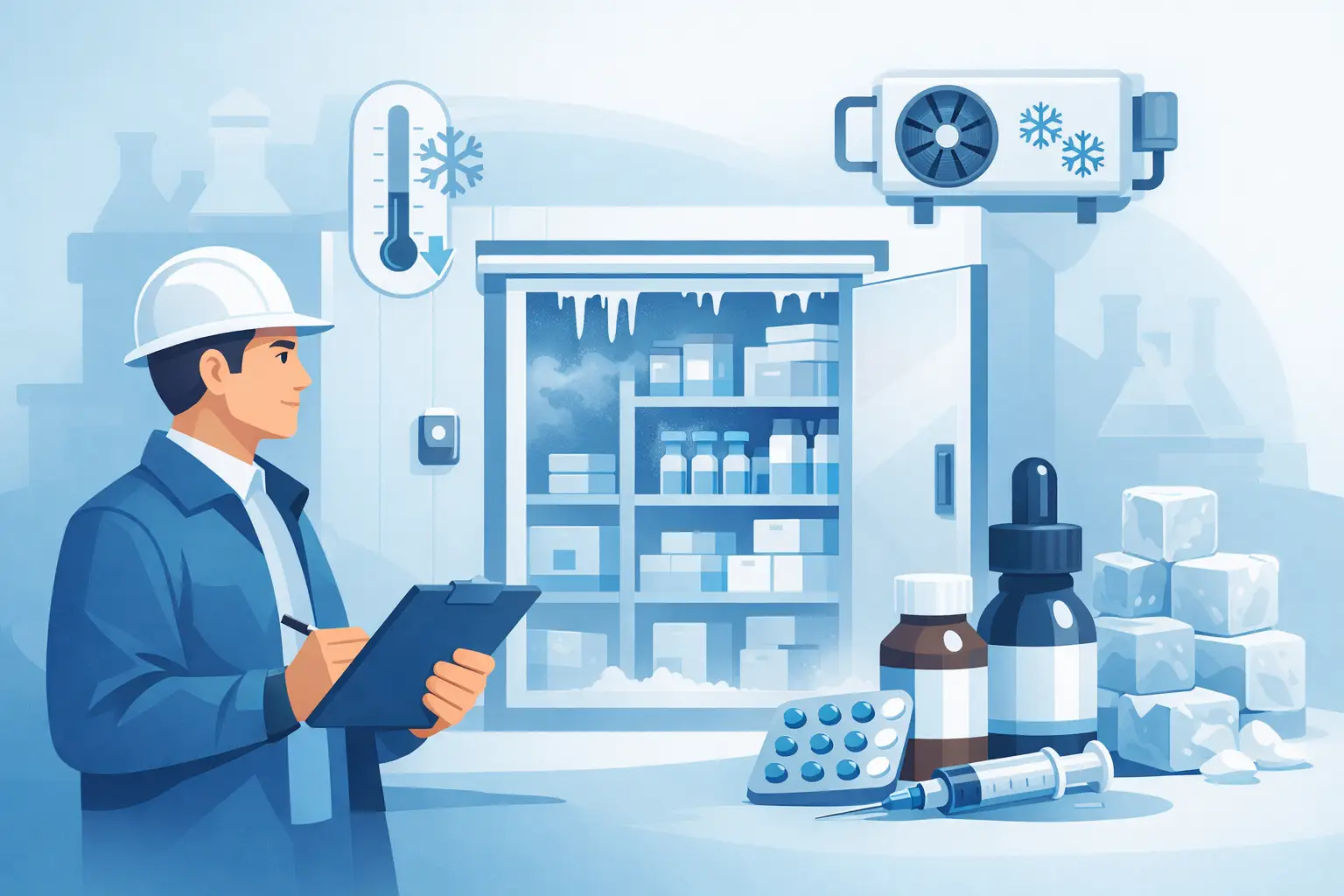
A failed compressor at 2am is not just an engineering problem when vaccines, biologics or temperature-sensitive medicines are inside. It can mean lost stock, disrupted supply, compliance headaches and difficult conversations by breakfast. That is why a proper pharmaceutical cold storage guide starts with one simple point – cold storage in this sector is about product integrity first, refrigeration second.
Pharmaceutical storage has less room for error than most chilled environments. Small temperature excursions can affect stability, potency and shelf life, even when products still look fine. For operators, facilities teams and procurement leads, the real job is not simply buying a cold room or medical fridge. It is building a storage setup that holds temperature consistently, can be monitored properly, and can be supported quickly when something goes wrong.
What pharmaceutical cold storage actually demands
A pharmaceutical cold storage guide needs to go beyond target temperature ranges on a specification sheet. In practice, the challenge is consistency. It is one thing for a unit to reach 2°C to 8°C during a demonstration. It is another for it to maintain that range through busy access periods, seasonal heat, defrost cycles and years of daily use.
Different products have different storage requirements, and that matters at design stage. Vaccines, insulin, biologics, trial materials and compounded products may all need different temperature bands, shelf arrangements and handling procedures. Some products are highly sensitive to freezing, while others require frozen or ultra-low conditions. The storage solution has to match the exact risk profile of the stock, not a generic idea of what a cold room should do.
This is where businesses often underestimate the difference between commercial refrigeration and pharmaceutical-grade cold storage. The refrigeration plant may look familiar, but the control, validation, alarm response and record-keeping expectations are tighter. A unit that works well for food stock is not automatically suitable for medicines.
Choosing the right pharmaceutical cold storage setup
The right system depends on stock volume, product sensitivity, access frequency and operational layout. A pharmacy with modest throughput may need a medical refrigerator with accurate controls and clear data logging. A wholesaler, hospital stores department or manufacturer may need a walk-in cold room with zoned shelving, backup systems and remote alarm monitoring.
Cold rooms are often the best fit where larger quantities must be stored, picked and rotated safely. They offer more usable capacity and better workflow, but they also need proper design. Door size, evaporator positioning, airflow patterns and shelving layout all affect temperature stability. If racking blocks circulation or warm deliveries are placed too close to sensors, readings can mislead staff while products at the back drift out of range.
There is also a trade-off between flexibility and control. A larger room can make handling easier, but every door opening introduces warm air and moisture. In a busy site, strip curtains, fast-closing doors or a well-managed loading routine may be just as important as the refrigeration plant itself.
Temperature control is only as good as the monitoring behind it
One of the biggest mistakes in pharmaceutical storage is assuming displayed cabinet temperature tells the whole story. It does not. You need monitoring that reflects real storage conditions over time, not just a number on the front panel.
Continuous temperature logging is essential. So are high and low alarms that alert the right people quickly, not after the event. If alarms go to an unmanned handset or an inbox nobody checks overnight, the system is not doing its job. In pharmaceutical settings, alarm response needs a clear chain of responsibility, with escalation if the first contact does not act.
Sensor placement matters too. Probes should be positioned to represent product temperature risk, not just the coldest or easiest point to measure. Mapping is often needed to identify hot and cold spots within the room. This becomes especially important in larger walk-in environments where loading patterns and access behaviour can create variation across the space.
Battery-backed monitoring and independent alarm systems are worth considering where product value or compliance pressure is high. The more critical the stock, the less sensible it is to rely on a single point of failure.
Compliance is not separate from engineering
In pharmaceutical environments, compliance and engineering sit side by side. A refrigeration system may be technically capable, but if it cannot support traceability, documented maintenance and reliable records, it creates risk.
A practical pharmaceutical cold storage guide should therefore include the documentation side of the job. Operators need clear records for temperature history, alarm events, servicing, calibration and corrective action. If there is an excursion, you need to know what happened, when it happened, how long it lasted and what was done next.
Validation also plays a part. Depending on the application, businesses may need installation qualification, operational checks and documented evidence that the environment performs as intended. The level of formality varies, but the principle is straightforward – if storage conditions matter to product quality, the system should be proven, not assumed.
Design details that reduce risk day to day
Most storage failures are not caused by dramatic breakdowns alone. Many start with ordinary operational problems: doors left open, overloaded shelving, poor airflow, delayed servicing or a room that was never sized correctly in the first place.
That is why good pharmaceutical cold storage is practical at ground level. Shelving should allow airflow around stock. Internal layout should support stock rotation and prevent products being pushed against evaporators or walls. Lighting should be adequate for safe picking without creating unnecessary heat load. Doors should seal properly and shut reliably.
Capacity planning matters as well. If a room is specified too tightly, seasonal spikes or emergency deliveries can push it beyond stable operating conditions. Extra margin is useful, but oversizing is not always efficient either. An oversized system can short cycle, waste energy and create control issues if the plant is not matched properly to the actual load.
Maintenance is part of product protection
In pharmaceutical storage, maintenance is not just about avoiding a breakdown bill. It is part of protecting stock. Dirty condensers, worn door seals, iced evaporators, inaccurate sensors and drifting controls can all affect temperature performance before a total failure happens.
Planned maintenance gives you a better chance of catching those issues early. It also helps keep systems running efficiently, which matters where cold rooms operate continuously. Energy costs are a business issue, but so is plant strain. Refrigeration systems forced to work harder than necessary tend to fail more often and with less warning.
For critical sites, response time matters just as much as maintenance frequency. If a unit serving temperature-sensitive medicines fails, waiting until the next convenient slot is not realistic. You need access to engineers who understand the urgency, can fault-find properly and can advise on immediate containment while repairs are underway.
This is one reason many operators prefer a single partner that can design, install, maintain and repair the system throughout its life. At Ukcoldroom.com, that joined-up approach is often what gives customers more confidence in high-dependency environments.
Planning for failure before it happens
Even a well-designed system can fail. Power cuts happen. Components wear out. Controls misbehave. The question is not whether failure is possible, but whether the site is prepared.
A sensible contingency plan covers backup storage, out-of-hours contacts, stock triage and alarm escalation. Staff should know who decides whether products can remain in use after an excursion and what evidence needs to be collected. In some settings, temporary relocation to another validated unit may be possible. In others, backup plant or generator support may be justified.
The right level of resilience depends on the value and sensitivity of the stock. A small site storing limited product may manage risk differently from a distribution operation holding large volumes of high-value medicines. The point is to make that decision in advance, not during a live incident.
When to review your current setup
If your current storage environment struggles in summer, alarms too often, lacks proper records or relies on ageing equipment, it is worth reviewing before a serious excursion forces the issue. The same applies if stock volumes have increased, product lines have changed or access patterns are busier than they were when the room was first installed.
Cold storage that was adequate three years ago may not be adequate now. A site assessment can highlight whether the issue is capacity, controls, airflow, maintenance standards or the simple fact that the room was never designed for pharmaceutical use. Sometimes a full replacement is needed. Sometimes better monitoring, upgraded controls or a sensible retrofit will solve the real problem.
The most dependable pharmaceutical storage setups are rarely the cheapest on paper, but they are usually the least costly when measured against stock loss, downtime and avoidable risk. If your cold storage supports regulated products, the best time to tighten it up is before it is tested by a fault call in the middle of the night.