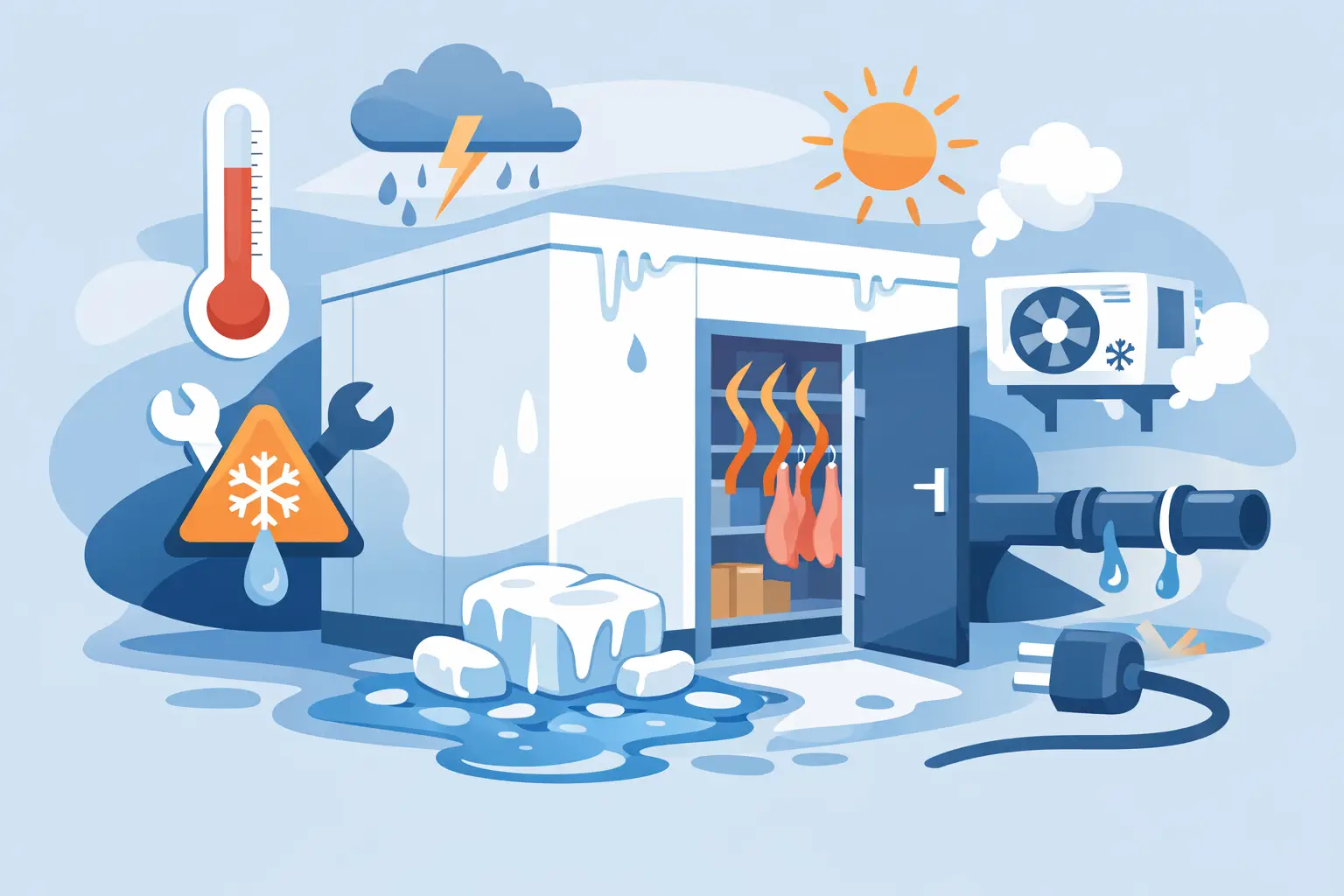
A cold room rarely fails without warning. More often, the signs show up in rising energy bills, longer pull-down times, ice where it should not be, or staff noticing stock temperatures are drifting. If you are asking what causes cold room failure, the short answer is that breakdowns usually come from a mix of poor maintenance, component wear, incorrect installation, and day-to-day operational strain.
For businesses that rely on chilled or frozen storage, that matters quickly. A restaurant can lose stock in hours. A supermarket can face compliance problems and waste. A pharmaceutical site may be dealing with far higher consequences than simple product loss. The cause is not always one dramatic fault. In many cases, it is several smaller issues building up until the system can no longer hold temperature consistently.
What causes cold room failure most often?
The most common cause is not one part failing in isolation. It is deferred maintenance combined with stress on the system. Condensers get dirty, door seals wear down, evaporators ice up, refrigerant charge falls out of range, and compressors end up working harder than they were designed to.
That is why two cold rooms of the same age can perform very differently. One may run reliably for years with planned servicing and sensible use. The other may suffer repeat callouts because the original installation was not right, airflow has been compromised, or small faults were ignored until they became major repairs.
Compressor problems
The compressor is often treated as the heart of the system, and when it struggles, the whole cold room struggles with it. Compressors fail for several reasons: overheating, poor refrigerant return, electrical faults, contaminated oil, or sustained operation outside normal load conditions.
In practice, compressors are often the victim rather than the starting point. A dirty condenser can raise discharge pressure. Low refrigerant can reduce cooling while increasing strain. Fan failures can upset heat exchange. If a compressor eventually burns out, the underlying cause still needs to be corrected or the replacement unit may be put under the same pressure.
Refrigerant leaks
A refrigerant leak is one of the most common and disruptive faults in commercial refrigeration. Even a modest leak can reduce cooling capacity, increase running time, and make temperature control unstable. Left unresolved, it can lead to icing, poor product temperature, and compressor damage.
Leaks can come from vibration, ageing joints, corrosion, poor pipework practices, or damage during other works on site. The challenge is that the symptoms can look like other faults at first. The room may still cool, just not as efficiently. By the time the issue becomes obvious, the system may already be under significant strain.
Dirty condensers and blocked airflow
A cold room depends on proper heat rejection. When condensers are clogged with grease, dust, packaging debris, or general site dirt, the system has to work harder to lose heat. That drives up energy use and places avoidable stress on components.
This is especially common in busy kitchens, food production spaces, and loading areas where airborne grease or dust is part of daily operations. Poor airflow around the condensing unit makes the problem worse. Even a correctly sized system will underperform if it cannot breathe.
Evaporator icing and drainage issues
Ice build-up is not always the main problem. Sometimes it is a symptom of something else – poor door discipline, warm air ingress, failed defrost cycles, blocked drains, or faulty heaters. Once ice starts building on the evaporator, airflow drops, cooling becomes uneven, and the room may run longer without actually protecting stock properly.
Drainage faults can also create repeated disruption. Blocked or frozen drains lead to water accumulation, slip risks, and further icing. In freezer rooms, small drainage defects can turn into persistent operational problems surprisingly quickly.
Installation faults are a bigger factor than many realise
Some cold room failures begin long before the first breakdown. If the room was badly designed, incorrectly sized, or poorly installed, reliability problems are far more likely later on.
A system that is too small will run excessively and wear out faster. A system that is oversized may short cycle, which brings its own efficiency and control issues. Poor panel fitting can allow air leakage and condensation. Incorrect pipework can affect oil return and refrigerant flow. Weak commissioning can leave controls and defrost settings poorly adjusted from day one.
This is one reason businesses often benefit from working with one engineering partner that can design, install, maintain and repair the full system, rather than splitting responsibility across several contractors. If no one owns the whole picture, faults are easier to miss and harder to resolve properly.
Operational habits that lead to failure
Not every cold room fault starts with engineering. Daily use has a major effect on service life.
Frequent door opening is a common issue, particularly in fast-paced catering and retail environments. Every unnecessary opening introduces warm, moist air, which increases load and encourages ice formation. Damaged or flattened door gaskets make the same problem constant rather than occasional.
Overloading the room can also create trouble. If stock blocks evaporators or restricts circulation, the room temperature may look acceptable in one area but drift in another. Staff may assume the cold room is working because the display shows the set point, while actual product temperatures tell a different story.
Then there is simple wear from a busy site. Trolleys hit doors, racking gets moved against panels, and access points are used far harder than originally expected. None of that is unusual, but it does mean cold rooms need regular inspection, not just emergency repair after a failure.
Electrical and control faults
Cold rooms rely on more than compressors and coils. Sensors, controllers, contactors, relays, fan motors, heaters and power supply issues all affect performance. A failed probe can give false readings. A control fault can interrupt defrost. A failing fan motor can reduce airflow enough to cause temperature instability even when the refrigeration circuit itself is still functional.
Electrical issues can be intermittent, which makes them frustrating for site teams. The room may appear to recover, then fail again during busy periods or overnight. That is why fault-finding matters. Replacing parts without proper diagnosis can waste time and money while the real cause remains in place.
Why maintenance gaps turn small faults into major breakdowns
Most serious cold room failures do not happen because one part simply reaches the end of its life on schedule. They happen because early warning signs are missed.
Routine maintenance gives engineers the chance to pick up reduced refrigerant charge, dirty coils, loose electrical connections, poor door seals, fan wear, abnormal pressures and drainage issues before they escalate. It also helps businesses plan repairs at the right time instead of reacting when stock is already at risk.
There is a cost to maintenance, of course. But there is usually a much higher cost to avoidable downtime, emergency callouts, lost stock and operational disruption. For sites with strict compliance requirements, the cost of failure is not only financial.
Warning signs you should not ignore
If a cold room starts taking longer to reach temperature, that is worth investigating. The same applies to visible ice build-up, water on the floor, unusual noises, short cycling, hot condensing units, or a sudden jump in energy consumption.
Staff feedback is often useful here. They are the first to notice when doors are not sealing properly, when the room feels warmer than usual, or when alarms are becoming more frequent. Acting early can mean the difference between a straightforward repair and a full breakdown under pressure.
Preventing cold room failure in practice
Prevention starts with proper design and installation, but it does not end there. Cold rooms need planned servicing, realistic load management, clean heat exchange surfaces, sound door hardware, and prompt attention when performance changes.
It also helps to have a clear support arrangement in place before something goes wrong. For many operators, the real risk is not only the fault itself but the delay in getting the right engineer to site. Businesses that depend on uninterrupted cold storage are usually best served by a provider that can support the full lifecycle, from installation through to maintenance and urgent repair. That is the practical approach behind services offered at UK Cold Room.
If your cold room is showing early signs of strain, the best time to act is before it stops protecting stock properly. A fast inspection now is usually far easier than dealing with spoilage, downtime and an emergency repair later.