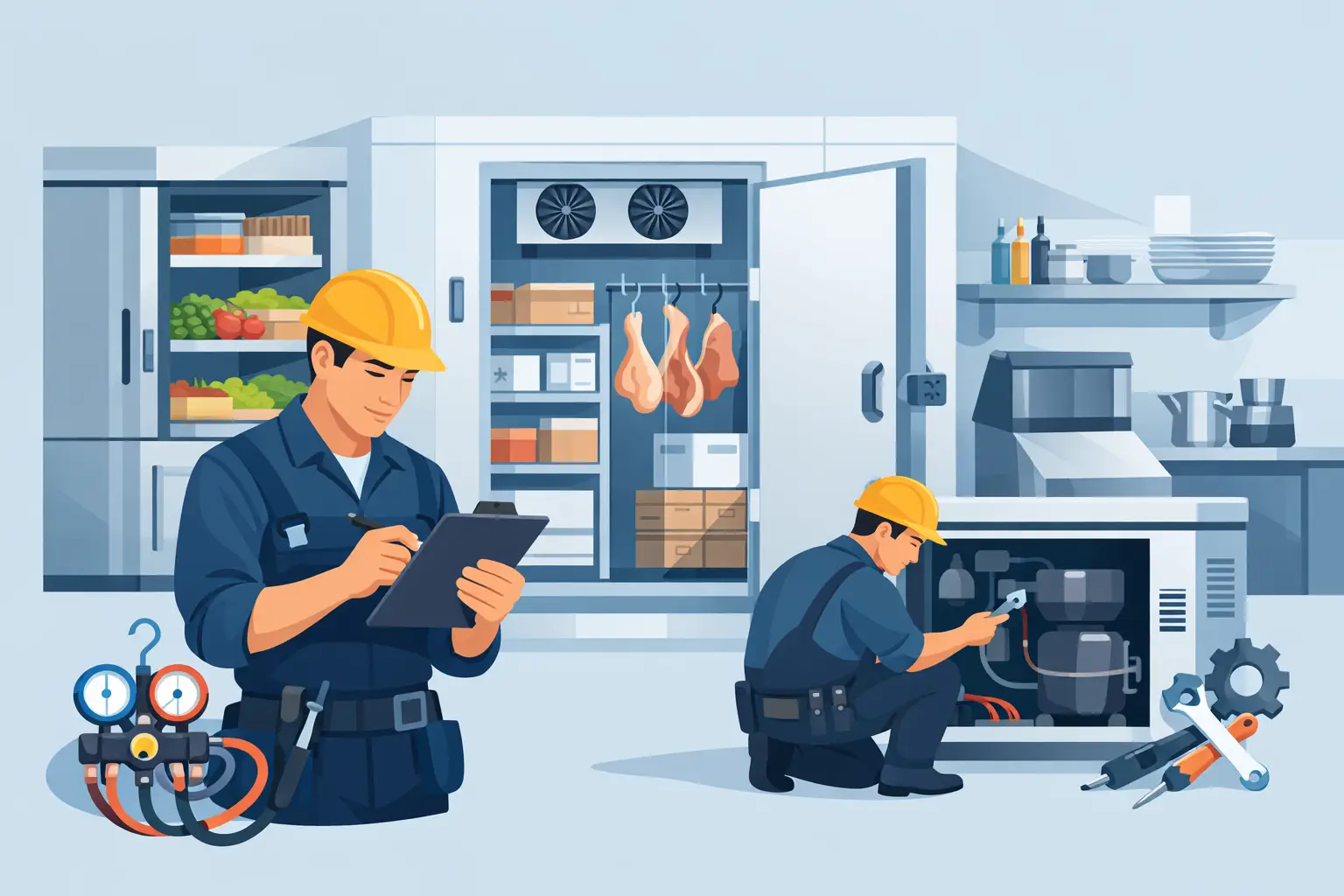
A failed fridge rarely happens at a convenient time. It shows up during prep, on a busy Friday service, or just after a large delivery has been put away. That is why a restaurant refrigeration maintenance plan matters – not as paperwork for a file, but as a practical way to protect stock, avoid disruption and keep food safe.
For restaurant owners and kitchen managers, refrigeration is not a background system. It affects service, margins, hygiene, compliance and staff stress levels. When a cold room, undercounter unit or freezer starts drifting out of temperature, the impact spreads quickly. A proper maintenance plan reduces that risk by dealing with wear, airflow problems, refrigerant issues and component failure before they turn into an emergency callout.
What a restaurant refrigeration maintenance plan should actually cover
A useful plan is more than a reminder to clean a condenser once in a while. It should be built around the way your kitchen operates, the age of your equipment and how critical each unit is to daily service.
At a minimum, the plan should cover routine inspection, cleaning, performance checks, temperature verification and early identification of worn parts. That includes door seals, fan motors, drain lines, evaporators, condensers, thermostats, defrost systems and electrical connections. If your site uses a walk-in cold room or freezer room, those larger systems need closer attention because even a small fault can affect a large volume of stock.
The best plans also set out response arrangements for breakdowns. Preventive maintenance lowers the chance of failure, but it does not remove it entirely. Compressors still fail, controls still develop faults and older systems can become less stable in hot weather or under heavy kitchen demand. A plan works best when routine servicing and fast repair support sit together.
Why maintenance matters more in restaurants than in many other settings
Restaurants put refrigeration under constant pressure. Doors are opened all day, warm stock is loaded in, kitchens run at high ambient temperatures and units are often packed tightly during peak periods. In some sites, equipment is also squeezed into awkward positions with poor airflow around condensers, which pushes systems even harder.
That operating environment creates a simple problem: even a well-installed unit can struggle if it is not maintained properly. Dirty coils make systems work longer. Damaged gaskets let cold air escape. Ice build-up affects airflow. A blocked drain can lead to water problems and hygiene concerns. Each issue may look small on its own, but together they raise energy use and increase the chance of breakdown.
There is also the food safety side. If temperatures are inconsistent, stock quality starts to suffer before a complete failure is obvious. Dairy, meat, seafood, prepared sauces and desserts are all vulnerable. In a busy kitchen, staff may not spot a gradual decline until the unit is already outside safe operating conditions.
The key parts of an effective maintenance schedule
A strong maintenance schedule balances daily awareness with planned engineer visits. Kitchen teams should carry out basic checks as part of routine opening or closing. That means checking displayed temperatures, looking for frost build-up, listening for unusual noises and making sure doors shut properly. Staff should also keep grills and visible air paths clear rather than stacking boxes against them.
Planned servicing by qualified engineers goes further. That is where coil cleaning, refrigerant pressure checks, electrical testing, fan inspection, calibration and deeper fault diagnosis should happen. For some restaurants, two visits a year are enough. For others, especially those with high-use cold rooms, multiple freezer units or extended trading hours, more frequent visits may be the better choice.
It depends on how hard the equipment works. A small café with one display fridge and one upright freezer does not need the same service pattern as a large restaurant with multiple prep fridges, cellar cooling and a walk-in freezer. The right plan should reflect the site, not force every business into the same timetable.
Daily and weekly checks by site staff
These checks are simple, but they matter. Staff can spot temperature fluctuations, damaged seals, excessive condensation and blocked vents long before a full failure occurs. They can also make sure units are not overloaded and that warm deliveries are managed properly.
The point is not to turn chefs or managers into refrigeration engineers. It is to catch obvious warning signs early and report them before stock is at risk.
Planned engineering visits
An engineer should inspect the system under operating conditions, not just glance at the controller and leave. Good servicing means checking how the unit is performing, whether components are under strain and whether energy use is likely to rise because of poor airflow, dirty heat exchange surfaces or failing parts.
This is also where maintenance becomes cost control. Replacing a worn fan motor or perished gasket at the right time is usually far cheaper than dealing with spoiled stock, a lost trading period and an urgent repair.
Common faults a maintenance plan helps prevent
Most refrigeration breakdowns do not come out of nowhere. They build up from neglected small issues.
Dirty condensers are one of the most common examples. When coils are clogged with grease and dust, the system cannot reject heat efficiently. That forces the compressor to work harder, raises running costs and shortens component life. In restaurant kitchens, where airborne grease is common, this is a regular problem.
Door seals are another weak point. If gaskets split or stop sealing properly, warm air enters the cabinet or cold room. The unit then runs longer to compensate, temperatures become less stable and ice may start forming around the evaporator.
Blocked drains, fan faults, sensor issues and electrical wear are also common. None of these faults are unusual, but they become expensive when ignored. A restaurant refrigeration maintenance plan is there to catch them at the service stage rather than during a crisis.
Energy efficiency is part of maintenance, not a separate issue
Many operators think about servicing and energy bills as two different things. In practice, they are closely linked. Refrigeration that is clean, correctly set up and mechanically sound uses less energy than refrigeration that is dirty, leaking air or cycling badly.
That matters because refrigeration runs constantly. Even a modest drop in efficiency is felt on monthly bills. Across a full site with multiple cabinets, cold rooms and freezers, wasted energy adds up quickly.
There is a trade-off, though. Some businesses delay maintenance to save money in the short term, especially if the equipment still appears to be cooling. That can work for a while, but usually at the cost of higher electricity use and a bigger repair bill later. Planned maintenance is not just about preventing complete failure. It is also about keeping the system working at a sensible cost.
How to choose the right plan for your site
The right plan starts with an honest view of your operation. Think about how many units you run, what stock they hold, how long you trade, whether you have older equipment and how serious the impact would be if one system went down.
If a single upright fridge fails and stock can be moved elsewhere, your level of risk is lower. If a walk-in cold room supports the whole kitchen, the risk is much higher. The same applies to freezer rooms holding bulk stock. Critical systems deserve more attention, faster response arrangements and clearer service records.
It is also worth considering whether one provider can support the full lifecycle of your refrigeration. Installation, repair, planned maintenance and emergency response often overlap. When one engineering partner understands the system from design through to servicing, fault diagnosis tends to be faster and practical recommendations are more consistent. For restaurants in London and across the UK, that joined-up support can make a real difference when time is tight.
Signs your current approach is not enough
If you are only calling for help when something stops working, that is not a maintenance plan. It is reactive repair. The warning signs are usually easy to spot: rising energy bills, repeat faults, uneven temperatures, excess ice, noisy operation, water leaks or cabinets that seem to run constantly.
Another sign is uncertainty. If no one on site knows when a unit was last serviced, whether temperatures are being checked properly or which equipment is nearing the end of its life, the business is exposed. Even a basic planned approach is better than relying on luck.
UK Cold Room works with businesses that cannot afford downtime, and that is the right way to think about refrigeration maintenance in a restaurant. The goal is not simply to fix faults when they happen. It is to keep the kitchen moving, protect stock and remove avoidable pressure from your team.
A good maintenance plan does not need to be complicated. It needs to be realistic, regular and backed by engineers who understand what a few lost degrees can mean during service.