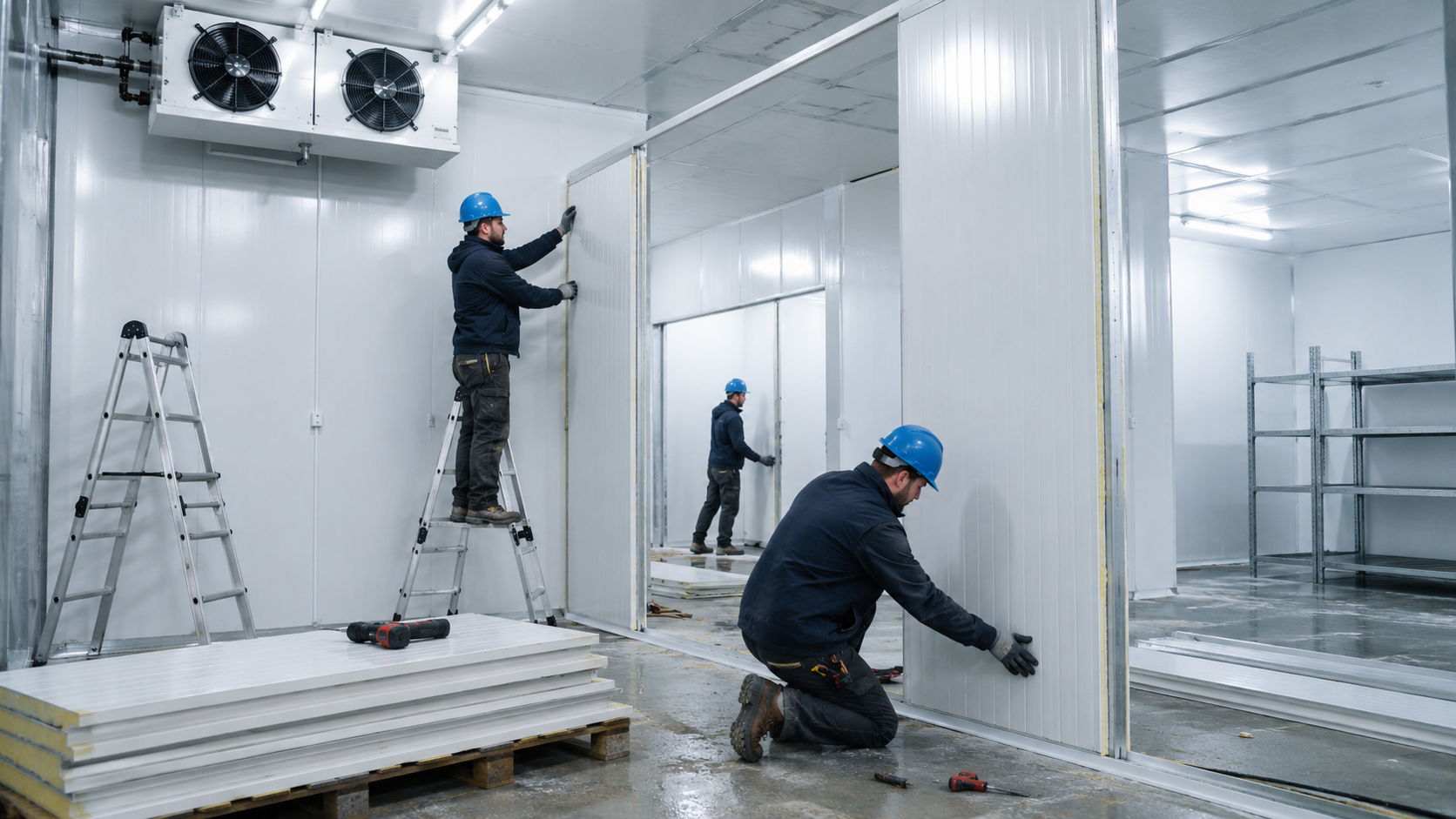
Businesses across London rely heavily on efficient refrigeration systems to protect stock, maintain food safety standards, and ensure smooth day-to-day operations. Whether you run a restaurant in Central London, a supermarket in Croydon, a pharmaceutical facility in West London, or a catering company serving events throughout the capital, investing in the right cold room can have a significant impact on your business.
However, cold room projects involve far more than simply choosing a refrigerated space. Proper planning, design, installation, and ongoing maintenance all contribute to the performance, longevity, and efficiency of the system.
In this comprehensive guide, we explore everything London business owners need to know about cold room design and installation, helping you make informed decisions that support long-term success.
What Is a Cold Room?
A cold room is a temperature-controlled storage area designed to preserve perishable products. Unlike domestic refrigeration units, commercial cold rooms are built to handle larger capacities and maintain consistent temperatures suitable for specific industries.
Cold rooms are commonly used by:
- Restaurants and cafes
- Hotels and hospitality businesses
- Supermarkets and convenience stores
- Butchers and fishmongers
- Pharmaceutical companies
- Floral businesses
- Food manufacturers
- Catering companies
Depending on operational requirements, cold rooms can operate at chilled temperatures or be configured as freezer rooms.
Why Proper Cold Room Design Matters
Many businesses underestimate the importance of professional planning during the design stage. A poorly designed cold room can lead to:
- Excessive energy consumption
- Inconsistent temperatures
- Product spoilage
- Higher maintenance costs
- Reduced equipment lifespan
- Compliance issues
Working with experienced specialists in cold room design and installation services ensures that every aspect of the project is tailored to your operational needs.
Assessing Your Business Requirements
Every business has unique refrigeration requirements.
Before installation begins, several questions should be addressed:
What products will be stored?
Fresh produce, dairy products, pharmaceuticals, frozen foods, and beverages all require different storage temperatures.
How much storage capacity is required?
Businesses should consider both current needs and future growth.
Installing a system that is too small may lead to operational challenges, while oversized systems can increase running costs unnecessarily.
How frequently will the cold room be accessed?
Frequent door openings affect temperature stability and influence equipment selection.
What space is available?
The location of the cold room impacts airflow, accessibility, and installation complexity.
Choosing the Right Type of Cold Room
Several cold room configurations are available.
Modular Cold Rooms
These are built using insulated panels and offer flexibility.
Benefits include:
- Faster installation
- Cost-effectiveness
- Ease of expansion
- Reduced disruption
Bespoke Cold Rooms
Custom-designed systems provide tailored solutions for businesses with unique operational requirements.
Advantages include:
- Maximum space utilisation
- Custom layouts
- Specialised temperature zones
- Enhanced workflow efficiency
Understanding Insulation Requirements
Insulation plays a crucial role in maintaining internal temperatures.
High-quality insulated panels help:
- Reduce energy consumption
- Improve temperature consistency
- Prevent condensation issues
- Lower operational costs
Panel thickness varies depending on intended use.
Freezer applications typically require thicker insulation compared with chilled storage facilities.
Selecting Refrigeration Equipment
The refrigeration system is the heart of any cold room.
Equipment selection should take into account:
Cooling Capacity
The system must effectively maintain desired temperatures during peak demand periods.
Energy Efficiency
Modern refrigeration technologies can significantly reduce electricity usage.
Energy-efficient systems help businesses lower operating expenses while supporting environmental objectives.
Reliability
Commercial refrigeration downtime can be extremely costly.
Selecting dependable equipment reduces the risk of unexpected failures.
Noise Considerations
Businesses operating in residential areas of London may need quieter systems to comply with local expectations.
Compliance and Food Safety Regulations
Businesses handling food products must comply with strict UK regulations.
Key considerations include:
Temperature Monitoring
Accurate monitoring systems help maintain safe storage conditions.
HACCP Requirements
Hazard Analysis and Critical Control Point procedures are essential for food safety management.
Health and Safety Compliance
Cold rooms should be designed with staff safety in mind.
Features may include:
- Emergency release mechanisms
- Internal alarms
- Anti-slip flooring
- Adequate lighting
Failure to meet regulatory requirements can result in financial penalties and reputational damage.
The Cold Room Installation Process
Understanding the installation process helps businesses prepare effectively.
Site Survey
The first step involves a detailed assessment of the premises.
Specialists evaluate:
- Available space
- Electrical infrastructure
- Access routes
- Ventilation requirements
- Operational needs
Design and Planning
Following the survey, engineers prepare a tailored design proposal.
This stage determines:
- Room dimensions
- Panel specifications
- Refrigeration equipment
- Door configurations
- Ancillary systems
Installation
Qualified engineers assemble insulated panels and install refrigeration equipment.
The duration varies depending on project complexity.
Testing and Commissioning
Before handover, the entire system undergoes rigorous testing.
Engineers verify:
- Temperature performance
- Equipment functionality
- Alarm systems
- Safety features
Staff Training
Operators receive guidance on correct usage and daily procedures.
Proper training contributes to system longevity and efficiency.
Common Mistakes Businesses Should Avoid
Businesses often encounter avoidable issues during cold room projects.
Choosing Price Over Quality
Lower-cost solutions may result in higher expenses over time.
Investing in reputable contractors delivers better value.
Ignoring Future Expansion
Growth plans should be considered during initial design stages.
Overlooking Maintenance Requirements
Preventive servicing reduces the likelihood of breakdowns.
Businesses should schedule regular cold storage repair and maintenance to protect their investment.
Poor Location Planning
Inconvenient placement can disrupt workflow and increase energy usage.
The Importance of Preventive Maintenance
Installation is only the beginning.
Routine maintenance is essential to ensure continued performance.
Benefits include:
- Improved efficiency
- Reduced repair costs
- Longer equipment lifespan
- Enhanced food safety
- Lower risk of emergency breakdowns
Professional maintenance programmes often include:
- Cleaning condenser coils
- Checking refrigerant levels
- Inspecting door seals
- Testing safety systems
- Verifying temperature accuracy
Businesses operating freezer facilities should also consider specialist freezer room repair and maintenance services to address specific operational demands.
Energy Efficiency Tips for London Businesses
With rising utility costs, energy efficiency has become increasingly important.
Consider the following measures:
Install LED Lighting
LED systems generate less heat and consume less electricity.
Minimise Door Openings
Encouraging efficient stock rotation reduces temperature fluctuations.
Use Strip Curtains
These help maintain internal temperatures during busy periods.
Monitor Performance
Temperature monitoring systems identify inefficiencies before they escalate.
Schedule Regular Servicing
Well-maintained systems operate more efficiently.
Cold Rooms Versus Freezer Rooms
Although often grouped together, these facilities serve different purposes.
Cold rooms maintain chilled temperatures suitable for fresh products.
Freezer rooms preserve frozen goods at significantly lower temperatures.
Businesses requiring frozen storage may benefit from dedicated freezer room design installation solutions designed specifically for their operational requirements.
How Much Does Cold Room Installation Cost?
Project costs vary considerably depending on factors such as:
- Size of the facility
- Temperature requirements
- Refrigeration equipment specifications
- Insulation thickness
- Site accessibility
- Customisation needs
Rather than focusing solely on initial expenditure, businesses should evaluate the total cost of ownership, including energy efficiency and maintenance requirements.
Obtaining a detailed quotation from experienced specialists provides the most accurate estimate.
Why Work with Professional Cold Room Specialists?
Professional expertise reduces risk and ensures a successful outcome.
Experienced contractors provide:
- Tailored recommendations
- Regulatory knowledge
- Quality workmanship
- Reliable aftercare support
- Ongoing maintenance services
Businesses also benefit from access to emergency support, including commercial freezer repair in London when unexpected issues arise.
Where facilities include office environments or customer-facing areas, integrated air conditioning service support can further improve comfort and operational efficiency.
Final Thoughts
Cold room design and installation represent significant investments for London businesses. Taking the time to assess operational requirements, select suitable equipment, and work with experienced professionals can deliver substantial long-term benefits.
From preserving product quality and improving energy efficiency to ensuring regulatory compliance, a properly designed cold room supports both operational performance and customer satisfaction.
Whether you are opening a new premises, expanding an existing facility, or upgrading outdated equipment, partnering with trusted refrigeration specialists can help your business build a reliable foundation for future growth.
Frequently Asked Questions
How long does a cold room installation take?
Most installations can be completed within a few days to a couple of weeks, depending on size and complexity.
Do cold rooms require planning permission?
In many cases, planning permission is not required, although this depends on the nature of the premises and local regulations.
How often should a cold room be serviced?
Most commercial systems benefit from professional servicing at least twice annually.
Can existing cold rooms be upgraded?
Yes. Many systems can be modernised with new refrigeration equipment and energy-efficient components.
What temperature should a cold room operate at?
Temperature requirements vary according to the products being stored. Professional guidance ensures appropriate settings for your industry.