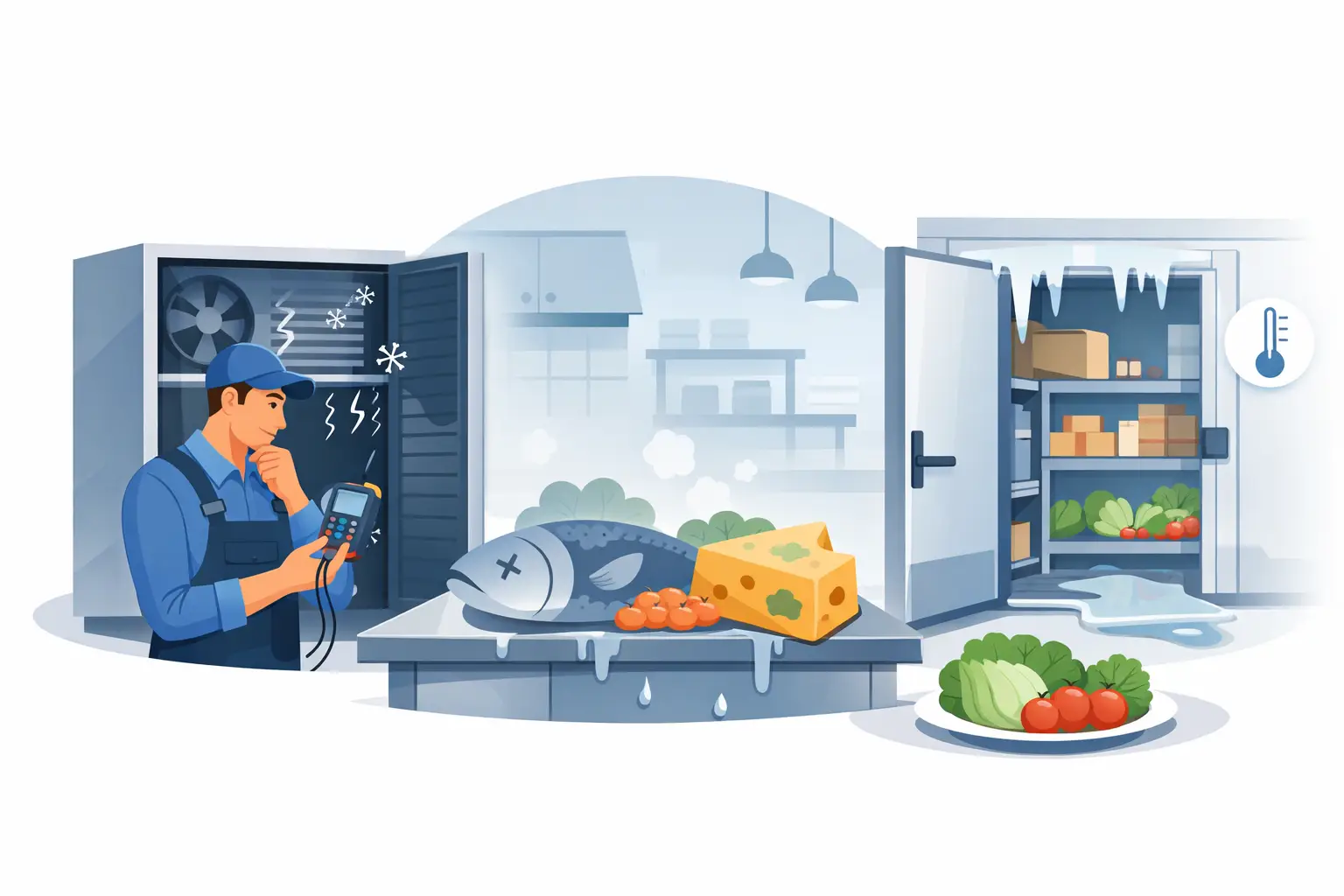
A fridge that runs warm for just one service can leave you with spoiled stock, failed temperature checks and a kitchen team trying to work around a problem they cannot control. That is why understanding the top refrigeration faults in restaurants matters. Most breakdowns do not start as full system failures – they begin with small warning signs that are easy to miss when the kitchen is busy.
In restaurant environments, refrigeration works hard and often without much margin for error. Doors are opened constantly, condensers pull in grease and dust, and equipment is expected to hold safe temperatures through lunch rushes, evening service and late deliveries. When a fault develops, the real cost is rarely just the repair. It is lost product, disrupted prep, pressure on staff and, in some cases, a direct food safety risk.
The top refrigeration faults in restaurants usually start small
One of the most common issues is poor temperature control. A cabinet or cold room may still be running, but not at the temperature it should be. Operators often first notice this when products feel softer than usual, drinks are not properly chilled, or temperature logs begin to creep upward. The cause can vary. It might be a failing thermostat, a sensor reading incorrectly, restricted airflow, dirty coils or a refrigerant issue.
This is where experience matters. The same symptom does not always point to the same fault. Turning the thermostat down may appear to solve the problem for a day or two, but if the condenser is blocked or the evaporator is icing up, the underlying problem remains. In commercial kitchens, temporary fixes often turn into larger repair bills.
Another frequent fault is excessive ice build-up. Ice on the evaporator coil, around the fan section or on internal surfaces usually means something is wrong with airflow, door sealing or the defrost cycle. In a busy restaurant, damaged door gaskets are common because doors take repeated impact from trolleys, boxes and fast-paced movement during service. Once a seal starts leaking warm air into the unit, moisture enters and frost builds quickly.
Defrost faults are also common in freezer rooms and low-temperature storage. If heaters, timers or control boards are not working correctly, ice accumulates until airflow is restricted. At that stage, the system has to work harder, temperatures become unstable and energy use rises.
Compressor and condenser problems
When people think of a refrigeration breakdown, they often think of the compressor. That makes sense – it is the heart of the system. But compressors usually fail for a reason. In many cases, the real issue started elsewhere.
Dirty condensers are one of the biggest contributors to poor refrigeration performance. In restaurants, airborne grease, flour, dust and general kitchen debris collect quickly on condenser coils. When heat cannot dissipate properly, system pressures rise. That puts strain on the compressor, increases running costs and shortens equipment life.
You may notice longer run times, warmer internal temperatures or the condensing unit sounding louder than usual. Left alone, this can lead to overheating trips or full compressor failure. A simple cleaning visit is far cheaper than replacing a compressor assembly, especially where stock loss is added on top.
Fan motor faults sit in the same category. If condenser fans are not pulling enough air across the coil, or evaporator fans are not circulating cold air evenly, temperatures become inconsistent. Sometimes the problem shows up as one warm area inside a cold room. In other cases, staff report that the system seems to run continuously without pulling down temperature as expected.
Refrigerant leaks and pressure-related faults
Refrigerant leaks are another of the top refrigeration faults in restaurants, and they are often more subtle than operators expect. A system with low refrigerant may not stop altogether at first. Instead, it gradually loses performance. Pull-down times get slower, temperature recovery after door openings worsens, and products stored near the end of the line or in higher shelves may not stay as cold as they should.
Leaks can develop at joints, valves, pipework connections or coils, particularly on older systems or equipment exposed to vibration and heavy use. In some cases, corrosion plays a part. In others, poor installation or inadequate support on pipe runs causes long-term stress on connections.
The important point is this: topping up refrigerant is not a proper repair. If refrigerant levels have dropped, the leak needs to be found and fixed. Otherwise, the same fault will return, often at the worst possible time. It also means the system is working under poor conditions, which can damage other components.
High-pressure and low-pressure faults are closely linked. These can be caused by dirty coils, fan failure, blockages, overcharge, undercharge or control issues. The fault alarm may be what your team notices first, but the pressure issue itself is only part of the diagnosis. A proper engineer looks at why those pressures have moved out of range.
Electrical and control faults
Not every refrigeration issue is mechanical. Electrical faults are common across commercial kitchens, especially where equipment runs for long hours in hot, demanding conditions. Contactors wear out, relays fail, wiring degrades, and control boards become unreliable over time.
These faults often create intermittent problems, which are among the hardest for restaurant teams to manage. A unit may appear fine during the morning, then trip out mid-service. Or it may restart after being switched off, leading staff to assume the problem has passed. In reality, intermittent electrical faults usually worsen.
Sensor failures are particularly disruptive because they can make a working refrigeration system behave unpredictably. If a probe is reading incorrectly, the system may short cycle, overcool, undercool or defrost at the wrong time. That can be difficult to spot without proper testing because the cabinet still appears operational.
Control faults also matter more in modern systems, where energy-saving settings, alarms and defrost logic are built into digital controllers. These controls can improve performance when set up correctly, but if they are misconfigured or starting to fail, the symptoms can look like a larger refrigeration problem.
Drainage, door and airflow issues
Some of the most disruptive faults are also the least glamorous. Blocked drains, broken door closers and poor stock layout do not sound as serious as compressor failure, but they cause a surprising number of service calls.
A blocked evaporator drain can lead to standing water, internal ice and damage to surrounding components. In a freezer room, that water quickly becomes a slip hazard. In chilled storage, it can create hygiene concerns and affect packaging. The cause may be grease, food debris or frozen condensate in the line.
Doors are another frequent weak point. If a cold room door does not close properly, if the hinges have dropped, or if the seal is split, warm air enters continuously. That puts strain on the plant, encourages ice build-up and makes temperature stability much harder to maintain. Staff sometimes adapt by closing the door manually or accepting a bit of frost as normal. It is not normal, and it is rarely cheap to ignore.
Airflow problems inside the unit are equally common. Overloading a cabinet, stacking products against the evaporator, or storing warm deliveries without space for circulation can all reduce performance. This is not always a fault in the equipment itself, but the result is the same – poor holding temperature and extra strain on the system.
What restaurants should watch for before failure happens
The best time to deal with refrigeration faults is before they become breakdowns. In practice, that means paying attention to changes in behaviour rather than waiting for total failure. If a unit is noisier, slower to recover temperature, icing up, leaking water or running constantly, it is already asking for attention.
Temperature logs are useful here, but only if someone reviews them properly. A pattern of small fluctuations often tells you more than a single failed reading. The same goes for energy use. If electricity costs rise without a clear operational reason, refrigeration efficiency is one of the first places worth checking.
Preventive maintenance remains the most reliable way to reduce risk. That includes coil cleaning, fan checks, defrost inspection, door seal assessment, drain clearing, control testing and refrigerant diagnostics where needed. Not every site needs the same maintenance frequency. A high-volume restaurant kitchen with grease-heavy cooking will generally need more frequent attention than a lighter-use environment. It depends on load, layout, ambient conditions and how the equipment is used day to day.
For restaurants in London and across the UK, fast response matters when faults do happen, but so does proper diagnosis. Quick attendance is only part of the job. The real value comes from identifying the root cause, carrying out a sound repair and helping prevent repeat failure.
When refrigeration fails in a restaurant, the pressure shows up immediately in stock, service and compliance. The good news is that most major failures give warnings first. Catch those warnings early, and you have a far better chance of protecting both your equipment and your operation.