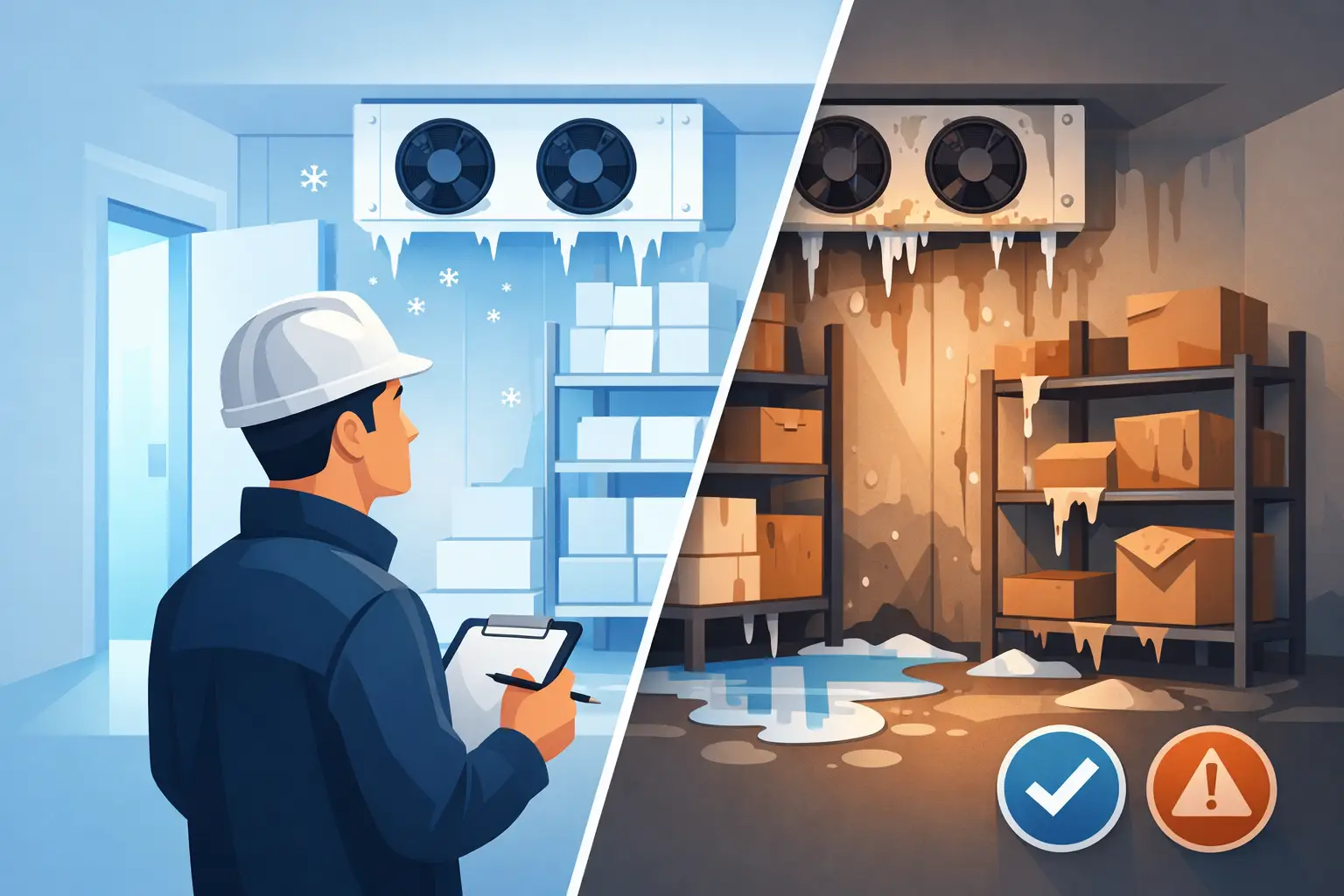
A cold room rarely fails all at once. More often, the warning signs show up in day-to-day operation – rising energy bills, uneven temperatures, recurring repairs, ice where it should not be, or staff quietly adapting to a room that no longer performs as it should. If you are asking when should a cold room be replaced, the real question is usually whether the system is still protecting stock, supporting compliance, and making commercial sense.
For most businesses, replacement is not only about age. A ten-year-old cold room that has been properly maintained can still perform well, while a newer installation that was poorly specified, badly fitted, or heavily overworked may already be costing more than it should. The right decision comes from looking at performance, repair history, energy use, insulation condition, and how critical the cold room is to your operation.
When should a cold room be replaced instead of repaired?
Repair is often the right first step when the issue is isolated and the rest of the system is sound. A failed fan motor, damaged door seal, faulty controller, or refrigerant leak does not automatically mean the whole room needs replacing. If the structure is in good condition and the plant has years of useful life left, a targeted repair can restore reliable operation quickly.
Replacement becomes the stronger option when faults are no longer isolated. If compressors are failing, panels are deteriorating, insulation is compromised, and temperature stability is becoming harder to maintain, repair starts to turn into short-term spending rather than a long-term fix. This is especially true in restaurants, supermarkets, pharmaceutical storage and wholesale environments where a few hours of temperature drift can lead to stock loss, compliance issues, or service disruption.
One useful rule is to look at the pattern, not just the latest breakdown. A single emergency callout is one thing. Repeated callouts over six to twelve months usually tell a different story.
The clearest signs your cold room is nearing replacement
A cold room that needs replacing usually gives off a combination of symptoms rather than one dramatic failure. The most common sign is inconsistent temperature control. If the room struggles to pull down to set point, warms up during busy periods, or develops hot and cold spots, the system may no longer be suitable for the load or the room envelope may be failing.
Another sign is a steady increase in energy consumption. Older refrigeration systems are often less efficient than current equipment, but poor performance is not always down to age alone. Worn door gaskets, damaged insulation, icing evaporators, badly positioned condensers, and overworked compressors all make the system run harder for longer. If your electricity costs are rising without a matching increase in usage, the cold room should be assessed as a whole rather than repaired part by part.
Visible wear matters too. Corroded panels, swollen floors, damaged joints, water ingress, and repeated ice build-up can point to insulation failure or structural deterioration. Once the fabric of the room starts to break down, temperature control becomes harder and hygiene risks can increase. In food and pharmaceutical settings, that creates a problem that maintenance alone may not solve.
Then there is the issue of parts availability. If key components are obsolete or difficult to source, every breakdown becomes slower and more expensive to resolve. That risk is often enough to justify planned replacement, especially where uptime is critical.
Age matters, but it is not the whole story
Many businesses want a simple age threshold, but there is no fixed number that applies to every cold room. As a broad guide, once a system moves into the 10 to 15 year range, replacement should at least be considered more seriously, particularly if the room is in constant use or supports frozen storage. Heavy-duty environments age equipment faster than lightly used stores.
That said, age only becomes meaningful when combined with condition. A well-maintained cold room with sound panels, good insulation, modern controls, and a strong service history may continue to operate reliably beyond that range. By contrast, an ageing system that has had years of reactive repairs, poor airflow, damaged doors and deferred maintenance may already be a liability.
This is why a proper site inspection is more useful than relying on age alone. It shows whether the problem is mainly with refrigeration plant, the insulated envelope, or the original design.
What replacement can solve that repairs cannot
Repairs are designed to restore function. Replacement gives you the chance to correct deeper issues that have been built into the room for years. In many commercial sites, the original cold room no longer matches current use. The business has grown, stock turnover has changed, product type is different, or compliance demands are tighter than they were when the room was first installed.
A replacement project allows you to resize the room, improve access, upgrade door systems, install more efficient condensing units, improve airflow, and integrate controls that make monitoring easier. It can also reduce the strain caused by poor original specification. For example, if a room designed for chilled storage is being pushed hard in a high-traffic kitchen, no amount of repeated repair will fully solve a design mismatch.
Energy efficiency is often where the biggest long-term gains sit. Newer systems can offer better insulation performance, more accurate controls and more efficient refrigeration plant. That does not mean every old cold room should be replaced immediately, but where operating costs are persistently high, replacement can become the more economical decision over time.
When repair still makes sense
There are plenty of situations where replacement would be premature. If the cold room structure is sound, temperatures are stable, and the issue is limited to a specific component, repair is usually the sensible route. The same applies where a room has had a strong maintenance history and breakdowns are still occasional rather than frequent.
Budget and timing also matter. A business may need an immediate repair to protect stock and keep trading, while planning replacement for a quieter period. That is a practical approach, especially in hospitality and retail where operational disruption must be managed carefully.
The key is honesty about whether the repair is buying you reliable service or simply buying you a little time. There is nothing wrong with the second option, provided it is recognised for what it is.
When should a cold room be replaced for compliance and risk reasons?
In some settings, the decision is less about engineering preference and more about operational risk. If a cold room can no longer maintain the temperature range required for food safety, medicines, or sensitive stock, replacement may be necessary even if the system is still technically running. A room that drifts, struggles in warm weather, or cannot recover quickly after door openings may put product integrity at risk.
Hygiene and fabric condition can also force the issue. Damaged panels, cracked finishes, moisture ingress and failing floors can create cleaning problems and undermine standards expected in regulated environments. Where compliance is central to the business, the cost of keeping an unreliable room in service can quickly exceed the cost of upgrading it properly.
How to decide without guessing
The best replacement decisions are based on inspection and evidence, not frustration after a breakdown. Start with the service history. How often has the room failed? Are the same faults returning? Have repair costs started to bunch together? Then look at performance data, energy use and the condition of the room itself.
A good assessment should consider the insulated panels, doors, seals, evaporators, condensers, controls, pipework and overall system sizing. It should also take account of how the room is actually used. Frequent door openings, overloading, poor product loading patterns and high ambient conditions all affect performance, and sometimes the answer is not full replacement but a targeted upgrade.
Where replacement is justified, planning matters. A staged project can reduce downtime, protect stock, and avoid the panic that comes with waiting for total failure. For businesses across London and the wider UK, that often makes the difference between a controlled upgrade and an expensive emergency.
If your cold room has become unpredictable, expensive to run, or increasingly difficult to trust, do not wait for a complete failure to make the decision for you. The right time to replace it is usually just before it starts putting stock, service, and compliance at risk.