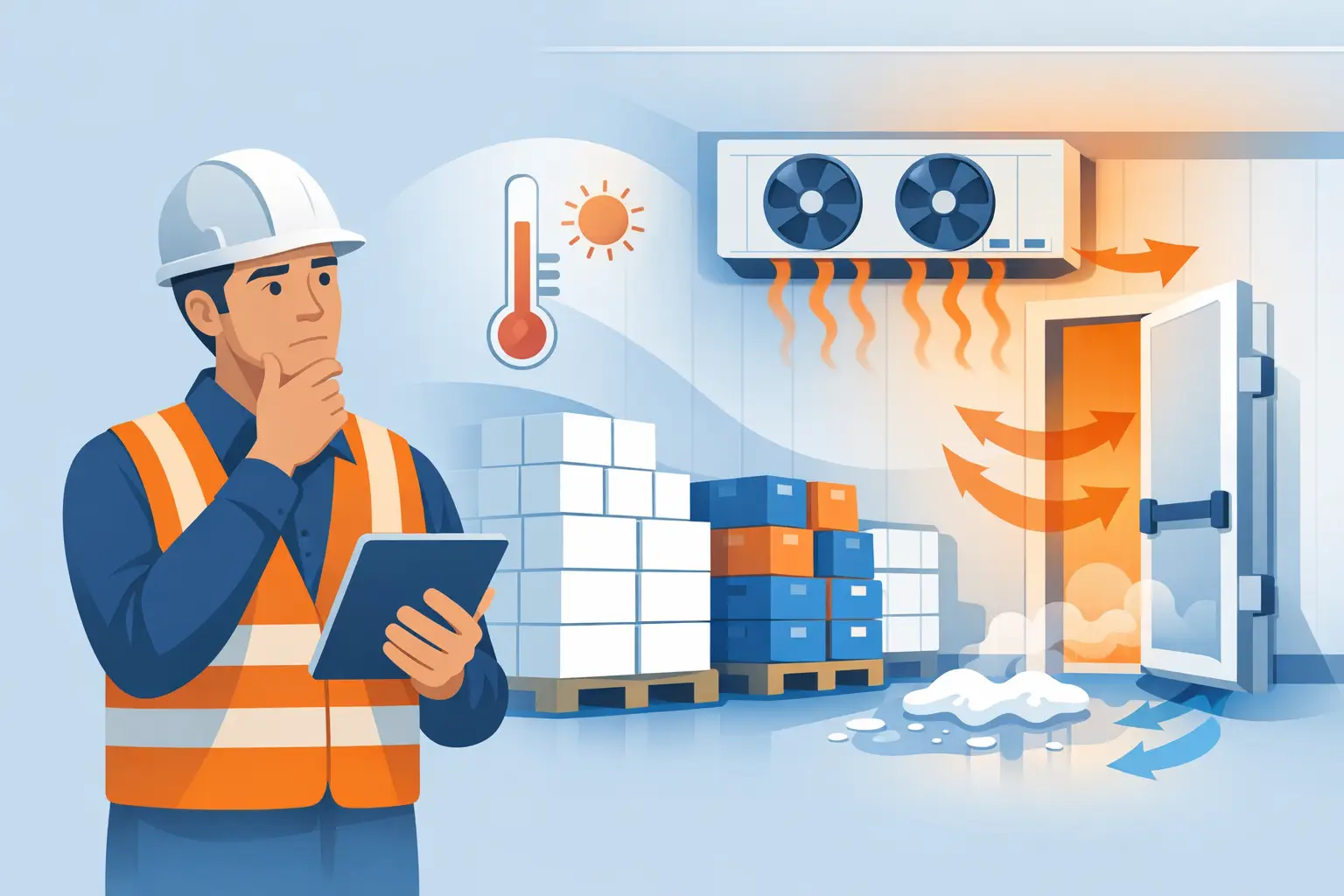
You notice it when stock feels soft, fans seem louder than usual, or the room simply does not pull down to set temperature after a delivery. If you are asking why is cold room warm, the answer is rarely just one fault. In commercial refrigeration, rising temperature usually points to a system under strain, a failed component, poor airflow, or heat getting in where it should not.
That matters because a warm cold room is not only an inconvenience. It can mean food waste, compliance issues, lost product, interrupted service, and higher energy use while the system works harder to recover. The right response is not guesswork. It is a clear check of the most likely causes, the urgency of the situation, and whether the fault can be corrected on site or needs an engineer.
Why is cold room warm when the unit is running?
One of the most frustrating scenarios is when the condensing unit is clearly operating, yet the room stays above target temperature. That usually means the system is running but not removing heat effectively. A refrigeration system can only perform if airflow, refrigerant movement, controls, and insulation are all doing their job.
In many commercial sites, the first issue is restricted airflow. If the evaporator is blocked by ice, cartons are stacked too close to the unit cooler, or fan motors are not working correctly, cold air cannot circulate around the room. The unit may continue to run for long periods, but the product temperature will stay too high, especially in corners, near doors, or around tightly packed stock.
Another common cause is dirty heat exchange surfaces. Condensers collect dust, grease, and debris over time, particularly in busy kitchens, food prep areas, and loading environments. When the condenser cannot reject heat properly, system pressures rise, efficiency drops, and the cold room struggles to hold temperature. This is a slow failure at first, which is why it often goes unnoticed until the room is obviously warm.
Controls can also mislead operators. A faulty thermostat, sensor, or controller may display one temperature while the actual room condition is different. Sometimes the unit cycles off too early. Sometimes it does not trigger defrost correctly. In either case, the cold room may appear to be operating normally while temperature control is drifting.
The most common reasons a cold room gets warm
If you are trying to narrow down why a cold room is warm, start with the faults seen most often in commercial settings.
Door problems and warm air ingress
Cold rooms lose performance quickly when warm air gets in. A damaged door seal, misaligned hinge, worn closer, or frequent door opening can all raise internal temperature. In a busy restaurant or supermarket back-of-house area, that effect is magnified because staff traffic is constant and deliveries often take place during peak operating periods.
Strip curtains and door heaters matter too. If strip curtains are missing or damaged, warm moist air enters the room more easily. That can lead to condensation, icing, and longer run times. Over time, what began as a simple door issue turns into broader performance problems.
Evaporator icing
Ice on the evaporator coil is a major warning sign. Once the coil is heavily iced, airflow drops and cooling capacity falls away. This can be caused by a failed defrost heater, a defrost timer issue, a blocked drain, or warm air entering through poor door seals.
Some operators try to manage this by turning the system off and letting the ice melt. That may restore cooling briefly, but it does not solve the underlying cause. If the fault is in the defrost system or airflow pattern, the issue usually returns.
Refrigerant issues
Low refrigerant charge can reduce cooling performance and prevent the system from reaching set point. In most cases, refrigerant does not simply get used up. If levels are low, there is usually a leak somewhere in the system.
This is one of the clearest examples of why quick diagnosis matters. Topping up refrigerant without leak testing is only a short-term fix. The room may cool for a while, then warm again, and the business ends up paying twice for the same problem.
Compressor or condenser faults
A failing compressor may still run but not pump effectively enough to maintain temperature. Electrical issues, worn internal components, overheating, or poor oil return can all affect output. Likewise, condenser fan failures or blocked condensers reduce heat rejection and make the whole system less effective.
These faults are not always dramatic. The room may cool slowly, struggle in warm weather, or fail after heavy door usage rather than stopping completely. That is why pattern recognition matters. If performance drops during busy trading hours or after restocking, there may already be a plant issue developing.
Poor loading and airflow obstruction
Sometimes the refrigeration plant is sound, but the room is being used in a way that works against it. Hot product loaded straight into the room, overfilled shelving, blocked evaporators, and stock pushed against walls all reduce effective air circulation.
A cold room is designed to maintain temperature, not rapidly pull down large volumes of warm stock without limit. If loading practices change, or if demand has outgrown the original design, the room may consistently run warm even though there is no single component failure.
Why is cold room warm after a delivery or busy shift?
This is where context matters. A brief temperature rise after a large delivery is not unusual. Doors are open longer, ambient air enters the room, and incoming goods may be warmer than stored stock. The key question is whether the room recovers in a reasonable time.
If the cold room remains warm for hours after loading, the plant may be undersized for the current demand, airflow may be obstructed, or there may be a maintenance issue reducing capacity. Busy commercial sites often change how they use cold storage long before they review whether the equipment still matches the workload.
In some cases, the problem is environmental. High kitchen temperatures, poor ventilation around the condensing unit, or seasonal heat can all affect system performance. That does not always mean the equipment is faulty, but it does mean the installation may need adjustment, servicing, or a capacity review.
What to check before calling an engineer
A few basic checks can help confirm whether the issue is operational or mechanical. Look first at the door. Make sure it is closing fully and the seals are intact. Then check whether stock is blocking the evaporator or stopping air from circulating.
Inspect the controller and compare the displayed temperature with a separate thermometer if available. If there is visible ice on the evaporator, water around the drain area, or unusual fan noise, that points towards airflow or defrost trouble. Also listen for the condensing unit. If it is running constantly, short cycling, or unusually noisy, there may be a plant-side fault.
Do not ignore housekeeping around the condenser. If it is heavily coated with dust or grease, performance will suffer. In some cases, careful cleaning by a competent person may improve operation. But if temperatures are rising quickly, stock is at risk, or you suspect refrigerant or electrical failure, it is best not to delay.
When a warm cold room becomes urgent
Not every rise in temperature is an emergency, but some situations need immediate attention. If the room is used for pharmaceuticals, dairy, meat, seafood, or frozen stock, even a short loss of temperature control can become serious. The same applies where food safety records, audit compliance, or product traceability are involved.
Urgency also depends on trend. A room sitting one or two degrees above set point may be manageable for a short period while checks are made. A room climbing steadily, failing to recover, or showing signs of icing, water leakage, or compressor stress should be treated as urgent. The longer the fault continues, the greater the risk to stock and the more strain placed on the equipment.
Preventing the same fault from happening again
Most warm cold room callouts are preventable with regular servicing and realistic operational planning. Maintenance is not just about avoiding breakdowns. It is about keeping the room efficient, spotting wear before it causes failure, and making sure controls, defrost, refrigerant levels, fans, drains, and condensers are all performing properly.
It also helps to review how the room is actually being used. If stock volumes have increased, if door traffic is heavier, or if the business has changed product type, the original specification may no longer be the right fit. A practical engineering review can often identify whether the answer is repair, adjustment, or system upgrade.
For businesses that rely on uninterrupted chilled or frozen storage, a warm cold room is never just a temperature issue. It is an operational risk. If the cause is caught early, the fix is often straightforward. Leave it too long, and a minor fault can become stock loss, wasted energy, and avoidable downtime.
If your cold room is running warm, act early, check the basics, and treat repeated temperature drift as a sign that the system needs proper attention rather than another temporary workaround.