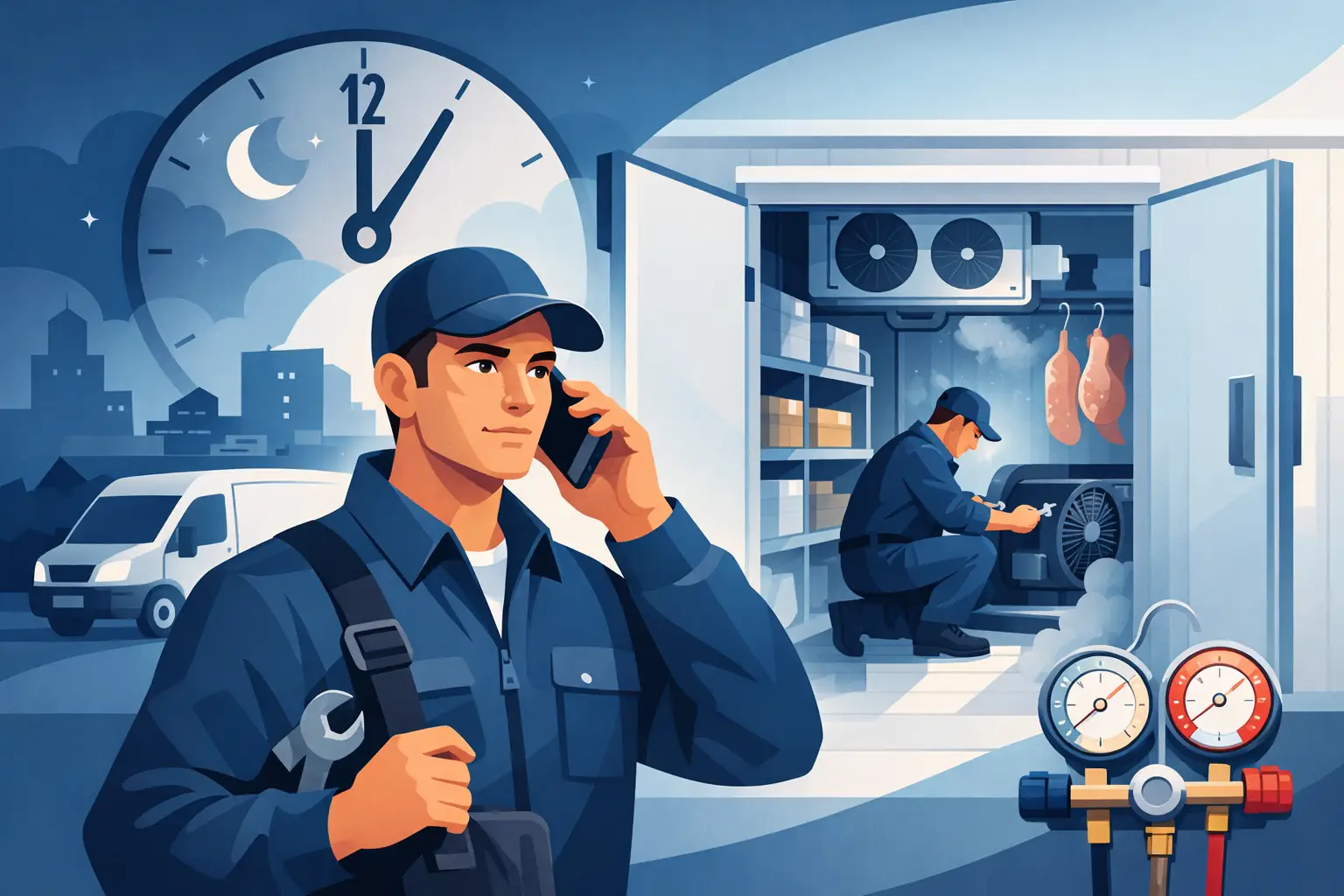
A cold room alarm at 2am is not a minor inconvenience when you have stock on the shelves, deliveries due in the morning, or temperature-sensitive products that cannot drift out of range. That is exactly when 24 hour refrigeration engineers become essential – not just to get a system running again, but to protect stock, compliance, and the working day that follows.
For restaurants, supermarkets, wholesalers and pharmaceutical sites, refrigeration breakdowns rarely happen at a convenient time. Compressors fail overnight. Fan motors stop during a weekend service. Door seals give way after months of wear, and the first real sign is a struggling room temperature when the site is lightly staffed. In those moments, the value of a true emergency engineering service is simple: fast diagnosis, practical repair, and clear advice on whether the fix will hold or whether a larger issue needs to be dealt with properly.
What 24 hour refrigeration engineers actually do
There is a difference between a company that offers emergency support in theory and one that is set up to respond in practice. Commercial refrigeration faults are not one-size-fits-all. A walk-in freezer room, a cellar cooling system, a multideck display case and a pharmaceutical cold store all behave differently under fault conditions. The engineer attending needs to understand controls, refrigerant circuits, airflow, defrost operation, electrical faults and how the system was installed in the first place.
When 24 hour refrigeration engineers attend a callout, the first priority is usually containment. That means stabilising temperature, identifying whether stock can be protected, and working out if the issue is mechanical, electrical or control-related. Sometimes the repair is straightforward, such as replacing a failed contactor, resetting a tripped component after testing, or resolving an evaporator icing issue caused by a defrost fault. Other times, the visible symptom is only part of the problem. A room running warm may point to refrigerant loss, but the root cause could be a damaged coil, a failed valve, poor airflow or a long-standing maintenance issue.
Good emergency support is not just about arriving quickly. It is about arriving ready to diagnose properly.
Why speed matters, but accuracy matters more
In emergency refrigeration work, everyone wants the same thing: the system back on as quickly as possible. That said, speed without proper diagnosis can create more downtime later. A temporary reset may get a condensing unit running again, but if the underlying cause is a failing compressor or unstable electrical supply, the same site may face another outage within hours.
This is why experienced engineers work in stages. First, they make the environment safe and assess the risk to stock. Then they test the system methodically, rather than changing parts on assumption. After that, they explain whether the repair is temporary, durable, or likely to need follow-on work.
For a business owner or site manager, that clarity matters. You need to know whether the room is genuinely back in service or whether you are buying time until a planned repair can be carried out. Honest advice is often the difference between a controlled maintenance decision and another costly emergency call.
Common faults seen on emergency callouts
Most overnight and out-of-hours failures fall into a few broad categories, although each site has its own quirks. Electrical faults are common, especially with contactors, relays, fan motors and control boards. Refrigerant leaks also appear regularly, particularly on older systems or where vibration and wear have affected joints and pipework.
Airflow issues are another frequent cause of temperature problems. Blocked condensers, iced evaporators, failed fans and poor door discipline can all force a system to work harder than it should. In freezer rooms, defrost faults are a regular source of trouble. In chilled environments, incorrect set-up or sensor drift can quietly affect performance until a site suddenly notices product temperatures moving out of spec.
The point is that emergency faults are often preventable, but once they happen they need engineers who can read the full picture, not just swap a part and leave.
What businesses should expect from 24 hour refrigeration engineers
If your operation depends on cold storage, emergency support should feel organised, not improvised. A proper service starts before the engineer reaches site. The business taking the call should ask the right questions about room temperature, alarm codes, unit type, stock risk and site access. That helps the engineer arrive with a realistic understanding of the problem.
On site, you should expect a clear assessment, not vague reassurance. If the system can be repaired there and then, that should be explained. If parts are needed, you should be told what has failed, how urgent the follow-up work is, and what short-term precautions are sensible. In some cases, a temporary repair is the right move because it protects stock and gets trading restored. In others, temporary fixes are false economy.
You should also expect practical advice around maintenance. Emergency attendance is one part of refrigeration support, but the best engineering partners also help reduce repeat failures. That may mean recommending condenser cleaning, replacing worn door seals, checking drain heaters, reviewing defrost settings, or looking at the age and condition of major components.
The cost of waiting too long
Many breakdowns do not begin as full failures. They begin as warning signs: longer pull-down times, unusual noises, intermittent alarms, excessive ice build-up, or a cold room that is technically running but not holding temperature as steadily as it should. Businesses sometimes delay action because the system is still operating. That can be an expensive mistake.
A struggling condensing unit uses more energy. A refrigerant leak usually worsens over time. A worn fan motor rarely improves on its own. What starts as a service visit can turn into a full emergency, with stock loss and business disruption on top of the repair cost.
For sites under food safety or pharmaceutical compliance pressure, delayed action carries another risk. If temperature records show instability, you may be dealing with more than a maintenance issue. You may be dealing with product integrity, audit questions and operational disruption that lasts far beyond the repair itself.
Emergency repair versus planned replacement
Not every failing system should be patched indefinitely. This is where experienced advice matters most. If a unit is relatively modern and well matched to the application, a repair often makes complete sense. If the plant is ageing, inefficient, poorly maintained or has a history of repeated callouts, replacement may be the more cost-effective option.
It depends on the age of the equipment, refrigerant type, availability of parts and how critical the cold storage is to your operation. A restaurant might tolerate a short planned shutdown for replacement if temporary storage is available. A pharmaceutical facility may need a far more controlled approach with no room for guesswork. The right engineering advice takes the operating reality into account, not just the immediate fault.
Why end-to-end support makes a difference
There is a practical advantage in working with a refrigeration company that understands design, installation, repair and maintenance rather than only one part of the process. Systems are easier to diagnose when the engineers understand how they should have been specified, how pipework layouts affect performance, and how controls interact with room usage.
That matters during emergency callouts because refrigeration problems are not always isolated part failures. Sometimes the issue traces back to system design, poor ventilation around the condenser, incorrect commissioning, or an application that has changed over time. A room originally built for one volume of stock may now be carrying a very different load. An engineer who can see beyond the immediate breakdown is more likely to provide a fix that lasts.
For businesses with multiple refrigeration assets, from freezer rooms to prep area chillers, long-term support also brings consistency. Engineers become familiar with the site, records improve, and recurring faults are easier to spot early. That saves time, reduces repeat disruption and helps maintenance budgets stay more predictable.
Choosing the right emergency refrigeration partner
When comparing providers, response time matters, but it should not be the only question. Ask whether they work regularly on commercial cold rooms and freezer rooms, whether they support planned maintenance as well as breakdowns, and whether they are comfortable advising on repair versus replacement. A fast attendance is useful. A fast attendance with the wrong diagnosis is not.
It is also worth looking for a service partner that understands the pressure of your sector. A supermarket manager has different priorities from a small café owner. A pharmaceutical operator may need tighter control, more documentation and more certainty around temperature performance. Practical engineering support should reflect that.
In London and across the wider UK, businesses that depend on cold storage need more than a number to ring in a crisis. They need confidence that when a unit fails at the worst possible time, the response will be calm, competent and focused on keeping the operation moving.
The best time to think about 24-hour support is before the next alarm sounds, while there is still time to choose engineers who will treat your breakdown like the business risk it is.