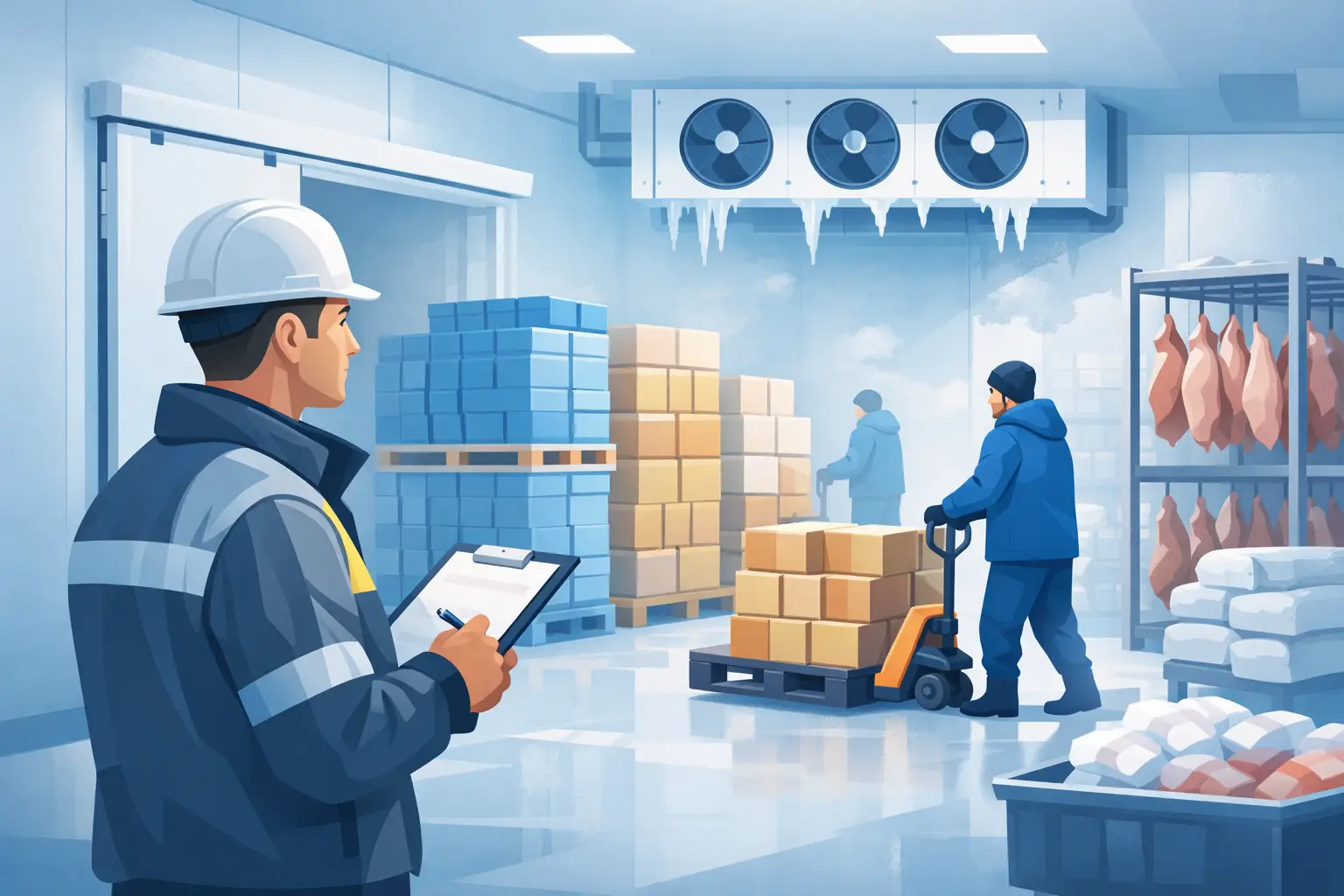
When a cold room fails, the damage is rarely limited to temperature. Stock is put at risk, service slows down, compliance issues appear, and energy costs often climb long before a full breakdown makes itself obvious. For any business that depends on chilled storage, a cold room is not just a box that stays cold. It is part of the operation, and it needs to be designed, installed and maintained that way.
A lot of businesses only start asking detailed questions after something goes wrong. That is understandable, but it is expensive. Whether you run a restaurant, supermarket, warehouse or pharmaceutical site, the right cold room setup protects stock, supports staff, and gives you far fewer emergencies to deal with.
What a cold room actually does
A cold room is a temperature-controlled storage space built to hold products within a consistent chilled range. In commercial settings, that usually means preserving food, drink, flowers, medicines or other temperature-sensitive goods that cannot be left to fluctuate.
The key word is consistency. Most businesses do not lose stock because a room was warm for weeks without anyone noticing. They lose stock because temperatures drift, doors are left open, airflow is poor, components begin to struggle, or the room was never properly specified for the products inside it.
That is why a cold room has to be treated as a system rather than a simple piece of equipment. Panels, insulation, doors, evaporators, condensers, compressors, controls and layout all affect how well it performs. A weakness in one area usually creates pressure somewhere else.
Why specification matters more than many businesses expect
One of the most common mistakes is assuming that bigger is better or that standard sizes suit every site. In reality, the right cold room depends on what you store, how often the door opens, the room’s location, the ambient temperature around it, and how your team works day to day.
A restaurant kitchen, for example, may need fast access, tight space planning and reliable holding temperatures through busy service periods. A wholesaler may be more concerned with pallet access, loading cycles and energy efficiency over larger storage volumes. A pharmaceutical business has another level of pressure altogether, where temperature stability, monitoring and compliance are central.
Poor specification has knock-on effects. If the room is undersized, overworked or badly ventilated, components wear faster. If insulation is not right, the system runs harder and electricity use increases. If access has not been planned properly, staff habits start working against the system every day.
This is why proper planning at the start matters so much. If you are reviewing a new project, it helps to understand How to Design Cold Room Systems Properly before you commit to layout, plant selection or build details.
The difference between installation and a proper solution
Many suppliers can install a cold room. That does not always mean they have solved the wider operational problem.
A proper solution starts with asking the right questions. What temperature range is required? What stock profile is stored? How often is the room accessed? Is there a need for future expansion? What happens if the site loses cooling during peak trading hours? These are practical engineering questions, not sales questions.
Installation quality makes a direct difference to reliability. Poor panel joints, weak door seals, badly placed evaporators, inadequate drainage or incorrect condenser positioning can lead to recurring faults that look unrelated but come from the same original issue. The business then ends up paying for repeated callouts instead of getting long-term performance.
The best installations are not simply cold on day one. They are stable, efficient and maintainable over time.
What affects cold room performance day to day
Once a room is up and running, performance is shaped by a mix of engineering, environment and behaviour. Businesses often focus on the refrigeration kit alone, but daily usage patterns matter just as much.
Frequent door opening is an obvious factor, especially in busy kitchens and retail environments. Warm air enters, moisture builds, and the system has to work harder to recover temperature. Damaged door gaskets, blocked airflow and poor stock placement create the same kind of strain, even if the plant itself is sound.
Then there is maintenance. Dirty condensers, low refrigerant charge, worn fan motors, control faults and sensor issues rarely appear all at once. They usually build gradually. The room still cools, but not as efficiently, and running costs rise before a breakdown forces action. If you are seeing inconsistent temperatures or increased energy use, it is worth looking at What Causes Cold Room Failure? before a minor issue becomes a stock-loss event.
Ambient conditions also matter more than many operators realise. A condenser working in a poorly ventilated plant area or exposed to excessive heat will struggle to reject heat properly. That increases system stress and reduces efficiency. In simple terms, the cold room may still be doing its job, but at a much higher cost.
Energy use is a design and maintenance issue
A cold room that runs constantly is not necessarily doing a better job. In many cases, it is doing the same job less efficiently.
Energy costs are shaped by insulation quality, door management, system sizing, component condition and control settings. Older rooms are especially vulnerable because the decline is gradual. A business gets used to the cost base and assumes that rising bills are unavoidable, when the real issue may be worn seals, ageing controls, poor insulation performance or a condenser that has not been properly cleaned and serviced.
This is where practical upgrades can make a measurable difference. Better insulation, improved controls and timely component replacement often cost less over time than allowing an inefficient system to limp on. Businesses reviewing operating costs should pay close attention to Cold Room Insulation Upgrades That Pay Off, especially if the room is older or usage has increased since the original installation.
Compliance is not the same as cooling
Holding a low temperature is only part of the requirement in regulated environments. For food businesses, temperature control links directly to safety, traceability and due diligence. For pharmaceutical storage, the standard is even higher. Monitoring, recording, alarm response and system reliability all matter.
That means a cold room should not be judged only by whether it feels cold when someone steps inside. It should be assessed by whether it consistently meets the temperature range required for the products being stored, whether that can be verified, and whether the system can be trusted during operational pressure.
For sites storing sensitive medical products, biological materials or regulated goods, a more specialised approach is essential. Pharmaceutical Cold Storage Compliance is a useful reference point if your business has strict audit or validation requirements.
When repair is enough and when replacement is the better decision
Not every fault means the room needs replacing. Equally, not every repair is good value.
If a system has been reliable for years and the issue is isolated, a targeted repair often makes sense. That could mean replacing a failed fan motor, correcting a control issue, repairing a door heater, or resolving condenser or compressor problems before wider damage occurs.
But there is a point where repeated repairs become false economy. If the room has chronic temperature instability, obsolete components, poor insulation or persistent energy waste, replacing or refurbishing part of the system may be the smarter decision. This is especially true where downtime carries a direct commercial cost.
The right decision depends on age, condition, repair history and business risk. A small fault in a lightly used back-of-house room is very different from the same fault in a high-turnover supermarket or production environment.
Why planned servicing matters
Emergency support matters because breakdowns do happen. But the businesses with the fewest serious failures are usually the ones that do not rely on emergency response alone.
Planned servicing helps catch early signs of trouble, keeps components working within proper limits, and gives operators a clearer view of the system’s condition. It also reduces the chance of hidden issues pushing up electricity use or shortening equipment life.
A good service visit should do more than tick a box. It should check performance, inspect critical components, review controls, identify wear, and highlight risks before they affect stock or trading. If you want a practical view of what that should include, Cold Room Servicing Checklist for Reliability sets out the areas worth paying attention to.
Choosing a cold room partner, not just a contractor
For most businesses, the real challenge is not finding someone who can supply a room. It is finding a provider who understands what happens after handover.
That means looking for technical depth, clear advice and support when things go wrong. It means asking who will service the system, who will attend if there is a breakdown, and whether the same company understands design, build, controls and repair. A provider with end-to-end capability is usually better placed to solve problems properly, because they can see how installation choices, component condition and operating pressures connect.
For businesses that cannot afford downtime, that joined-up support matters as much as the cold room itself. If your operation depends on stable chilled storage, the best investment is not the cheapest install. It is a system that is right from the start and backed by people who know how to keep it working.