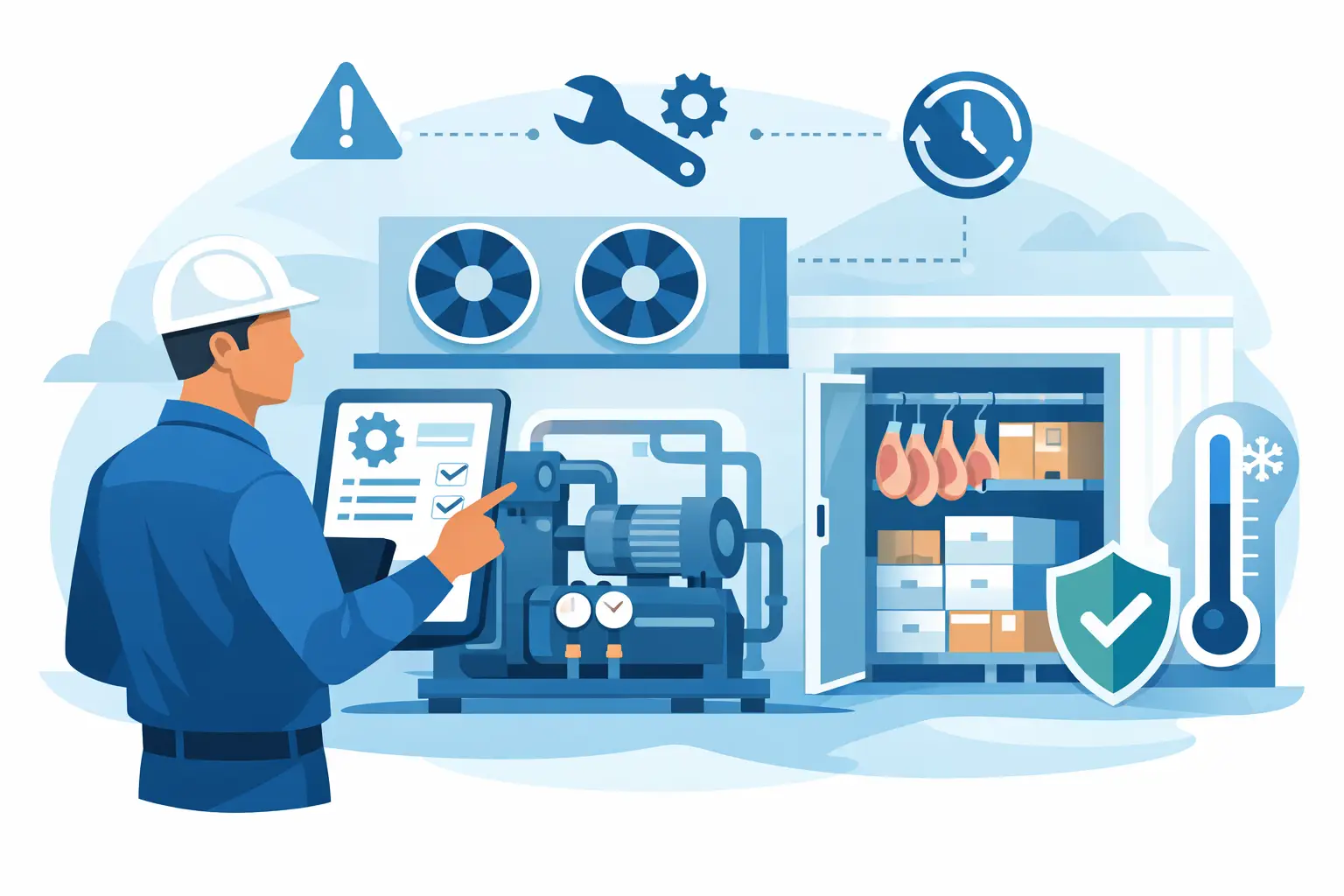
A compressor trips at 3am, the cold room temperature starts climbing, and by the time staff arrive the next morning, stock quality, safety records and the day’s trading are already under pressure. That is exactly why a refrigeration downtime prevention plan matters. For any business storing food, drink, pharmaceuticals or temperature-sensitive goods, downtime is not just an engineering issue. It is an operational risk with direct cost.
The strongest plans do not rely on one big fix. They reduce the chance of failure, shorten recovery time when something does go wrong, and make sure the right people know what to do without wasting valuable minutes. That approach is what keeps a busy restaurant service running, protects supermarket stock, and helps a warehouse or pharmacy stay compliant.
What a refrigeration downtime prevention plan should cover
A good refrigeration downtime prevention plan is part maintenance schedule, part risk assessment and part emergency procedure. If it only focuses on servicing, it is incomplete. If it only focuses on breakdown response, it is already too late.
In practice, the plan should cover the physical system, the people using it and the response steps for failure scenarios. That means looking at plant condition, temperature monitoring, alarm handling, cleaning routines, spare parts, contractor support and stock protection. Each of those areas affects uptime.
The exact detail depends on the site. A small restaurant walk-in chiller does not need the same level of redundancy as a pharmaceutical cold room. A wholesale freezer room holding high-value stock may justify backup capacity or more advanced remote monitoring, while a smaller site may be better served by tighter inspections and a faster emergency support arrangement. The principle is the same in both cases – reduce avoidable faults and respond quickly to unavoidable ones.
Start with the most common causes of downtime
Many refrigeration failures are not sudden, random events. They build up over time. Dirty condensers raise operating pressure. Worn door seals let warm air in and force the system to work harder. Drainage issues lead to ice build-up. Poor airflow around evaporators causes uneven cooling. Electrical components begin to fail after repeated stress. Small refrigerant leaks slowly reduce performance before they become obvious.
When businesses review downtime after the event, the warning signs were often there. Higher energy use, longer pull-down times, nuisance alarms and minor temperature drift are all early indicators. A prevention plan should treat these signs seriously, not as background noise.
This is one reason proper installation matters so much. If a system is undersized, badly commissioned or poorly laid out, it can spend years running under strain. That makes reactive repairs more likely and more expensive. Prevention starts long before the first breakdown callout.
Build maintenance around risk, not just a calendar
Routine maintenance is the backbone of any plan, but frequency should match the environment and usage. A cold room in a clean, low-traffic area has different demands from a freezer room in a busy loading zone with constant door openings.
At minimum, maintenance should include checks on operating pressures, temperature accuracy, refrigerant charge, electrical connections, fan motors, defrost operation, door hardware, seals and insulation condition. Condenser and evaporator cleanliness also matter more than many sites realise. Heat exchange surfaces do not have to look heavily contaminated before performance starts to drop.
The most effective maintenance schedules are based on actual site conditions. High-use systems often need more frequent attention, especially where stock turnover is fast or ambient temperatures vary sharply. Seasonal checks can also help. Summer places obvious extra demand on refrigeration plant, but winter can expose controls issues, drainage faults and door seal weaknesses.
A maintenance visit should not be treated as a tick-box exercise. It should identify trends. If a compressor is drawing more current than expected or a cold room is struggling to recover after deliveries, that is useful operational information. A prevention plan works best when maintenance is used to spot developing faults early.
Monitoring matters as much as mechanical condition
A well-maintained system can still fail, which is why temperature monitoring and alarm management deserve their own place in the plan. If staff only discover a problem during a manual check, the response is already delayed.
Continuous monitoring allows issues to be picked up early, especially overnight, at weekends or during quieter periods. In some settings, remote alarms are essential rather than optional. This is particularly true where stock loss would be significant or compliance requirements are strict.
That said, alarms are only useful if they lead to action. Too many sites have alarms set incorrectly, ignored because of frequent false alerts, or sent to people who are not available to respond. A sensible plan defines who receives alarms, what thresholds trigger escalation and how quickly checks should take place. It also separates critical alarms from minor notifications so genuine emergencies are not missed.
The human side of downtime prevention
A refrigeration system may be highly technical, but a lot of avoidable downtime still comes back to day-to-day handling. Doors left open, blocked airflow, overloading, poor stock arrangement and missed cleaning all place extra strain on equipment.
Staff do not need to be refrigeration engineers, but they should know the basics. They should understand the acceptable temperature range, what normal operation looks like, and which signs need reporting straight away. That could be unusual noise, excess frost, standing water, repeated alarms or doors not sealing properly.
Short, practical site procedures make a difference here. If an issue is spotted, who gets called first? If temperatures start rising, which stock is most critical? Should products be moved, quarantined or checked with probe readings? These decisions are easier when they have been agreed in advance.
Plan for breakdowns before they happen
No refrigeration downtime prevention plan can promise zero failures. Compressors fail. Controls fail. Power issues happen. The real test is how quickly the business can contain the problem.
That means having a clear breakdown procedure. The right contact details should be available on site, not buried in someone’s inbox. Plant information, access arrangements and asset records should be easy to find. If specialist parts are commonly needed, it may be worth holding critical spares on site or agreeing supply arrangements in advance.
For larger operations, contingency capacity should also be considered. It might be a secondary cold room, temporary storage arrangements, or system design that allows partial operation while repairs are carried out. This is where cost and risk need to be weighed properly. Backup capacity has a price, but so does losing a full room of stock or shutting down trading.
Businesses with multiple sites sometimes assume they are protected because stock can be moved elsewhere. In reality, transport time, available space and product handling rules can make that difficult. A prevention plan should test these assumptions before an emergency exposes them.
Why one provider often gives better control
Where refrigeration design, installation, maintenance and emergency repair are split across several contractors, responsibility can become blurred. Faults are harder to diagnose, previous work is harder to track, and response can slow down while people work out who owns the problem.
For many businesses, there is real value in using one engineering partner that understands the full system lifecycle. That does not just make callouts easier. It improves planning. The team servicing the plant already knows how it was built, what its weak points are and how the site operates. That context often leads to faster diagnosis and more practical recommendations.
For sites across London and the wider UK where uptime is critical, this joined-up approach can remove a lot of operational friction.
Reviewing the plan after every incident
A prevention plan should not be written once and forgotten. Every alarm, temperature excursion or repair is a chance to improve it. If a callout took too long, ask why. If stock had to be moved in a hurry, check whether the process was realistic. If a repeated fault keeps returning, the issue may be design-related rather than maintenance-related.
This review process is where many businesses make the biggest gains. Not because the faults disappear overnight, but because response becomes sharper and repeat issues are addressed properly instead of patched.
The aim is straightforward. Keep equipment reliable, catch small problems early, and make sure a fault does not turn into a business interruption. That is what a refrigeration downtime prevention plan is really for. Not paperwork, not theory, but protecting stock, compliance and continuity when the cold room has to keep working.
If your refrigeration supports revenue, safety or legal compliance, prevention is rarely the expensive option. Waiting for failure usually is.