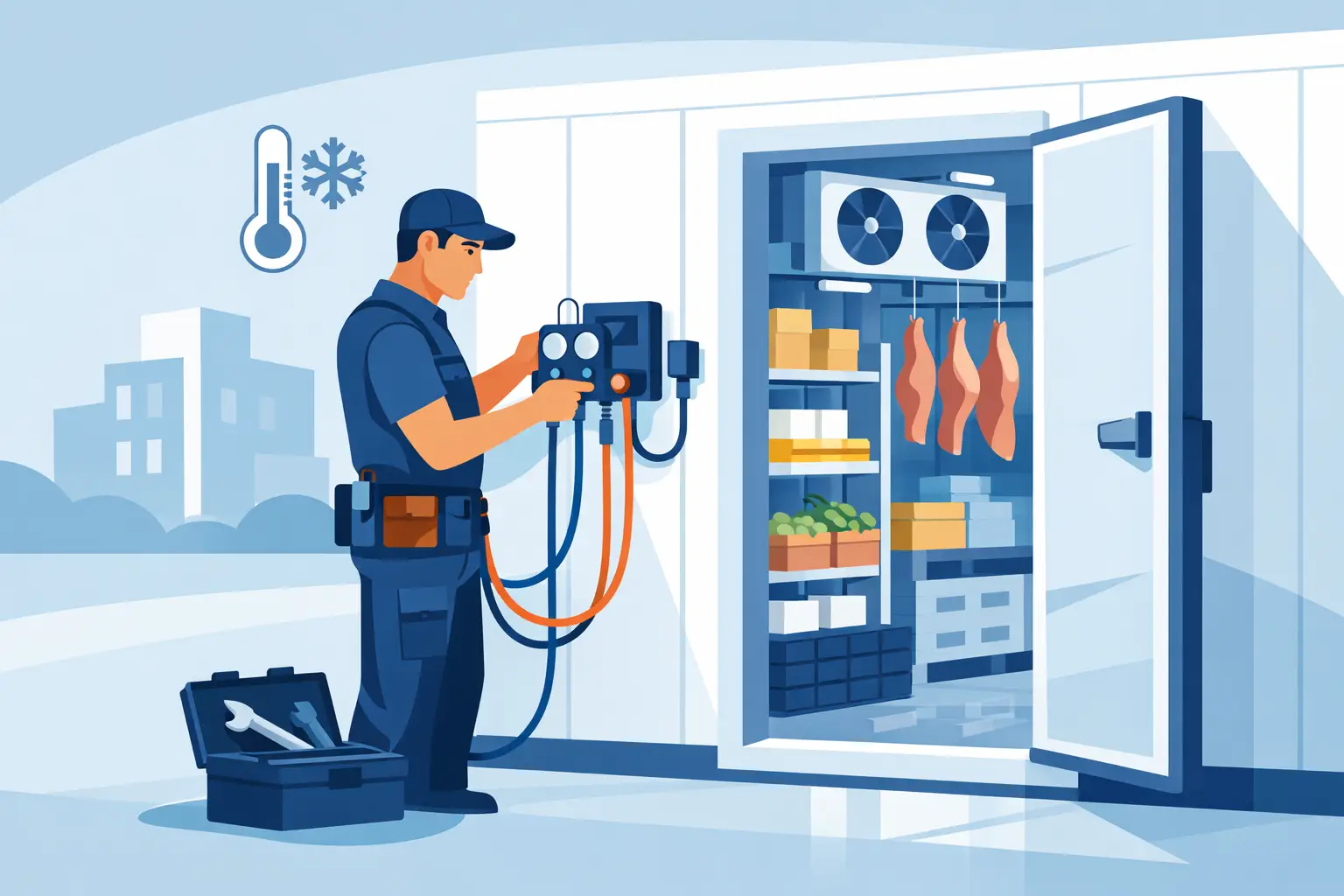
When a cold room starts drifting a couple of degrees, the problem rarely stays small for long. Stock quality drops, energy use climbs, staff lose time checking temperatures, and before long you are dealing with a breakdown at the worst possible moment. This cold room servicing guide is written for businesses that rely on consistent refrigeration every day and cannot afford guesswork.
A well-maintained cold room should do two things without fuss – hold the right temperature and do it efficiently. Servicing is what keeps that happening. It is not just about reacting when the unit stops working. Proper servicing catches wear early, keeps components clean, reduces strain on the system and helps you avoid the kind of failure that disrupts kitchens, warehouses, retail operations and pharmaceutical storage.
What cold room servicing should actually cover
Good servicing is more than a quick visual check and a temperature reading. A proper visit looks at how the full system is operating, from the evaporator and condenser through to controls, drains, door seals and refrigerant performance. The aim is simple: spot issues before they become expensive and keep the room working as designed.
In practice, that means checking operating temperatures against the room’s intended use, inspecting the evaporator for ice build-up, confirming fans are running correctly, cleaning condensers where needed and testing the control system. Engineers should also review the condition of door gaskets, hinges, latches and insulation panels, because cold loss is often caused by basic wear rather than a major mechanical fault.
Electrical checks matter just as much. Loose connections, worn contactors and failing sensors can all cause intermittent faults that are easy to miss until the room starts cycling incorrectly or alarm systems begin triggering. If a site depends heavily on uninterrupted cold storage, these are not minor details.
How often should a cold room be serviced?
There is no one schedule that suits every site. A small cold room in a low-traffic storeroom will not need the same attention as a freezer room in a busy food operation with constant door openings. Usage, ambient conditions, stored products and the age of the system all affect service frequency.
For many commercial sites, servicing every six months is a sensible starting point. High-demand environments often benefit from quarterly visits, especially where food safety, stock value or compliance risks are high. If the cold room is older, has a history of faults or operates in a hot plant area, more frequent maintenance usually pays for itself.
A practical rule is this: the greater the cost of downtime, the less sensible it is to stretch service intervals. Restaurants during peak trading, supermarket back-of-house storage, wholesalers with high stock volumes and pharmaceutical facilities should all think in terms of risk, not just maintenance spend.
The warning signs that should not wait for the next service
Some faults build slowly. Others announce themselves clearly. If your team knows what to look for, you have a better chance of getting the room checked before stock is affected.
One common sign is temperature inconsistency. If readings are drifting, recovering slowly after door openings or varying more than usual, the system may be losing efficiency. Ice on the evaporator, water on the floor, unusual noise from fans or compressors and doors that no longer close cleanly are also worth immediate attention.
Higher electricity bills can be another clue. When a refrigeration system has to work harder because coils are dirty, airflow is restricted or seals are damaged, energy use rises. The room may still appear to be functioning, but it is doing so at a higher operating cost and with less margin for error.
Frequent alarm resets are another red flag. If staff are repeatedly silencing or clearing alarms without investigating the cause, small issues can go unchecked until they become urgent callouts.
A practical cold room servicing guide for site teams
Not every part of servicing should be left to engineers. Daily and weekly housekeeping by site staff can make a real difference to reliability between planned maintenance visits.
Start with door discipline. Doors left open, damaged strip curtains and worn seals all let warm air in and force the system to recover more often. Make sure staff understand that poor door management is not a minor habit issue – it directly affects running costs and temperature stability.
Keep airflow clear inside the room. Overloading stock against the evaporator or blocking circulation paths creates warm spots and uneven cooling. It also makes the system work harder than necessary. Cold rooms perform best when there is space for air to move properly around the stored product.
Basic cleaning matters too. Floors should be kept clean and drains should not be allowed to block. Water build-up around the drain or evaporator area can lead to icing and slip risks. External plant areas also need attention. Condensing units choked with dust, grease or packaging debris lose efficiency quickly.
Temperature records should be reviewed, not just logged. If patterns start changing, that is useful maintenance information. The same applies to repeated staff complaints such as sticking doors, condensation or unusual fan noise. These points help an engineer identify early-stage faults before they cause a shutdown.
Why planned maintenance is cheaper than reactive repair
Most businesses understand this in principle, but refrigeration often gets attention only when it stops. The difficulty is that reactive repair usually costs more in every direction. There is the repair itself, but also stock risk, labour disruption, possible compliance issues and the pressure of finding a fast fix under time constraints.
Planned servicing gives you options. Components can be replaced before failure, performance issues can be corrected gradually and repairs can often be scheduled around operations. That is especially valuable where access is difficult or downtime needs to be managed outside trading hours.
There is also the energy argument. A cold room that is clean, correctly adjusted and properly sealed generally runs more efficiently than one left to deteriorate. Savings vary depending on system type and condition, so there is no honest fixed figure to promise. Still, many operators find that maintenance costs are offset partly by lower energy waste and fewer emergency callouts.
What a good service partner should help you understand
A service visit should not leave you with a vague tick sheet and no clear picture of system condition. You should know what was checked, what needs monitoring and whether any parts are approaching failure.
That is where an experienced refrigeration partner adds value. They should be able to explain not just what is wrong, but why it is happening and whether it is urgent. For example, a worn door seal may be a simple low-cost fix if caught early. Leave it too long and you may end up dealing with icing, compressor strain and poor temperature recovery.
They should also understand the reality of your operation. A restaurant kitchen, a distribution warehouse and a pharmaceutical store do not have the same tolerance for downtime or temperature fluctuation. Servicing has to reflect that. In busy London sites and across the wider UK, response time can be just as important as technical knowledge when a fault threatens stock.
Common servicing oversights that create bigger problems
One of the most common mistakes is treating the refrigeration plant as the whole story. In reality, cold room performance depends just as much on the structure and usage of the room. A perfect condensing unit will still struggle if insulation is compromised, doors are misaligned or staff traffic is excessive.
Another oversight is ignoring minor recurring faults. If the same issue keeps returning, the first repair may have dealt with the symptom rather than the cause. Repeated icing, for example, could point to airflow problems, drainage issues, sensor faults or door leakage. Good servicing looks for root cause, not just quick reset solutions.
Documentation is often overlooked too. Maintenance records, alarm history and temperature trends can reveal patterns that single callouts do not. For regulated sectors, those records also matter from a compliance point of view.
When to consider more than servicing
Servicing keeps a system in shape, but it cannot reverse age or compensate forever for poor design. If a cold room is breaking down regularly, struggling to hold temperature in normal conditions or costing more and more to run, it may be time to look at refurbishment or replacement rather than another short-term repair.
That does not always mean replacing the whole room. In some cases, upgrading controls, replacing a tired condensing unit or improving doors and insulation can extend service life and improve efficiency. The right option depends on the age of the equipment, the criticality of the stored goods and the pattern of faults over time.
The key is to make that decision before a crisis forces it. Planned upgrades are almost always less disruptive than emergency replacements.
A cold room is easy to take for granted when it is doing its job quietly in the background. Regular servicing is what keeps it there – dependable, efficient and ready for the pressure your business puts on it every day.