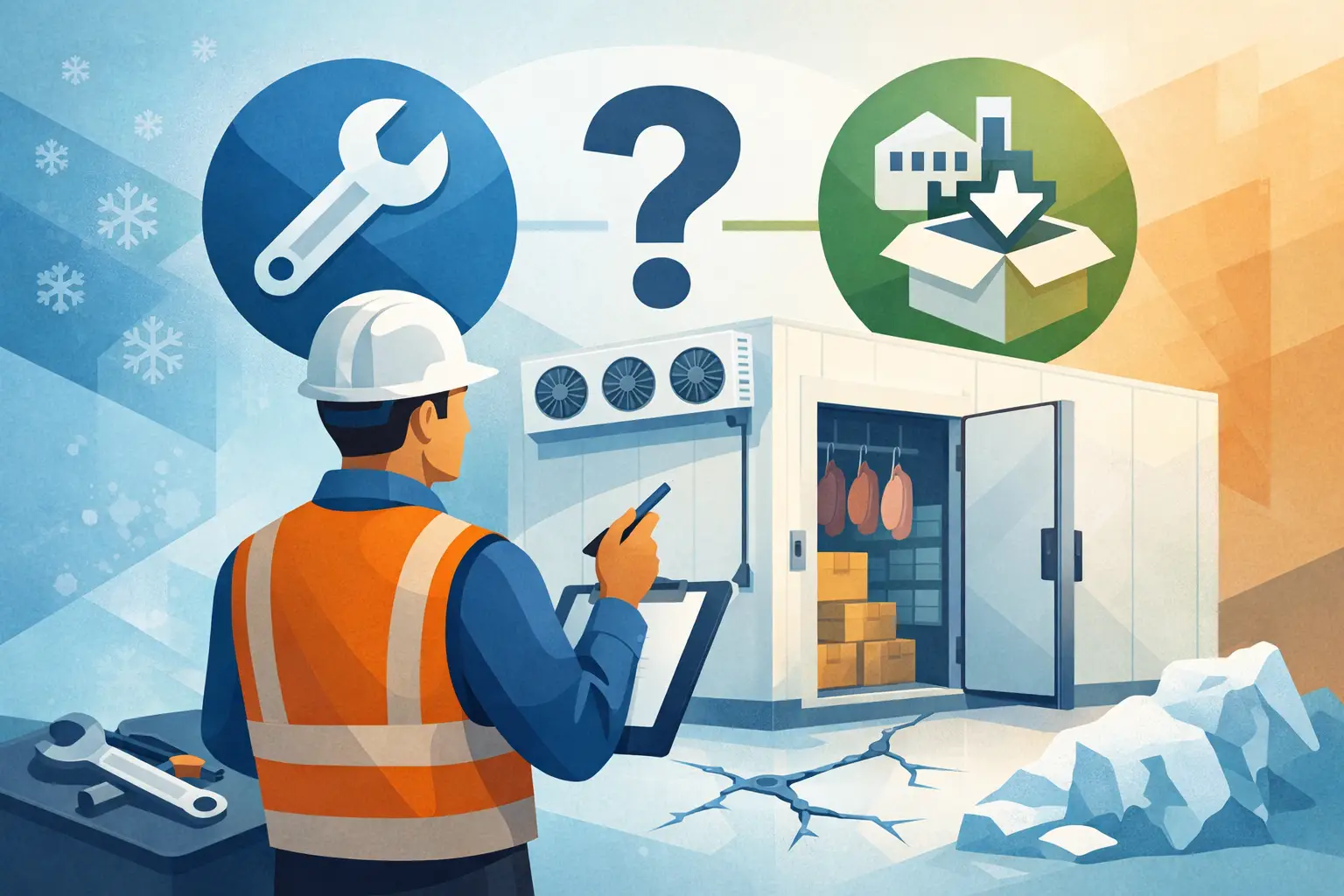
A cold room rarely fails at a convenient moment. It usually happens during a busy service, a delivery window, a stock build-up, or when compliance matters most. When that happens, the question is immediate – should you repair or replace cold room equipment, and which option protects your stock, energy costs and day-to-day operation best?
For most businesses, there is no one-size-fits-all answer. A supermarket with ageing plant and rising energy bills has a different decision to make than a restaurant dealing with a failed fan motor on an otherwise sound system. The right call depends on the age of the room, the condition of the panels and doors, the reliability of the refrigeration plant, and how much downtime your business can absorb.
When a repair is the right decision
A repair often makes the most sense when the fault is isolated and the rest of the system is in good condition. If the room has been cooling reliably, holds temperature properly, and the issue is linked to a component such as a controller, fan motor, door heater, sensor, contactor or defrost element, a targeted repair can restore performance without major disruption.
This is especially true where the cold room structure itself is still sound. Panels that remain intact, door seals that still close correctly, and insulation that has not deteriorated point towards a system worth keeping. In these cases, repairing the refrigeration side is usually more cost-effective than replacing the full room.
A recent installation is another strong argument for repair. If your cold room is only a few years old, replacement is rarely the first step unless the original design was wrong for the application. Most newer systems can be returned to reliable service with the right diagnostics and parts.
The other reason to repair is speed. For many food businesses, pharmaceutical operators and wholesalers, losing a cold room for days is not realistic. A prompt repair can stabilise temperatures fast, protect stock and buy time for a longer-term plan if needed.
Signs that replacement may be the better investment
There comes a point where repeated repairs stop being sensible. If you are calling engineers out regularly, replacing one part after another, and still seeing poor temperature stability, the problem may no longer be a single fault. It may be an ageing system reaching the end of its working life.
One of the clearest signs is persistent breakdowns across different parts of the room. If the compressor has been replaced, the evaporator is icing badly, controls are unreliable and door seals are failing, you are no longer dealing with one repair. You are managing a chain of failures.
Energy use is another major factor. Older cold rooms can still run, but not efficiently. Worn components, outdated condensing units, poor insulation and air leakage around doors all increase running costs. If the room is costing more to operate every month, replacement can make financial sense even before a full failure occurs.
Structural issues also push the decision towards replacement. Damaged panels, moisture ingress, swollen insulation, warped doors and floor deterioration affect more than appearance. They reduce temperature control, create hygiene risks and put extra strain on the refrigeration plant. Repairing mechanical parts alone will not solve those underlying problems.
Then there is suitability. Some businesses outgrow their original installation. A room designed for lighter use may struggle with increased foot traffic, warmer product loads or tighter temperature requirements. In that situation, replacing or upgrading the room is not just about failure – it is about making sure the cold storage matches the operation.
Repair or replace cold room systems based on total cost
The biggest mistake is comparing only the immediate repair invoice with the headline cost of a replacement. A repair is cheaper on paper, but that does not always make it the lower-cost option over the next 12 to 36 months.
A proper decision should include downtime risk, stock exposure, energy consumption and repeat callouts. If a repair gets you running but leaves you with an unreliable system, the hidden cost may be far higher than the engineer’s first visit. Lost product, interrupted service, staff disruption and emergency response charges all add up quickly.
Replacement has a higher upfront cost, but it can reduce running expenses, improve temperature pull-down, cut maintenance demand and give you more predictable performance. For businesses where uptime is critical, that predictability has real value.
It also helps to think about parts availability. Some older systems use obsolete controls or ageing plant that is increasingly difficult to source. Even if a repair is possible now, future breakdowns may become slower and more expensive to resolve.
What an engineer should assess before advising repair or replacement
A sound recommendation should be based on inspection, not guesswork. Before deciding whether to repair or replace cold room equipment, an engineer should assess both the refrigeration system and the room envelope.
That means checking operating temperatures, refrigerant pressures, defrost performance, compressor condition, evaporator coil health, fan operation, electrical controls and door function. It also means looking at panel integrity, insulation condition, seals, flooring and signs of condensation or moisture ingress.
The history matters too. A room with one significant fault after years of stable operation is different from a room with repeated attendance over several seasons. Usage patterns matter as well. A freezer room in constant use with frequent door openings will wear differently from a chilled room used for back-up stock.
A practical engineer should also ask what your business needs next, not just what it needed five years ago. If your stock volumes have grown, your product type has changed, or your compliance requirements are stricter, the right technical answer may involve redesign rather than another patch repair.
When a partial upgrade is better than a full replacement
The choice is not always repair or full replacement. In many cases, the most sensible route is a staged upgrade.
You might keep the insulated room structure but replace the condensing unit, evaporator, controls or doors. That can improve efficiency and reliability without the cost and disruption of starting again. This approach works well where the panels are still in good order but the plant is dated or undersized.
A controller upgrade, for example, can improve temperature management and defrost scheduling. Replacing a worn door and seals can reduce warm air ingress and icing issues. A new condensing unit can lower energy use and improve pull-down performance. The benefit is that you target the weak points while preserving what still works.
That said, partial upgrades only work when the remaining elements are genuinely sound. If the structure is deteriorating or the room was poorly designed from the outset, staged work may only delay an unavoidable replacement.
Business risks that should influence the decision
For commercial operators, the cold room is not just a piece of equipment. It supports stock value, food safety, product quality and compliance. That means the decision has to reflect operational risk, not just engineering preference.
If a breakdown threatens high-value stock or puts your business at risk of failing temperature records, caution matters. Pharmaceutical storage, food production and busy hospitality sites often need a more conservative approach because the cost of failure is so high.
Timing matters as well. If your cold room is limping through summer, replacement before peak demand may be safer than waiting for a full breakdown. Planned work is almost always less disruptive than emergency work.
For businesses across London and the wider UK, response times and access to specialist refrigeration support can also shape the decision. If your operation depends on fast attendance and reliable aftercare, it is worth choosing a route that reduces emergency exposure in the first place.
How to make the call with confidence
The best decisions are usually the least emotional ones. If the cold room is structurally sound, relatively modern and suffering from an isolated fault, repair is often the right move. If it is ageing, inefficient, unreliable and no longer suited to the job, replacement is usually the better investment.
What matters is having the system assessed properly and being given a straight answer about condition, expected lifespan and likely future costs. A dependable contractor should be able to explain not only what has failed, but what is likely to fail next and whether the room still represents good value to keep.
For many operators, that honest middle ground is what matters most. Not every fault needs a new installation, and not every old room is worth saving. The right advice protects your uptime first, then helps you spend money where it will actually improve performance.
If you are weighing up whether to repair or replace cold room equipment, do not focus only on the fault in front of you. Look at the whole system, the pressure on your operation, and what your business needs the room to do over the next few years. That is usually where the right answer becomes clear.