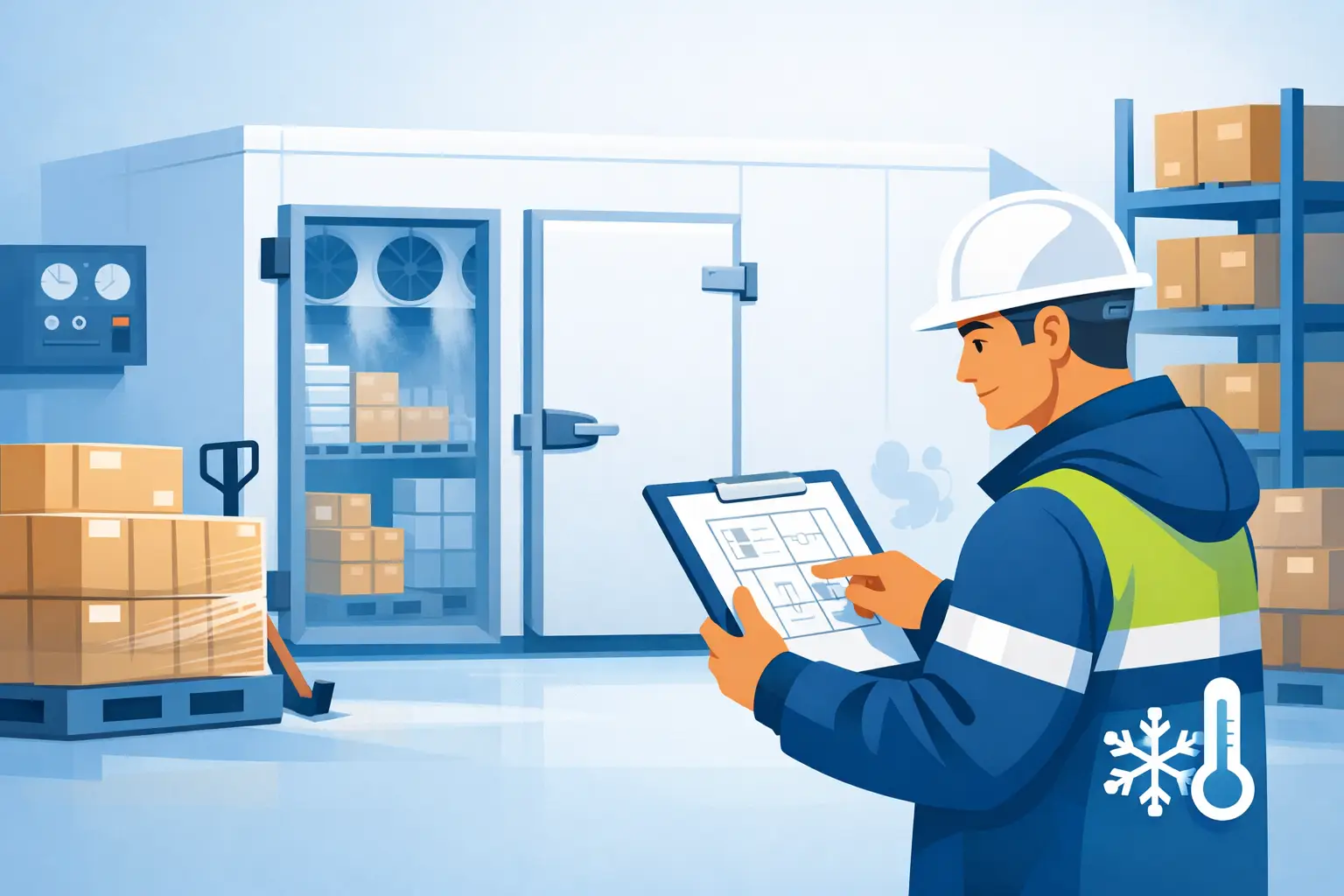
A freezer room that is too small fills up faster than expected. One that is too large can leave you paying to cool empty space every day. That is why a proper warehouse freezer room buying guide starts with operations, not just equipment. If you are storing food, pharmaceuticals or temperature-sensitive stock, the right room protects product quality, supports compliance and reduces the risk of costly downtime.
For most buyers, the challenge is not deciding whether they need frozen storage. It is choosing a system that matches stock volume, traffic levels, loading patterns and future growth without creating high running costs or service headaches later on. The cheapest option on paper is rarely the cheapest room to own.
What a warehouse freezer room buying guide should cover
A warehouse freezer room is not just an insulated box with a cooling unit attached. It is a working environment with doors, panels, floors, evaporators, controls, alarms and defrost cycles all affecting daily performance. If one part is underspecified, the whole system can struggle.
When comparing proposals, focus on how the room will actually be used. A wholesale operation taking regular pallet deliveries has very different demands from a back-of-house food service site holding boxed stock. The freezer room must suit the pace of your business, not a generic template.
Start with the real storage requirement
Buyers often begin with square metre estimates, but cubic capacity and stock movement matter just as much. Pallet height, aisle width, racking design and picking access all affect the usable volume. A room that looks large enough on a drawing can feel cramped once racking, door clearances and safety space are included.
Think about peak demand rather than average demand. Seasonal surges, promotional stock and supply chain delays can all increase the amount of frozen inventory you need to hold. If the room is close to maximum capacity from day one, there is little room to absorb pressure when trade changes.
It also helps to separate storage use from operational use. If staff are frequently entering the room to pick goods, wider access and better airflow management become more important. If stock is mostly held in bulk with less footfall, the design priorities may shift towards density and energy performance.
Why layout matters as much as size
A poor internal layout slows staff down and puts more strain on the refrigeration system. Tight turning space for pallet lorries, badly positioned doors and blocked evaporator airflow can all reduce efficiency. The best designs consider movement paths from the start, including loading areas, staging space and how long doors are likely to stay open.
This is also where future expansion should be discussed honestly. Leaving room for a larger system later can be sensible. Overbuilding immediately for capacity you may never use often is not.
Insulation and panel quality are not the place to cut corners
In freezer environments, insulation quality has a direct effect on energy use and temperature stability. Panel thickness, panel joints and vapour sealing all need to be right. If warm air is allowed to migrate into the structure, you can end up with ice build-up, reduced efficiency and long-term structural issues.
Floor construction deserves the same attention. Freezer rooms can require insulated floors and, in some applications, underfloor heating to prevent frost heave. Skipping this conversation early can lead to expensive remedial work later. The right floor specification depends on the room size, the site condition and the type of traffic it will take.
Doors are another area where buying decisions have lasting consequences. Hinged and sliding doors each have their place, but what matters is durability, sealing and suitability for traffic levels. In a busy warehouse setting, frequent opening can place significant load on the system, so strip curtains, rapid-close mechanisms or air management features may be worth considering.
Refrigeration plant selection affects running costs every day
The condensing unit and evaporator setup should be chosen around the room duty, not simply matched to a target temperature. Product pull-down, ambient conditions, door openings and defrost demand all influence system sizing. An undersized system may struggle in busy periods. An oversized system can short cycle and operate inefficiently.
This is where experience matters. A contractor should ask detailed questions about what is being stored, how goods arrive, whether they enter already frozen, and what the daily access pattern looks like. Those details shape the refrigeration load.
Energy efficiency is about the whole system
Many buyers ask for the most energy-efficient unit, but efficiency is not only about the compressor. Controls, insulation, door discipline, evaporator placement and maintenance standards all contribute. A high-spec system installed badly will not perform as intended.
If energy costs are a major concern, ask how the design will reduce them in practical terms. Variable speed components, efficient defrost strategies and well-configured controls can make a meaningful difference. So can better panel sealing and door management. The right answer depends on the site and the operating pattern.
Compliance, safety and temperature control
For food, pharmaceutical and regulated storage, compliance cannot be treated as an afterthought. Your freezer room needs to hold temperature reliably, but it also needs proper monitoring, alarm capability and safe access arrangements for staff.
That can include temperature recording, high and low alarms, emergency door releases, internal lighting suitable for cold environments and non-slip flooring where needed. In some sectors, documentation and validation are just as important as the physical installation. If your stock carries high value or regulatory sensitivity, build those requirements into the specification from the beginning.
A good supplier should also address practical service access. If plant equipment is difficult to reach, routine maintenance becomes slower and emergency repairs become more disruptive. This matters more than many buyers realise until the first fault occurs.
Installation constraints can change the best option
The right freezer room on paper may not be the right one for your building. Ceiling height, access routes, drainage, electrical supply and ventilation all affect what can be installed and how well it will run. Older buildings in particular can present awkward constraints that need engineering judgement rather than a standard package.
If your site is in a dense urban area, such as parts of London, delivery logistics, noise limits and plant location may all need careful planning. For operating businesses, phasing the work to minimise disruption can be just as important as the technical specification itself.
New build versus retrofit
A new warehouse build offers more freedom with layout and plant positioning. Retrofit projects usually involve more compromise. Existing floor levels, surrounding operations and restricted access can all influence design choices and programme length.
That does not mean retrofit is a poor option. It simply means the survey and planning stage matters more. Accurate site assessment prevents avoidable delays and costly changes during installation.
Think beyond the purchase price
A warehouse freezer room buying guide would be incomplete if it focused only on installation cost. The real cost sits across years of power consumption, maintenance, breakdown risk and business interruption. Saving money upfront can make sense in some areas, but not where it increases the chance of stock loss or repeated failures.
Ask what is included after handover. Commissioning, staff guidance, service intervals and emergency support all affect long-term value. A freezer room is a critical asset, not a one-off construction job. When something goes wrong, response time matters.
This is where many businesses prefer a provider that can design, install, maintain and repair the system rather than handing it off between multiple parties. It tends to shorten problem-solving and gives you clearer accountability over the life of the room.
Questions worth asking before you buy
Before approving a specification, ask how the room has been sized, what assumptions were made about usage, and where future capacity sits. Ask what happens during busy loading periods, how defrost is managed, and what maintenance will be needed to protect performance.
It is also sensible to ask what the common failure points are and how quickly parts and support can be accessed. Honest answers here are often more useful than polished promises. A dependable supplier will not pretend every site is simple or every choice has one perfect answer.
Choosing a freezer room that still works in five years
The best freezer room purchase is usually the one that fits your operation closely enough to avoid daily friction. It keeps temperature where it should be, controls running costs, supports compliance and gives your team a setup they can work with efficiently. That outcome comes from good design decisions early, not last-minute adjustments once problems appear.
If you are comparing options, slow the process down just enough to ask the awkward questions now. A freezer room should give your business confidence, not another source of operational risk.