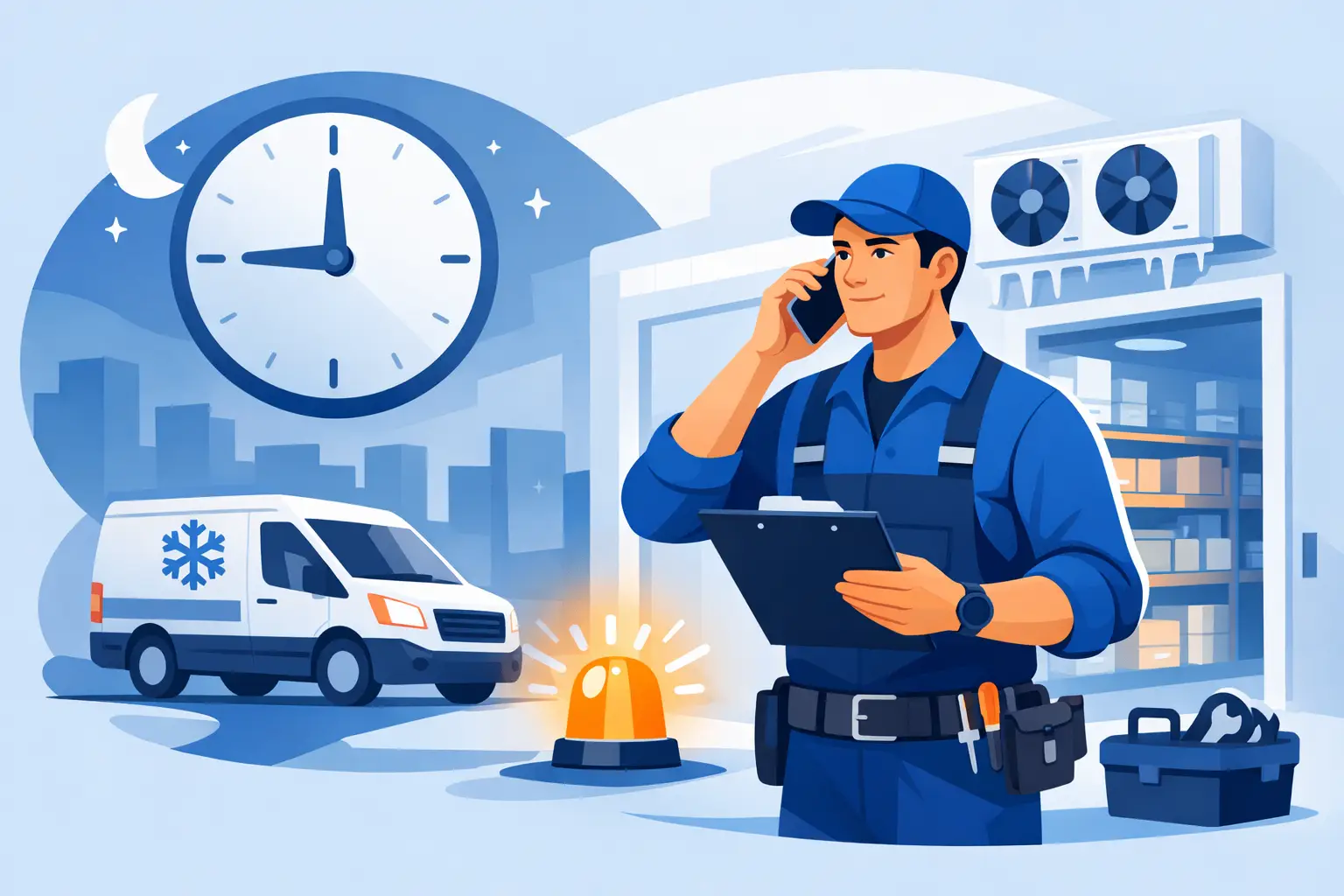
A cold room rarely picks a convenient time to fail. It goes down during a Saturday dinner service, in the early hours before a supermarket delivery, or overnight when a pharmacy needs stable storage without interruption. That is why a 24-hour refrigeration callout matters – not as a nice extra, but as a practical safeguard when stock, compliance and trading hours are all on the line.
For most businesses, refrigeration failure is never just a mechanical fault. It can mean lost stock, disrupted service, staff under pressure, and difficult decisions about whether products are still safe to use. The right emergency response is about more than arriving quickly. It is about diagnosing the fault properly, stabilising temperatures where possible, and making sensible decisions that protect the business in the short and long term.
Why a 24-hour refrigeration callout matters
If you run a restaurant, warehouse, food production site or pharmaceutical facility, the cost of downtime adds up fast. Chilled and frozen systems sit at the centre of daily operations, so a breakdown can affect far more than one piece of equipment. Deliveries may need to be turned away, prep schedules can fall behind, and staff may be pulled away from normal work to move stock or monitor temperatures manually.
The urgency is different from many other building services. A lighting fault can often wait until morning. A failed cold room, freezer room or integral refrigeration system usually cannot. Temperature drift starts immediately, and every hour increases the risk to product quality and safety.
There is also the issue of compliance. Food businesses must maintain proper storage temperatures, and pharmaceutical operators may have even tighter controls around product integrity. When an engineer attends promptly, the aim is not only to restore cooling but to reduce the exposure window and help the site regain control quickly.
What happens during a 24-hour refrigeration callout
A proper emergency response starts before the engineer arrives. The first conversation should establish the type of system, the symptoms, the current temperatures, and whether the site has already taken steps such as limiting door openings or moving critical stock. Those details help prioritise the call and ensure the engineer arrives prepared.
Once on site, the first job is usually to make the area safe and assess the immediate risk. That may involve checking electrical supply, control panels, alarms, compressor operation, condenser performance, evaporator condition and refrigerant pressures. In some cases the issue is straightforward, such as a failed controller, tripped breaker, faulty fan motor or iced-up evaporator. In others, the fault may be more complex, involving refrigerant leaks, compressor damage or a wider design issue that has been building for some time.
The key point is that emergency attendance should focus on two things at once. The first is restoring service as quickly as possible. The second is identifying whether the repair will genuinely hold or whether a temporary measure is the safest route until parts, deeper testing or planned remedial work can be arranged.
That distinction matters. A fast fix is useful only if it is honest. If a system is brought back online with a known underlying problem, the customer should be told clearly what the risk is and what happens next.
The difference between a temporary fix and a proper repair
Not every overnight repair can be permanent. If a compressor has failed completely or a specialist control component is unavailable, the engineer may need to stabilise the system, reduce temperature rise, or isolate the fault so further damage does not occur. That is still valuable work, because it buys time and can prevent a complete stock loss.
But there is a trade-off. Temporary solutions keep a site moving, yet they are not a substitute for proper repair planning. A dependable contractor will explain where the line is. Sometimes the best emergency outcome is a full first-time fix. Sometimes it is a controlled short-term measure followed by scheduled parts replacement or more extensive corrective work.
The faults that commonly trigger emergency callouts
Commercial refrigeration systems fail for all sorts of reasons, but the same patterns appear repeatedly. Condensers block up and run hot. Fan motors fail. Door seals deteriorate and let warm air in. Controllers drift out of calibration or stop responding altogether. Drainage issues cause icing, which then reduces airflow and cooling performance. Compressors can suffer from electrical faults, overheating or wear over time.
Then there are the avoidable failures. Poor installation, undersized equipment, neglected servicing and repeated short-term repairs often create the conditions for an eventual out-of-hours breakdown. That is why emergency response and ongoing maintenance should not be treated as separate issues. A callout may solve tonight’s problem, but recurring faults usually point to something more fundamental.
How to make a 24-hour refrigeration callout more effective
When a system fails, speed matters, but so does the quality of information the site can provide. If you have model details, temperature records, alarm codes or a timeline of the fault, pass them on straight away. If the system has been making unusual noises, cycling oddly or struggling to hold set point before the breakdown, mention that as well. Those details help narrow down the likely causes.
On site, practical steps can make a significant difference. Keep doors closed as much as possible. Separate critical stock from less sensitive goods if you have backup space. Avoid constant checking that introduces warm air into the room. If products are regulated or especially temperature-sensitive, document readings and actions taken from the start.
None of that replaces an engineer, but it does support a faster, more accurate response.
Why one provider for repair and maintenance often works better
A contractor who only handles emergency attendance may get you running again, but they do not always know the history of the system. When the same engineering team also carries out servicing, installations and remedial work, fault-finding is often quicker and advice is more practical. They can see whether the current issue is a one-off failure or part of a longer pattern.
That joined-up approach is especially useful for businesses with cold rooms, freezer rooms and multiple refrigeration assets on one site. It reduces handover gaps, improves accountability, and makes it easier to plan upgrades before failures become urgent.
For many operators, that is the real value of working with a specialist provider rather than treating every breakdown as an isolated event.
When an emergency callout points to a bigger problem
There are times when repeated callouts become more expensive than addressing the root cause. If the same room keeps icing up, if compressors are failing too often, or if the system cannot cope with summer load, the issue may be design-related rather than purely mechanical. Ageing equipment, poor airflow, incorrect sizing and deferred maintenance can all create chronic instability.
This is where honest advice matters. Businesses need clear guidance on whether to continue repairing, retrofit key components, or replace the system altogether. The cheapest option on the night is not always the lowest-cost option over twelve months. Frequent emergency repairs, product losses and excessive energy use can quickly outweigh the cost of proper corrective work.
A good engineering partner will explain that balance clearly. Sometimes repair is the right call. Sometimes replacement is the more sensible route, especially for older systems where reliability has become unpredictable.
Choosing the right emergency refrigeration support
If your operation depends on controlled temperatures, emergency support should not be an afterthought. Look for a provider with real commercial refrigeration experience, not just general building services coverage. Cold rooms, freezer rooms and process cooling systems all have their own demands, and poor diagnosis can waste critical hours.
Response time is important, but capability matters just as much. You need engineers who can troubleshoot electrical and mechanical faults, understand system performance, and advise on whether a repair is secure or temporary. Transparency matters too. In an emergency, nobody benefits from vague updates or overpromising.
For businesses in London and across the UK, the strongest support usually comes from specialists that can handle design, installation, maintenance and breakdown repair under one roof. UK Cold Room works in that way because it gives customers continuity from first installation through to urgent out-of-hours support.
The real goal is protecting uptime
A 24-hour refrigeration callout is not only about getting cold air flowing again. It is about protecting stock, keeping operations moving and reducing the knock-on effects of a breakdown at the worst possible time. The best emergency response combines speed with sound engineering judgement, because a rushed answer without proper fault-finding often leads straight back to another failure.
If your business cannot afford refrigeration downtime, the sensible approach is to treat emergency cover and preventative maintenance as part of the same plan. The callout gets you through the immediate problem. The ongoing engineering support is what makes the next one less likely.