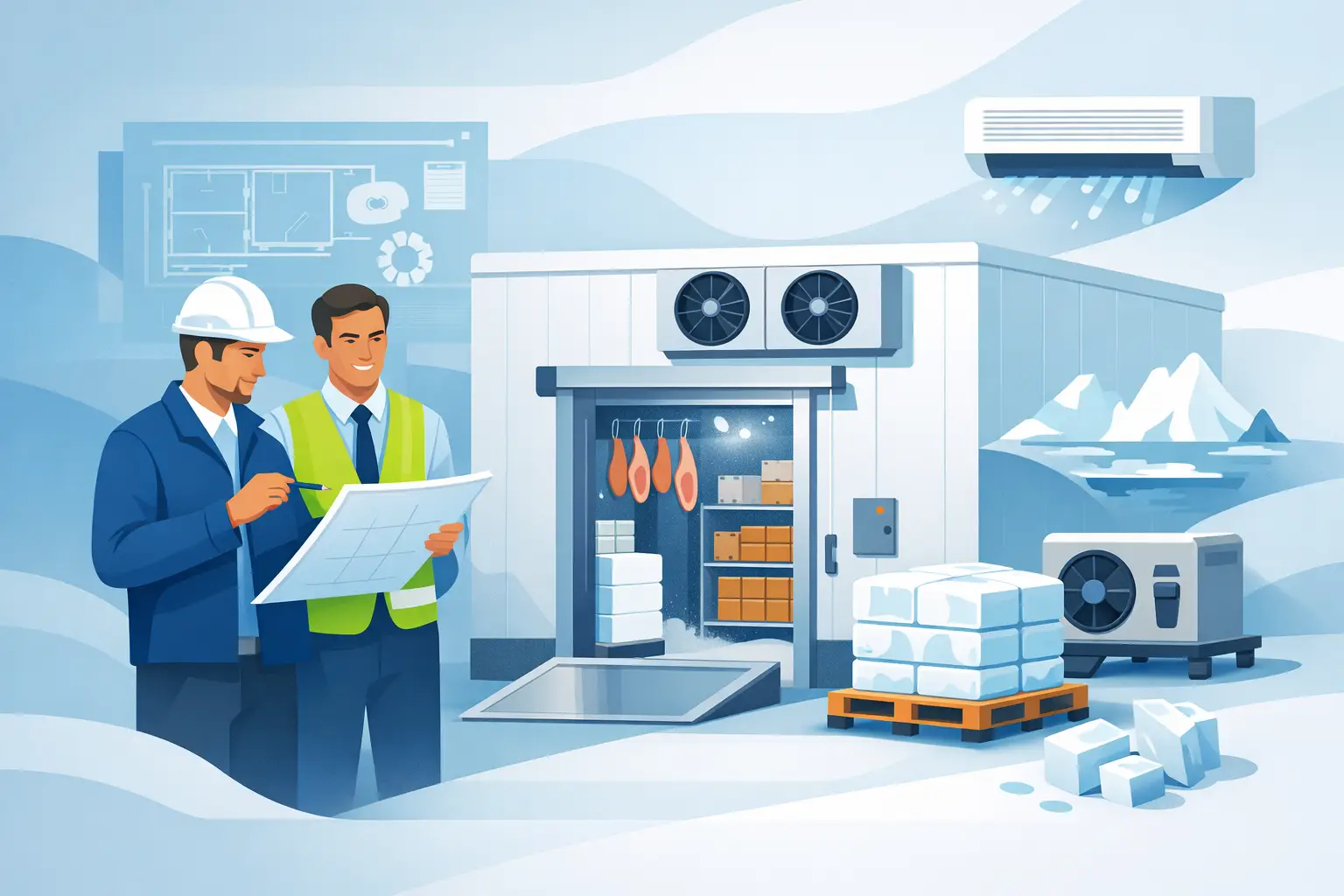
A freezer room that looks right on paper can still become a daily problem once the doors start opening, stock begins moving and the energy bills arrive. That is why freezer room design build needs to be treated as an operational decision, not just a construction job. If the room is undersized, poorly insulated or fitted with the wrong refrigeration system, the cost shows up quickly in wasted energy, unreliable temperatures and avoidable downtime.
For most businesses, the real question is not simply how to get a freezer room installed. It is how to get one that matches the way the site actually works. A busy restaurant kitchen, a wholesale storage unit and a pharmaceutical facility may all need frozen storage, but the design priorities are very different. Good results come from getting those details right at the start.
Why freezer room design build needs a joined-up approach
When design and build are handled as separate tasks, small decisions can turn into expensive problems. A room may be planned around the available floor area without enough thought given to door swing, loading patterns or access for maintenance. The refrigeration equipment may be sized for nominal storage volume rather than real operating conditions, including ambient temperature, product load and frequency of entry.
A joined-up approach avoids that. It means the room structure, insulation, refrigeration plant, controls, flooring and installation method are considered together. That matters because each element affects the others. Increase door traffic and you may need stronger evaporator performance and better air management. Change the room size and the condensing unit specification may also need to change. Put simply, freezer rooms perform properly when they are engineered as working systems rather than assembled as separate parts.
The first decisions shape everything
The early planning stage has more influence on long-term performance than many buyers expect. The most obvious factor is temperature requirement. Holding products at -18°C is very different from operating a low-temperature process area where products enter warm and pull-down times matter. Those differences affect refrigeration capacity, evaporator selection and defrost strategy.
The next issue is usage. A freezer room used for static storage behaves differently from one serving as part of a fast-moving picking operation. Frequent access introduces warm air, moisture and frost risk. That changes the demands on door systems, heaters, airflow and floor construction. It also affects how much spare capacity should be built into the refrigeration system.
Space planning is equally important. Many sites focus on maximising storage volume, but the usable layout matters more than the quoted cubic metres. Shelving, pallet movement, safe walkways and door clearance all need to work in practice. A room that is technically large enough but awkward to use often slows operations and encourages poor stock handling.
Freezer room design build for energy efficiency
Energy performance is rarely just about choosing an efficient condensing unit. In freezer room design build, efficiency starts with the envelope. High-quality insulated panels with the correct thickness and tight joints reduce heat gain and help the refrigeration equipment run more steadily. Poor panel fitting or weak details around doors and service penetrations can undermine the whole system.
Doors deserve particular attention because they are one of the biggest sources of temperature loss in busy sites. The right choice depends on traffic. A hinged door may be suitable for lower-use areas, while high-traffic environments may need rapid-action solutions and strip curtains to limit warm air ingress. Heated door frames and thresholds can also be necessary in freezer applications to prevent ice build-up and keep doors operational.
Controls matter too. Accurate control systems allow the room to maintain temperature without excessive cycling. In some applications, energy savings also come from matching plant output to demand rather than running at full capacity all the time. That said, chasing efficiency alone can be a mistake if it leaves too little resilience for peak periods. The cheapest system to run is not much use if it cannot protect stock during the busiest hours.
Structural details that cannot be treated as afterthoughts
A freezer room is not just insulated walls and a cooling unit. The floor, ceiling, vapour sealing and drainage details all play a part in reliable performance. Floor construction is especially important because freezing temperatures can create problems beneath the slab if the design is wrong. Frost heave can damage floors over time, so suitable insulation and floor heating or other protective measures may be required depending on the build type.
Vapour control is another area where shortcuts cause trouble. Warm, moist air will always try to move towards colder areas. If moisture enters the wrong parts of the structure, ice formation, insulation failure and panel damage can follow. That is why proper sealing, careful detailing and competent installation are not optional extras.
The site itself also shapes the build. Existing buildings may have restricted access, uneven floors, low soffits or limited plant space. Retrofitting within an occupied commercial premises often means planning around trading hours, staff routes and hygiene requirements. Those practical constraints should influence the design from day one, not be left for the installation team to solve on site.
Compliance, safety and product protection
For food businesses, wholesalers and pharmaceutical operators, freezer performance is closely tied to compliance. Temperature stability, cleanable finishes, safe access and reliable monitoring all support day-to-day obligations. A room that drifts in temperature, accumulates excessive ice or becomes difficult to sanitise creates risk that extends beyond repair costs.
Safety for staff matters just as much. Internal release mechanisms, alarms, suitable lighting and non-slip flooring are standard expectations in properly built freezer rooms. In high-use environments, sight panels and access controls may also be sensible additions. These are not decorative features. They help reduce accidents, improve confidence for staff and support smoother operation.
Monitoring should be considered during design, not bolted on later. If temperature records are important for audits or internal quality control, the room should be built with suitable sensors, alarm logic and access to data from the outset. Retrofitting after handover is usually more disruptive and more expensive.
Why installation quality is as important as design
Even the best specification can be let down by poor workmanship. Panel alignment, joint sealing, pipework routing, electrical integration and commissioning all affect how the room performs in real conditions. A freezer room may appear operational at handover but still develop issues if defrost settings are wrong, airflow is unbalanced or penetrations have not been sealed properly.
This is one reason many businesses prefer one contractor to handle design, build and installation rather than splitting responsibility across several trades. It reduces the gaps between specification, fitting and final performance. When one engineering team takes ownership of the project, there is less room for finger-pointing if something does not behave as expected.
Commissioning deserves more attention than it often gets. The system should be tested under realistic conditions, controls should be checked carefully and users should understand how to operate the room properly. A freezer room is a long-term asset, so handover needs to include practical guidance rather than a quick sign-off.
The long-term view: maintenance starts at design stage
A well-built freezer room should be easier to maintain, easier to clean and less likely to suffer avoidable failures. That starts with design choices such as accessible plant location, sensible component layout and enough clearance for servicing. If a condenser is awkward to reach or key parts are boxed into a tight space, routine maintenance becomes harder and delays become more likely when faults occur.
There is also a business continuity argument for planning support early. Sites that depend on frozen stock cannot afford to treat aftercare as an afterthought. Maintenance schedules, alarm response and emergency repair arrangements all have a direct bearing on stock protection. Businesses across London and the wider UK often look for a provider that can handle both the initial project and the support that follows, simply because time matters when something goes wrong.
The right freezer room is not always the biggest or the most complex. It is the one that fits the product, the building and the pace of the operation while remaining efficient and serviceable over time. That takes practical engineering judgement, careful installation and honest advice about what the site really needs. If you get those parts right at the start, the room is far more likely to stay reliable when your business is relying on it most.