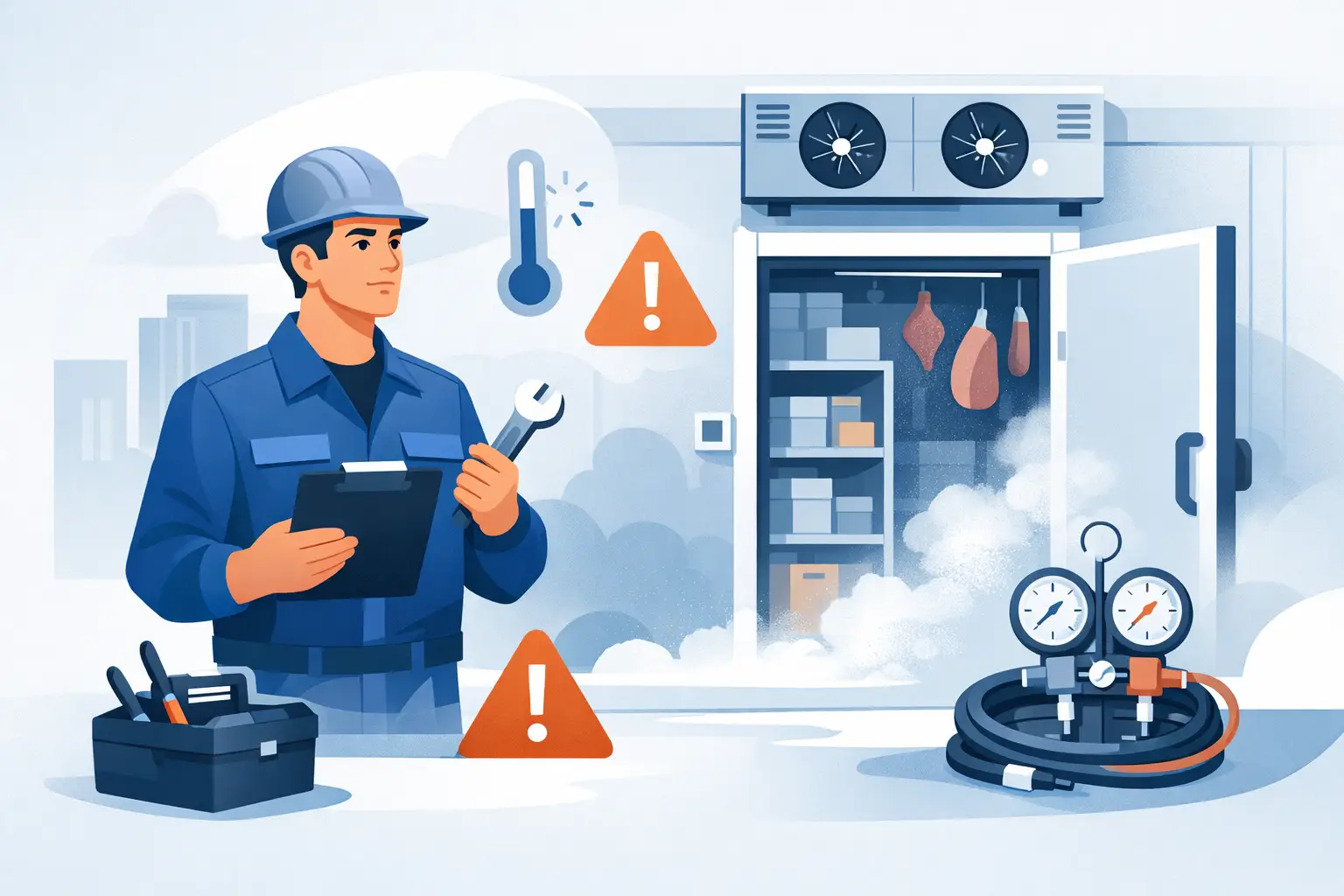
A cold room rarely fails at a convenient time. It happens during a busy kitchen service, overnight in a warehouse, or just before a delivery arrives. That is why knowing how to prepare for refrigeration breakdowns is not just good housekeeping – it is part of protecting stock, maintaining compliance, and keeping your operation moving when something goes wrong.
For businesses that depend on chilled or frozen storage, breakdown planning needs to be practical. A plan that lives in a folder and never gets used will not save a walk-in freezer full of stock. What matters is having clear actions, the right support in place, and a realistic understanding of where your system is most vulnerable.
Why refrigeration breakdowns cause wider business problems
When refrigeration stops, the first concern is usually product loss. For restaurants, that can mean spoiled ingredients and service disruption. For supermarkets and wholesalers, it can affect larger volumes of stock and create immediate waste costs. In pharmaceutical settings, temperature deviation can also become a compliance issue, not just a financial one.
There is usually a second layer of impact as well. Staff are pulled away from normal duties, managers are forced into reactive decisions, and emergency repairs often cost more when there is no maintenance history or site preparation. If the fault continues for several hours, the problem shifts from equipment failure to operational disruption.
That is why preparation should not start when the alarm sounds. It should start while the system is still working normally.
How to prepare for refrigeration breakdowns before they happen
The best preparation starts with understanding your current refrigeration setup. Many sites know they have a cold room, condensing unit, evaporator and controller, but they do not always know the age of the equipment, the service history, or which components are most likely to fail first. Compressors, fans, door heaters, controllers and condensers all have different maintenance demands, and weak points vary depending on usage.
If you run more than one chilled or frozen space, identify which unit is most critical to operations. A single freezer room holding high-value stock needs a different contingency plan from a secondary chilled area with lower-risk goods. Prioritising systems helps you decide where to focus maintenance budgets and where you may need backup storage options.
A planned maintenance schedule is the strongest first step. Regular servicing will not prevent every breakdown, but it does reduce the chances of avoidable faults caused by dirty condensers, failing electrical connections, refrigerant issues or neglected moving parts. It also gives engineers a chance to spot deterioration before it becomes a total failure.
There is a cost trade-off here. Some businesses delay servicing to save money in the short term. In practice, that often increases the risk of expensive callouts, stock loss and avoidable downtime later. For most commercial sites, routine maintenance is easier to control than emergency failure.
Keep accurate service and equipment records
When a unit goes down, time matters. Engineers can respond faster when they know what system they are dealing with. Keep a record of installation dates, model numbers, controller details, refrigerant type, previous faults and parts replaced. If there are recurring issues, note them clearly.
This matters even more on multi-site estates or larger premises where several systems may have been upgraded at different times. Without proper records, diagnosis becomes slower and decisions become less precise. A service partner should not have to start from scratch every time a breakdown occurs.
Train staff on early warning signs
Breakdowns are not always sudden. In many cases, the system gives warning signs first. Temperatures may fluctuate, doors may not seal properly, fans may become noisy, ice may build up where it should not, or the condensing unit may run longer than usual.
Front-line staff are often the first to notice these changes. If they are trained to report them early, you have a better chance of fixing a problem before stock is at risk. This does not need technical language. It just needs a simple process so staff know what to look for and who to tell.
Build a realistic breakdown response plan
A good response plan is clear enough to use under pressure. It should set out who checks the temperature, who contacts the engineer, who moves stock if needed, and who records the incident for compliance purposes. If those decisions are left until the moment of failure, valuable time is lost.
Your plan should also reflect the type of business you run. A restaurant may need a rapid stock transfer process between units. A wholesaler may need a separate area for loading and sorting affected goods. A pharmaceutical operation may need stricter escalation procedures based on temperature thresholds and product sensitivity.
Decide what happens to stock first
The first practical question during a breakdown is whether stock can remain in place safely for a short period or whether it needs to be moved at once. That depends on the product, the room temperature, the duration of the fault, and whether doors are being opened frequently.
Not every issue requires immediate emptying of a cold room. In some cases, keeping doors shut while an engineer attends is the safest option. In other cases, delaying stock transfer will only increase losses. This is why it helps to classify stock by risk in advance. Know what is most temperature-sensitive, what can be relocated, and where it can go.
If you have access to backup chilled or frozen capacity on site, make sure it is genuinely usable. Spare storage space is only helpful if it is operational, accessible, and large enough for the stock you may need to protect.
Set clear contact points
Every site should have up-to-date contact details for internal decision-makers and an emergency refrigeration engineer. That sounds obvious, but it is often overlooked until a breakdown happens outside normal hours. Contact information should be available to duty managers and key staff, not locked away in one person’s inbox.
For critical environments, 24/7 support is often worth having in place before there is a fault. A provider that already knows your equipment and site layout can usually respond more effectively than one being called in cold.
Reduce the risk of avoidable failures
Some breakdowns come from component wear or electrical issues that could not have been predicted exactly. Others come from preventable site conditions. Poor airflow around condensers, blocked drains, damaged door seals, overloading, and repeated door opening all place extra strain on the system.
Small operating changes can make a meaningful difference. Keep condenser areas clean and unobstructed. Check door closures and curtains. Make sure stock does not block evaporators or reduce airflow. Review whether staff habits are forcing the system to work harder than necessary.
Energy efficiency and reliability are closely linked here. Equipment that is constantly under strain tends to consume more energy and fail sooner. Looking after the system properly is not only about avoiding repairs. It also supports lower running costs over time.
Think beyond the repair itself
When a breakdown happens, the immediate goal is to restore temperature control. But the bigger question is whether the fault points to a wider problem. If the same room keeps failing, or if key components are reaching the end of their service life, repeated repairs may stop being the most sensible option.
This is where an experienced refrigeration partner adds real value. A proper engineer will not just replace a failed part and leave. They should be able to tell you whether the issue was isolated, whether the system is underspecified for the load, or whether a retrofit or upgrade would reduce future risk.
That judgement matters because there is no one-size-fits-all answer. For some sites, repair is clearly the right move. For others, particularly where ageing equipment supports critical stock, planned replacement may be the more cost-effective and lower-risk choice.
Make breakdown preparation part of normal operations
The most effective businesses treat refrigeration resilience as an operational priority, not a once-a-year task. They review alarm settings, test response procedures, update service records and make sure staff know what to do. They do not assume the system will always keep running just because it is running today.
If your business relies on cold storage, preparation should be proportionate to the risk. A single-site café may need a straightforward emergency process. A larger food operation or temperature-sensitive facility may need formal contingency planning, maintenance contracts and rapid-response engineering support. The principle is the same in both cases: do the thinking before the failure, not during it.
For businesses across London and the wider UK, that often means working with one refrigeration partner who understands the full life of the system – from design and installation through to servicing, repair and emergency response. When support is joined up, decisions are faster and downtime is easier to control.
A breakdown may never arrive at a good moment, but with the right preparation it does not have to become a full-scale business problem.